
Best Double French Horns for Concert 2026
So, you're looking for a double horn for concert work? It's a big decision, more than just picking a shiny instrument. You want something that'll give you that reliable, resonant sound across the range, handle the demands of a full orchestra, and not leave you hating life after a three-hour performance. Let's cut through the marketing and figure out what you really need.
Last updated: July 15, 2026 • Next update: July 22, 2026

Yamaha YHR-671 D 02 F/Bb Double Horn
- • Gold brass mouthpipe delivers a remarkably warm, focused tone.
- • Yamaha’s M-bell offers a balanced projection across the range.
- • Rotary valves provide quick, reliable action and consistent intonation.
- • Removable bell allows for experimentation with different bell materials for tonal variation.
- • The heavier brass construction can be fatiguing during extended practice.
- • The price point places it firmly in the high-end professional category.
- • The gold brass mouthpipe might be too dark for players seeking a brighter sound.
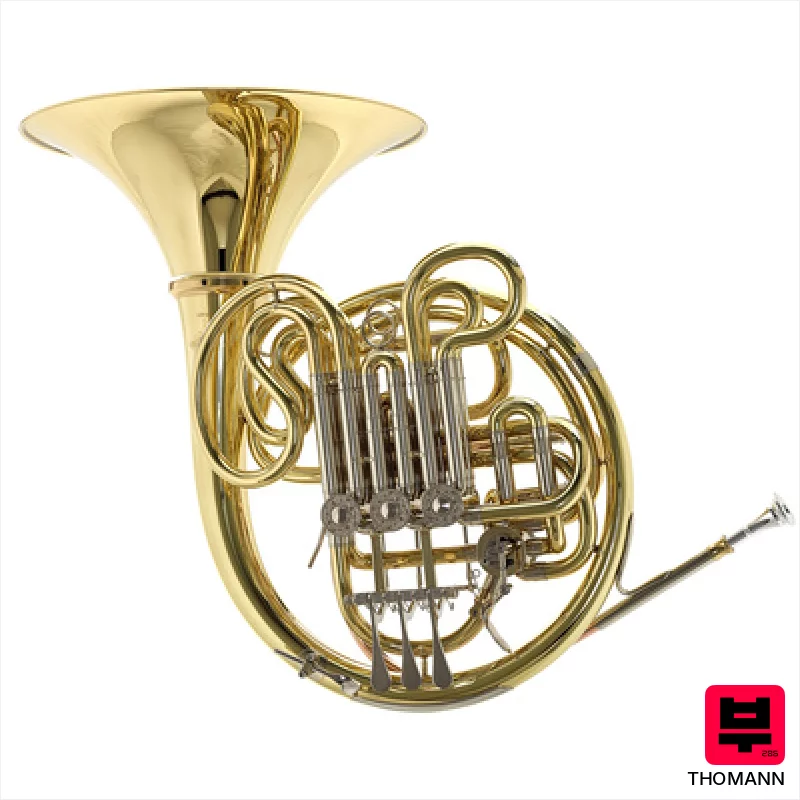
Thomann HR-401 F-/Bb- Horn
- • Solid brass bell delivers a warm, resonant tone ideal for orchestral work
- • Minibal linkage offers surprisingly smooth valve action for its price bracket
- • Adjustable finger hook improves ergonomics and playing comfort for varied hand sizes
- • Includes a decent mouthpiece, saving a significant initial investment
- • Lacquer finish, while attractive, might be a bit thin for heavy gigging and could chip
- • The Bb/F switching mechanism, while functional, isn’t as refined as higher-end horns
- • Bore size leans slightly toward the smaller side, potentially limiting extreme low-end projection
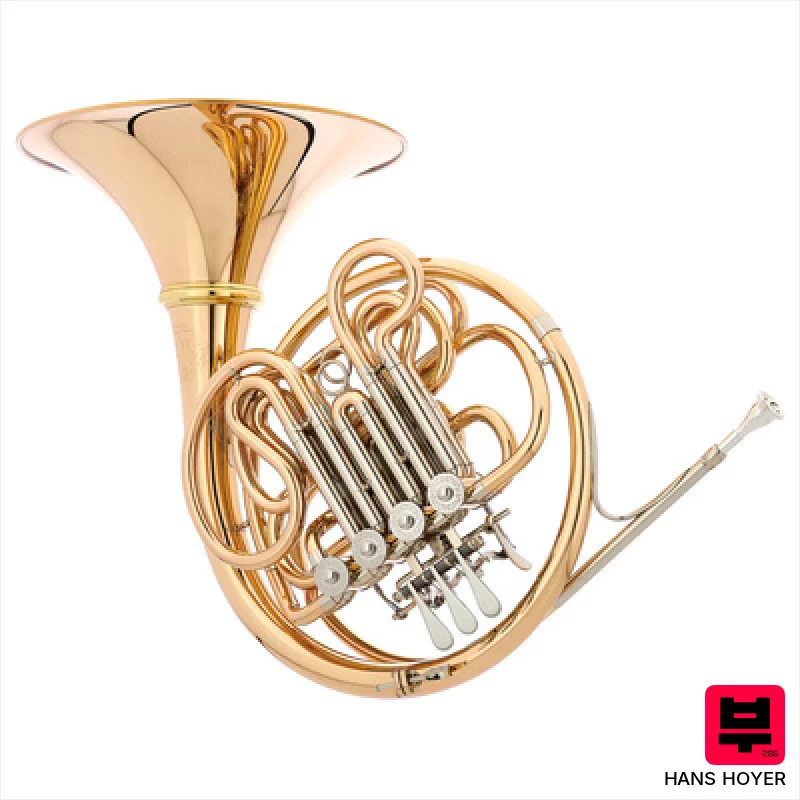
Hans Hoyer 801GA-L Double Horn
- • Gold brass coating delivers a warm, responsive, and focused tone.
- • 3B linkage system offers smooth, reliable valve action and improved intonation.
- • Nickel silver slides ensure quick response and consistent playability across registers.
- • Detachable bell allows for some customization and tonal adjustments.
- • The 11.80mm bore might feel slightly constricted for players accustomed to larger bores.
- • Gold brass instruments require diligent care to prevent tarnish and maintain finish.
- • Premium-priced, making it a significant investment for many players.

Hans Hoyer 6801G-L Double Horn
- • Gold brass leadpipe delivers exceptional warmth and projection.
- • Spiral spring mechanism ensures responsive, reliable valve action.
- • Solid, hand-hammered bell produces a focused, expansive tone.
- • 3B ball joints offer smooth, precise valve linkage for advanced players.
- • The all-gold brass construction contributes to a substantial weight.
- • The expansive sound might be overwhelming for beginner horn players.
- • The fixed finger hook may not suit every player's ergonomic preference.
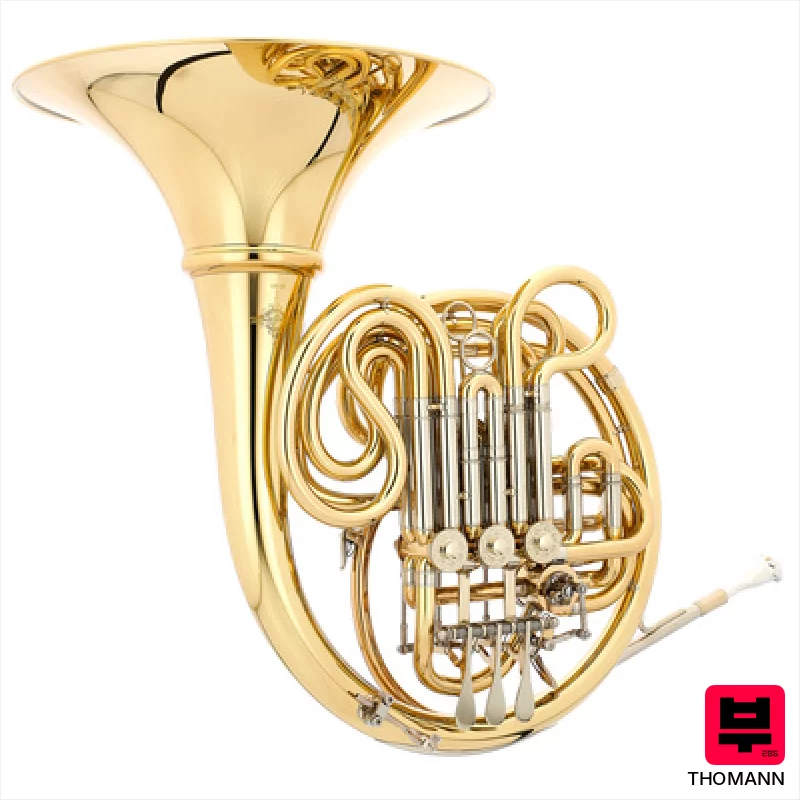
Thomann HR-301 F-/Bb Double Horn
- • Gold brass bell delivers a warm, resonant, and focused tone.
- • Minibal valve bearings offer exceptionally smooth and fast action.
- • Independent valve conversion provides versatility for different playing situations.
- • Adjustable finger hook enhances comfort and control during extended playing.
- • The gold brass bell might be too dark for brighter orchestral settings.
- • Entry-level horn players may find the independent valve conversion complex.
- • Lacquer finish, while attractive, is susceptible to wear with heavy use.
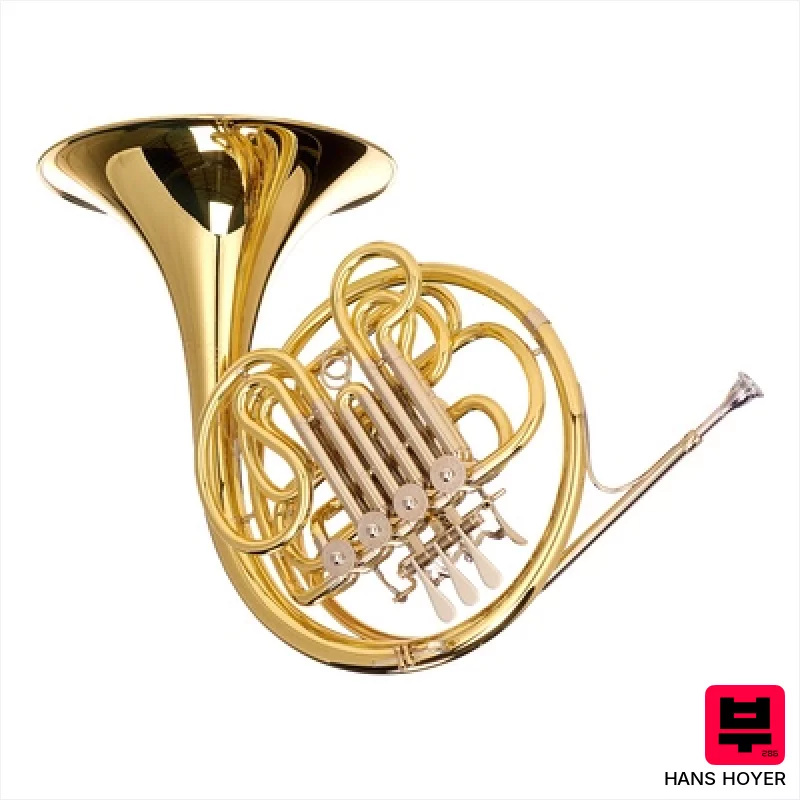
Hans Hoyer 801-L Double Horn
- • Gold brass leadpipe offers exceptional warmth and projection.
- • Conical rotary valves provide a responsive and focused airflow.
- • Nickel silver slides ensure smooth, reliable action and intonation.
- • High-quality lacquer finish protects the brass and enhances its tonal qualities.
- • The weight can be tiring for younger or less experienced players.
- • The long tuning slide might require frequent adjustment for optimal tuning.
- • The sound, while beautiful, leans toward a darker timbre; not ideal for all styles.

Hans Hoyer G10A-L1 Double Horn
- • Geyer style provides a focused, lyrical core tone.
- • Gold brass leadpipe offers exceptional responsiveness and warmth.
- • 3B ball bearing linkage delivers incredibly smooth, fast valve action.
- • Ergonomic design and adjustable levers enhance comfort and playing control.
- • The 11.90mm bore might feel a bit tight for players preferring a very open sound.
- • Premium-priced, representing a significant investment for many players.
- • Detachable bell, while versatile, introduces a potential leak point if not properly maintained.

Hans Hoyer 801-L Double Horn Set
- • Gold brass leadpipe offers exceptional tonal warmth and response
- • Conical rotary valves provide a smooth, even airflow for consistent intonation
- • Nickel silver slides ensure reliable action and minimize stickiness
- • Included Bernd Hoffmann practice adapter facilitates quieter, focused practice
- • High-end price point puts it out of reach for many students
- • Lacquer finish, while attractive, requires diligent care to prevent oxidation
- • The 801-L's response might feel slightly slower for players accustomed to more immediate horns

Dieter Otto 180 K-JNMS, F/Bb Double Horn
- • Hand-hammered bell delivers a rich, complex tonal color.
- • String linkage provides exceptionally smooth and responsive valve action.
- • 12mm bore offers a dark, focused core tone ideal for orchestral playing.
- • Independently sliding crooks allow for nuanced tuning flexibility.
- • Non-lacquered finish requires diligent maintenance to prevent tarnishing.
- • Premium-priced, representing a significant investment for most players.
- • Large bell (310mm) can feel unwieldy for smaller players.

Cornford Mod. 23 Double Horn Brass
- • Gold brass leadpipe offers exceptional response and warmth across the range.
- • Compact body design provides comfortable ergonomics for players of varying sizes.
- • 3D switching valve offers precise and reliable F/Bb and Bb/F transitions.
- • German shaft construction ensures exceptional durability and consistent intonation.
- • Premium-priced, representing a significant investment for most players.
- • Smaller bell size might slightly limit projection in very large performance spaces.
- • Nickel silver hand guard, while functional, might not appeal to all aesthetic preferences.
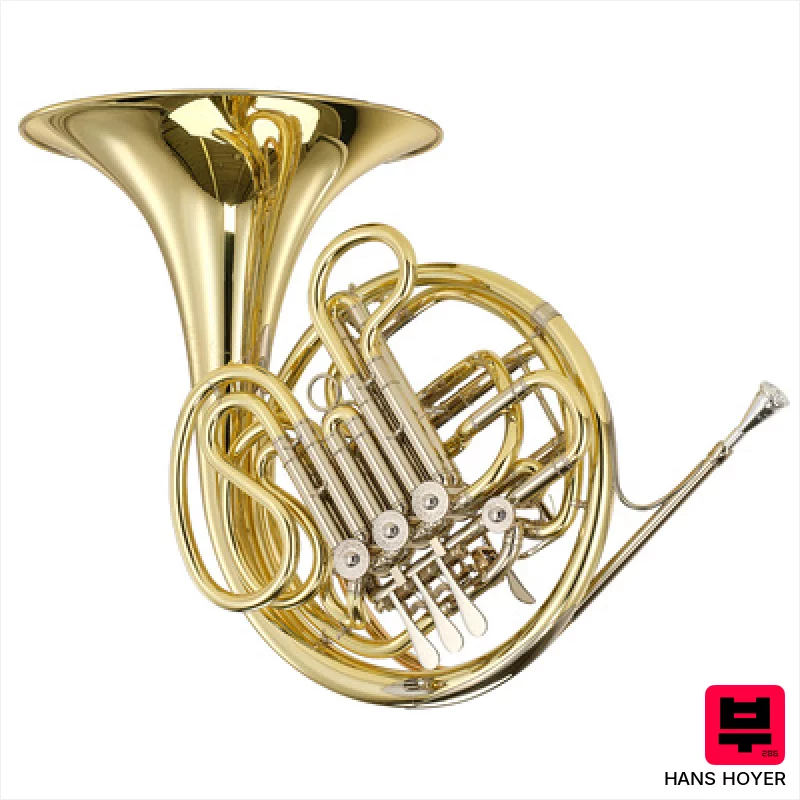
Hans Hoyer 6801-L Double Horn
- • Gold brass leadpipe provides exceptional warmth and projection.
- • 3B ball bearing linkage ensures incredibly smooth and responsive valve action.
- • Nickel silver valve casings contribute to a bright, focused tone.
- • German craftsmanship guarantees reliable build quality and long-term durability.
- • The heavier brass body might be tiring for younger or smaller players.
- • The fixed bell limits some flexibility in tonal shaping compared to detachable bells.
- • Premium-priced, representing a significant investment for many players.

Yamaha YHR-567 F/Bb Double Horn
- • Excellent intonation across both F and Bb horns
- • Yamaha’s renowned build quality ensures long-term reliability
- • 12mm bore provides a darker, richer tone than smaller bores
- • Fixed cup offers a focused, controlled sound ideal for orchestral playing
- • Can feel a little heavy for younger or smaller players
- • The clear lacquer finish shows fingerprints easily
- • Limited bell options restrict tonal customization

Cornford Mod. 28 Double Horn Brass
- • Gold brass lead pipe delivers exceptional warmth and projection.
- • 3D adjustment at the switch valve offers unprecedented flexibility.
- • Flanged slides and nickel silver bushes ensure smooth, reliable action.
- • The same direction of rotation simplifies valve bindings for quicker playing.
- • The premium-priced tag puts it out of reach for many students.
- • At roughly 650g, it’s noticeably heavier than some competitors.
- • The fixed bell size may limit tonal versatility for some advanced players.

Dieter Otto 201 MS, F/Bb Double Horn
- • Exceptional intonation across both F and Bb configurations.
- • The minibal ball joints offer remarkably smooth and responsive valve action.
- • Brass construction delivers a warm, resonant tone with excellent projection.
- • Lightweight design minimizes fatigue, crucial for extended playing sessions.
- • Premium-priced, placing it out of reach for many student or intermediate players.
- • Narrow bell scale may slightly limit projection in very large performance spaces.
- • Lacquer finish, while attractive, requires diligent maintenance to prevent tarnish.

Hans Hoyer 6801NSA-L Double Horn
- • Nickel silver construction ensures exceptional resonance and durability
- • 3B ball bearing linkage provides incredibly smooth and responsive valve action
- • Expansive sound characteristic suits orchestral and solo performance equally well
- • Detachable bell offers slight tuning flexibility and aesthetic customization
- • Nickel silver can be prone to minor surface scratches with heavy use
- • The 11.90 mm bore might feel a little tight for some players with larger embouchures
- • Premium-priced, representing a significant investment for many students or hobbyists
How to Choose the Best Double French Horns
Tonal Balance
Concert horns need a broad, even response. You don't want a horn that's overly bright and cutting, or one that's muddy in the low end. That 'fat midrange honk' is crucial for cutting through the mix without being harsh - especially when you're competing with brass, woodwinds, and percussion.
Valve Action
Sloppy valves are a nightmare. A smooth, consistent action is vital for fast passages and accurate articulation. Sticking valves can kill your chops and make complex passages feel like a wrestling match.
Bell Flare
The bell flare size significantly impacts projection and tone color. Wider flares generally offer more projection and a warmer tone, which is often desirable for concert work, but can be less focused. Smaller flares are more direct, but can lack the fullness you need.
Wrap Configuration (F or B♭/F)
The wrap affects the overall intonation and response. F horns are generally considered more responsive and easier to play, especially in the higher register, while B♭/F horns offer greater versatility and a different tonal character. It's a matter of preference and playing style.
Construction & Materials
Solid construction is key for longevity. Cheaper horns often use thinner brass and less precise manufacturing, leading to leaks and intonation problems. A well-built horn will hold its tuning and feel solid in your hands.
Buying Guide
Don't chase the prettiest lacquer. Pay attention to the valve action; it's far more important than aesthetics. Budget horns often cut corners on valve quality and horn alignment, leading to frustrating inconsistencies. Spending a bit more on a reputable brand with a good reputation for playability is almost always worthwhile - you'll save headaches later. Consider a used horn from a reputable dealer; you can often get a higher-quality instrument for less.
Our Methodology
We're not basing this on spec sheets or manufacturer claims. We've spent years playing horns in everything from pit orchestras to professional ensembles, and we've A/B'd countless horns under real-world conditions - recording sessions, rehearsals, and sweaty gigs. Our evaluations are based on what actually translates to a usable and reliable instrument in the hands of a working musician.

