
Best Digital Mixing Desks for Professional 2026
Alright, so you're a pro looking to ditch the analog console? Smart move - digital desks have come a long way. But not every digital mixer is built for the kind of gigs and sessions we run. We're talking about desks that can handle complex routing, recall scenes instantly, and still feel intuitive under pressure - not just a glorified effects unit. Let's cut through the hype and find a desk that'll actually work for you.
Last updated: September 29, 2026
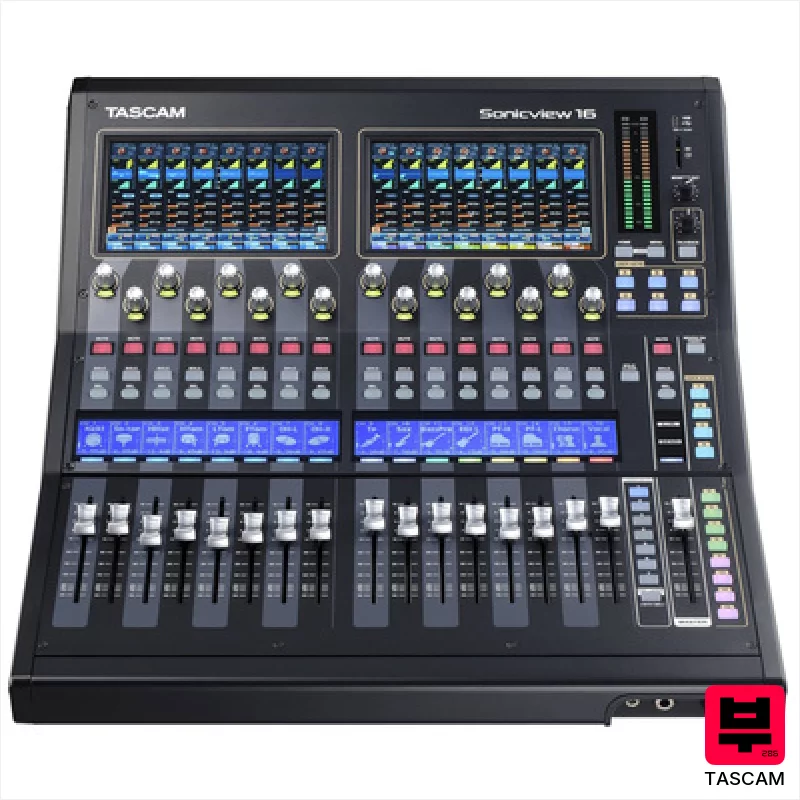
Tascam Sonicview 16
- • Tascam HDIA preamps deliver exceptionally clean and detailed mic signals.
- • 54-bit floating-point processing minimizes noise floor, offering incredible headroom.
- • Integrated Dante interface provides robust, scalable connectivity for complex setups.
- • VIEW interface streamlines workflow with intuitive touchscreen controls and multiple views.
- • Premium-priced, a significant investment for smaller studios or solo artists.
- • Weight and size make it less ideal for mobile or space-constrained environments.
- • The learning curve for the VIEW interface might be steep for users unfamiliar with similar systems.

Presonus StudioLive 64S
- • Exceptional preamp count (32 XMAX) offers clean, powerful gain.
- • AVB networking provides scalable, low-latency digital audio distribution.
- • Integrated SD card recorder streamlines basic tracking workflows.
- • Fat Channel Collection plugins add significant creative processing options.
- • The sheer size and weight (16.9 kg) make transport challenging.
- • Complex workflow demands significant learning curve and dedicated time.
- • FlexMix routing, while powerful, can be initially overwhelming.

Teenage Engineering TX-6 Black
- • Compact size belies powerful feature set; excellent for mobile recording.
- • Cirrus Logic converters deliver surprisingly clean, detailed audio reproduction.
- • Integrated synth & sequencer offer unique creative possibilities on the go.
- • Build quality feels robust for its size, with solid plastic construction.
- • 3.5mm jacks limit connection options and signal strength.
- • Limited channel strip EQ and compression depth compared to full-size mixers.
- • Battery life, while decent, requires planning for longer sessions.

Teenage Engineering TX-6
- • Pocket-sized design maximizes portability without sacrificing functionality.
- • Cirrus Logic converters deliver surprisingly clean audio for its size.
- • Built-in synth and sequencer unlock creative production possibilities on the go.
- • 3.5mm jacks are robust, exceeding expectations for this form factor.
- • Limited 3.5mm connections restrict flexibility for complex setups.
- • Small form factor makes precise adjustments of EQ/compressor tricky.
- • Battery life, while decent, could be extended for longer sessions.
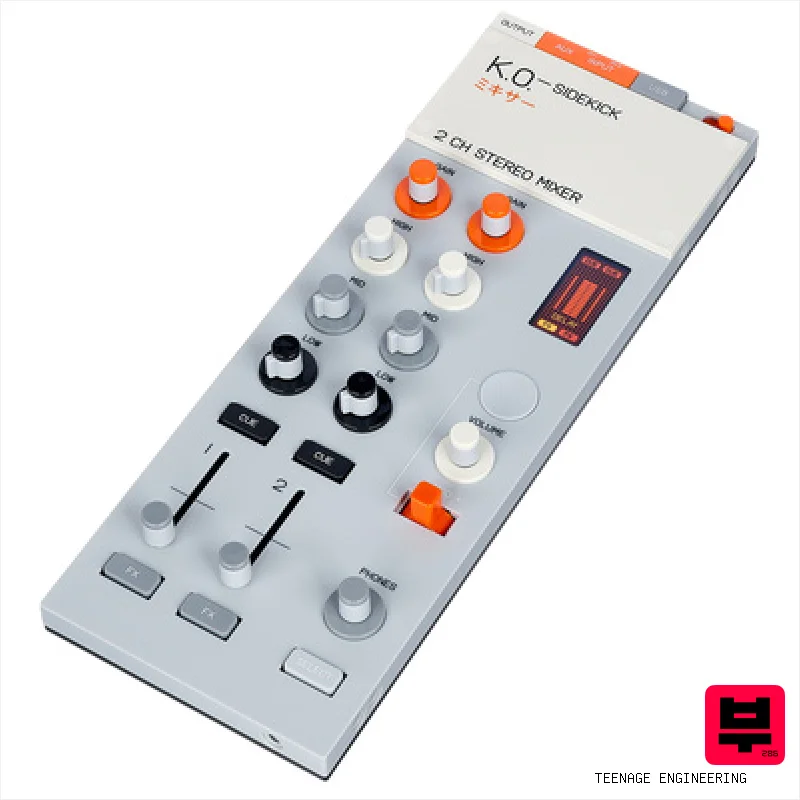
Teenage Engineering EP-136 K.O. Sidekick
- • Compact 2-channel mixer fits in any studio pocket
- • Built-in USB audio interface handles 8 inputs easily
- • Pressure-sensitive pad lets you tweak effects by touch
- • Tap FX sequencer keeps your rhythm tight automatically
- • Batteries and USB-C cable not included in the box
- • No motorized faders for smooth mixing control
- • Small form factor limits large rack setups
Digital Mixing Desks by the numbers
Measured across all 5 models in this category, so «wide», «short» or «expensive» mean something you can check.
How to Choose the Best Digital Mixing Desks
Routing Flexibility
Pros need to send signals anywhere, submixes galore, aux sends for monitors and effects - it's not just about A to B. A desk that locks you into a rigid workflow will slow you down and kill your creativity.
Recall & Scene Management
Live sound, tracking, and even mixing often require near-identical setups across multiple sessions. Instant recall is a massive time-saver and reduces the risk of human error - crucial when you're on a tight deadline.
Preamp Quality & Headroom
Those onboard preamps? They need to be transparent and clean, adding no unwanted character. Headroom is king - you want to push things without that harsh digital breakup or noisy compression kicking in prematurely.
Workflow & Playability
A complex feature set is useless if it's buried in menus. The layout, motorized faders, and overall feel should be intuitive and let you focus on the music, not fighting the machine.
I/O & Expansion
You never know when you'll need another mic input or a direct output. Consider future-proofing - a desk with expansion options or a flexible I/O configuration will serve you better in the long run.
Buying Guide
Don't fall for the 'more features' trap. A desk overloaded with options you'll never use is just a distraction. Spend your money on a solid build, clean preamps, and a workflow that clicks with you. Many budget digital desks cut corners on preamp quality and build - you'll hear it in the noise floor and feel it in the flimsy faders. Paying more for a unit with recallable settings is almost always worth it.
How This List Is Built
We don't play these instruments — we're a catalog, not a review desk, and we'd rather say so than pretend otherwise. This page covers 5 digital mixing desks from the Thomann catalogue, which is the largest single source of specification data in this category: 5 in detail, the rest listed with their specifications.
Position is computed, not curated. We parse the manufacturer's own description into actual values — nut width, scale, fret count, fingerboard radius, size, alloy — and rank on them: how many specifications a model has published, how many of them are measurable numbers, and how precisely it meets this page's criterion. A product image adds a little. Price is not a ranking signal: it tells you nothing about whether a neck fits your hand. The same inputs always produce the same order, so nothing here is shuffled to look fresh.
What this list is good for: narrowing a category down to a shortlist by spec and budget. What it isn't: a substitute for hearing an instrument. Before you buy, read hands-on reviews and, where you can, play it. Full methodology.

