AudioFu Chart · October 2026
Best Digital Grand Pianos Under $5,000 2026
The top pick is Thomann DP-275 GP BP ($2,235). Kawai DG 30 leads the high end. Ranked by the AudioFu Index from 2 models across 2 brands, prices checked every night.
Last updated: October 27, 2026
Top 2
Full detail for the 2 highest AudioFu Index scores. Every other model is listed below.
-
- Weight101 kg
- Key actionWeighted keys
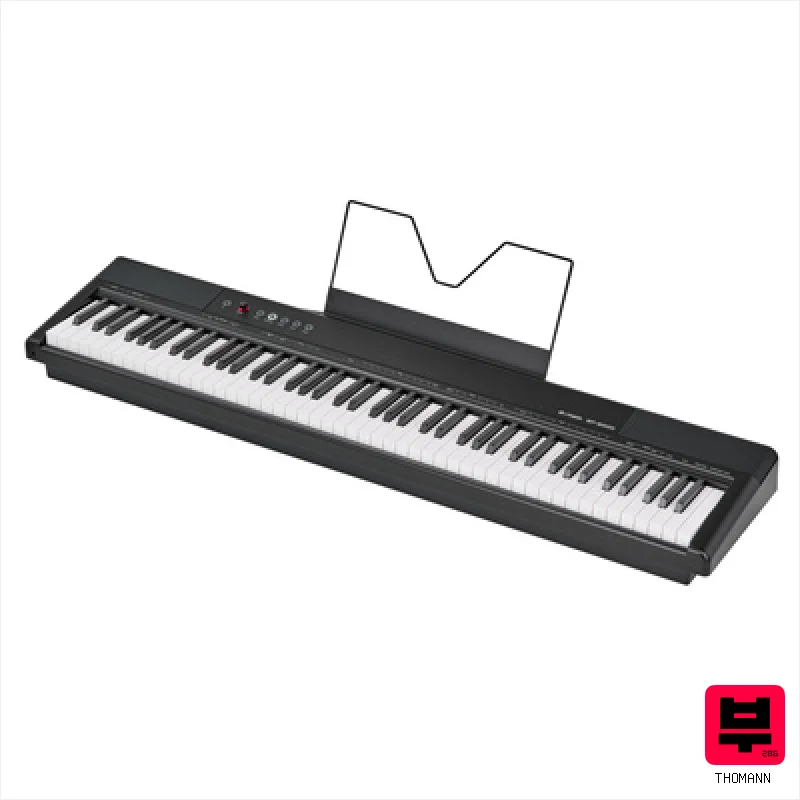
The Thomann DP-275 GP BP offers a surprisingly complete package for the price. It's a good option for beginners or those needing a digital grand for home practice or smaller performance spaces where portability isn't a major concern. While the action and sounds won't fool a concert pianist, it delivers a lot of value for the money.
Pros
- Solid, polished black finish elevates the aesthetic appeal.
- Comprehensive sound library offers diverse musical possibilities.
- The 256-voice polyphony handles complex arrangements smoothly.
Cons
- The sheer size and weight (101 kg) demands dedicated space and movers.
- Thomann's in-house sounds, while plentiful, lack the nuance of premium brands.
58AudioFu
IndexStableno change since Aug 17Aug 17$2,235 now$2,235€1,998 at Thomann · in stockCheck price ↗ -
- Weight80 kg
- Keys88 keys
- Key actionWeighted keys
The Kawai DG 30 is a serious contender if you're after a compact digital grand with a premium feel. The SK-EX samples are truly excellent, and the action is surprisingly responsive for a digital instrument. It’s perfect for home studios, smaller teaching spaces, or anyone who wants the look and feel of a grand without the acoustic limitations.
Pros
- Exceptional SK-EX sampling delivers authentic grand piano tone
- Responsive Hammer III action provides realistic key weighting and feel
- Grand Feel Pedal System offers nuanced damper, soft, and sostenuto control
Cons
- Limited portability due to its grand piano form factor and weight
- Loudspeaker power might be insufficient for larger performance spaces
54AudioFu
IndexStableno change since Aug 17Aug 17$4,473 now$4,473€3,998 at Thomann · in stockCheck price ↗
Digital Grand Pianos by the numbers
Measured across all 6 models we track, not a sample.
median of 6 models · 80 kg–101 kg
most common · 6 models
How to choose the best digital grand pianos
Action
This is the make-or-break. Weighted hammers are a must, but the responsiveness and dynamic range are what separate a decent piano from one you actually enjoy playing. Look for adjustable resistance if you can.
Sound Engine & Sample Library
A good piano isn't just about a 'bright' or 'warm' tone; it's about the nuances - the subtle hammer noise, the sympathetic resonance, the decay of the sustain. Cheap engines can sound thin and lifeless, lacking that crucial depth.
Polyphony
128-note polyphony is pretty much the baseline these days. Anything less and you'll hear notes cutting off when you're playing complex chords or layering sounds - a real frustration in a recording situation.
Connectivity & Features
MIDI, USB, multiple outputs - these are your lifelines to recording software and live rigs. Consider built-in speakers if portability is a factor, but don't expect miracles from them.
Build Quality & Aesthetics
Let's be honest, a piano is a visual instrument. Sturdy construction and a decent finish contribute to the overall feel and longevity. Cheap plastic can feel flimsy and detract from the experience.
Buying guide
So, you're looking for a digital grand without breaking the bank? It's a sweet spot-you want that big piano vibe for recording, practice, and maybe even some low-key gigs, but $5000 isn't unlimited. Forget the flagship models; we're hunting for the best bang-for-your-buck, instruments that deliver a usable sound and feel without leaving you eating ramen for a month. Let's find you a solid digital grand that actually inspires you to play.
At this price point, you're making trade-offs. The action will likely not be as refined as a $10,000 instrument, and the speaker quality might leave something to be desired. Prioritize the action above all else - a bad action will kill your technique faster than a mediocre sound engine.
Don't be swayed by a million sounds; a good piano with a few quality voices is better than a mediocre piano with a ton of unusable ones.
How the AudioFu Index works
Five measured signals and nothing else — no stars from strangers, no “tested by experts” we didn’t do. The weights are fixed and public. We don’t play these instruments; we measure the market around them.
This chart covers 6 digital grand pianos from the Thomann catalogue. Before you buy, read hands-on reviews and, where you can, play it. Full methodology.
AudioFu earns a commission when you buy through our Thomann links. It never changes the order — the index does.
- Demand40%
How many of this exact model are for sale on Reverb right now — what musicians actually buy and resell.
- Lineup20%
How many finishes Thomann stocks — makers expand the models that sell.
- Price15%
Where the price has moved since we started tracking in August.
- Specs15%
How completely the maker documents it.
- Maker10%
How deep the brand’s range is in this category.
Questions
Can I realistically expect an action that feels like an acoustic grand for under $5000?
No, absolutely not. The physics are different. However, some digital actions are much better than others, and you can find options that are surprisingly responsive and nuanced. Just manage your expectations.
What's the deal with 'modeling' vs. 'sampled' piano sounds?
Sampled pianos use recordings of real instruments. Modeling engines simulate the physics of a piano. Sampled generally sounds more realistic, but modeling can offer more flexibility and sometimes a more 'organic' feel. Both have their place.
I need something portable. Should I look for a stage piano instead?
A digital grand is inherently less portable than a stage piano. However, some smaller digital grands are manageable. Consider the weight and size carefully if portability is a major concern.
Are the built-in speakers any good?
Generally, no. They're adequate for practice, but for recording or gigging, you'll want to use external monitors or headphones. The built-in speakers are often a compromise to keep the overall size and weight down.
What about long-term reliability? Are cheaper digital pianos more likely to break down?
Component quality tends to be lower in budget instruments, so yes, they can be less reliable. Buy from a reputable brand with decent warranty support and handle it with care.