
Best Crotales for Professional 2026
Alright, so you're stepping up your crotales game. Forget the toy store versions - those things are glorified chimes. We're talking about instruments that demand precision, offer a nuanced palette of tones, and can actually cut through a dense orchestral mix or add a shimmering highlight to a jazz ensemble. This isn't about making noise; it's about crafting moments with a uniquely beautiful and delicate instrument.
Last updated: April 11, 2026
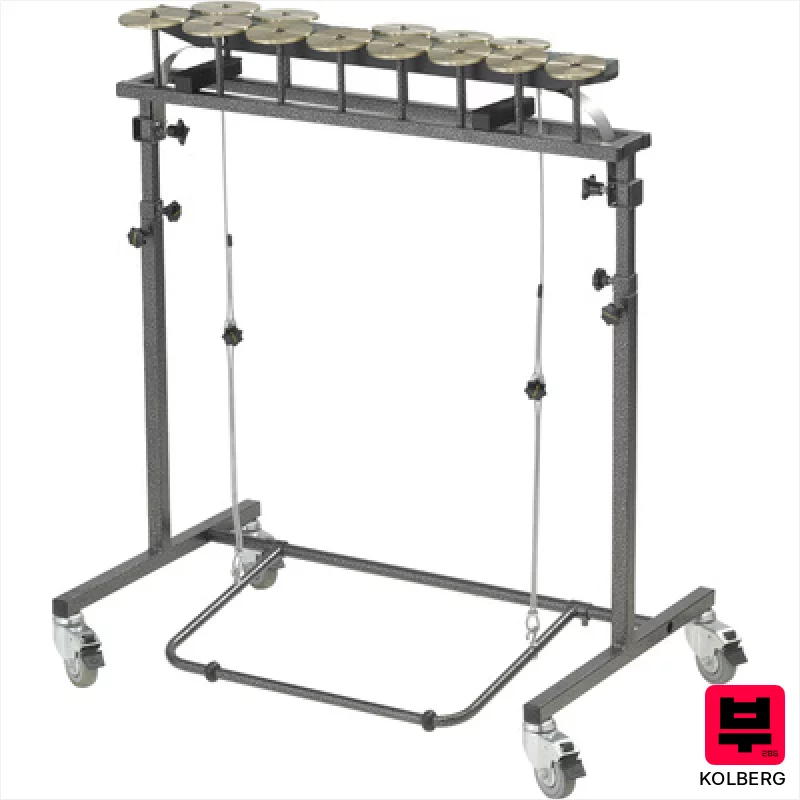
Kolberg 2375CRD Crotales c4-c5
- • Kolberg's bronze alloy delivers exceptional clarity and sustain, typical of their high-end crotales.
- • The included 2370SD stand offers precise height adjustment for optimal playing ergonomics and resonance.
- • Heavy mallets provide a full, rich tone suitable for orchestral and solo performance demands.
- • The protective transport cover ensures instrument longevity and ease of handling for touring musicians.
- • The premium-priced nature makes it a significant investment for smaller ensembles or students.
- • The limited range (C4-C5) restricts versatility compared to wider-range crotales sets.
- • Bronze crotales are sensitive to environmental changes; humidity can impact tuning slightly.
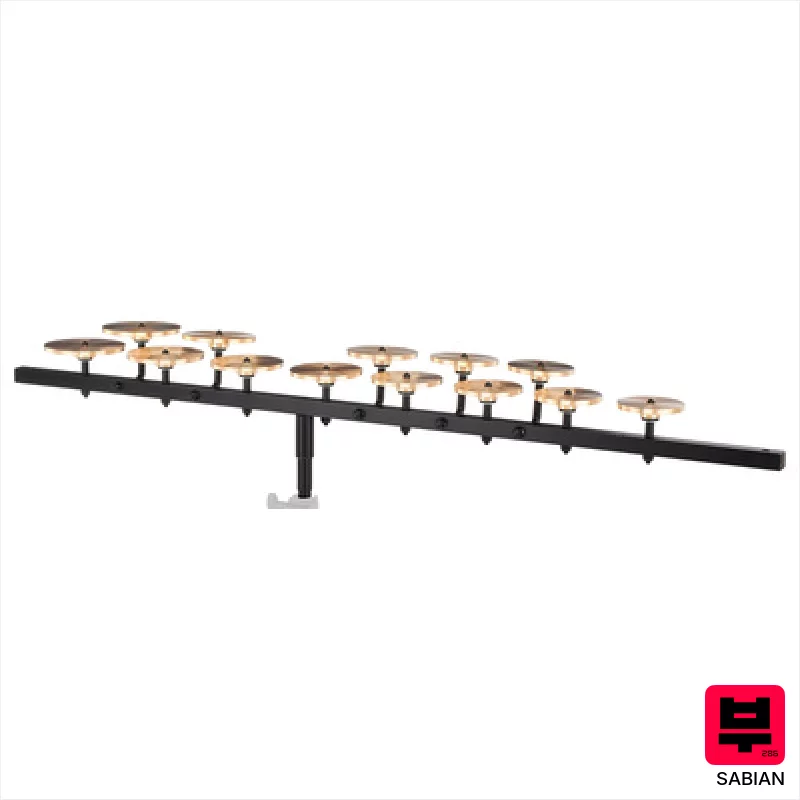
Sabian Crotales Set High Octave 443Hz
- • Exceptional clarity and sustain – truly remarkable bell-like tones
- • Sabian’s alloy provides consistent pitch and vibrant resonance
- • 443Hz tuning is ideal for modern orchestral and film scoring
- • Robust mounting rail allows flexible placement on standard stands
- • Crotales are inherently delicate – require careful handling and transport
- • Limited dynamic range compared to other percussion instruments
- • The high octave range restricts versatility for some musical styles
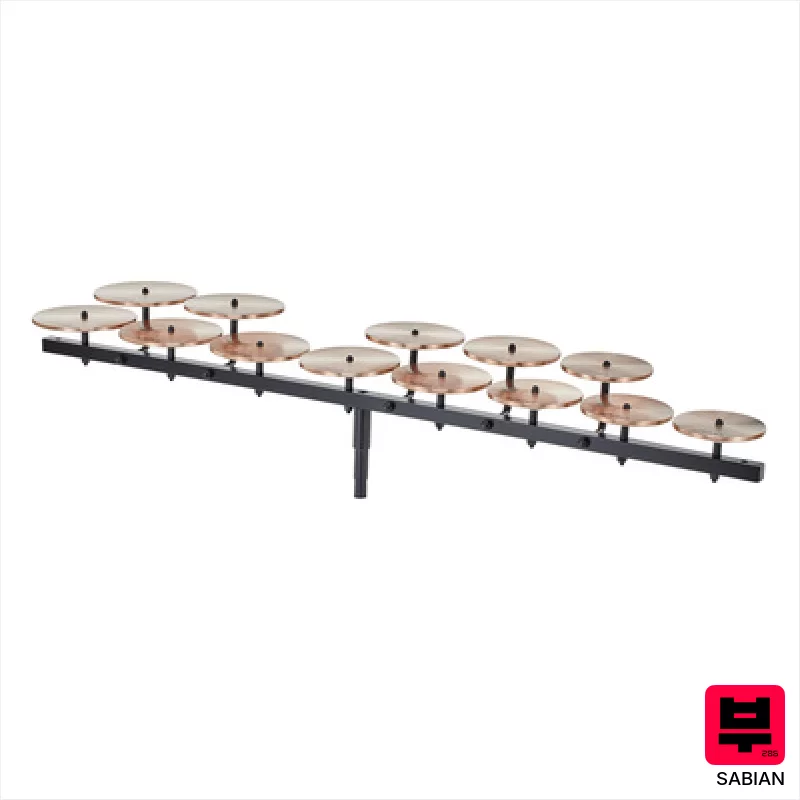
Sabian Crotales Set Low Octave 443
- • Exceptional clarity and sustain across the low octave range
- • Sabian’s bronze alloy delivers a warm, resonant tone
- • Holding rail provides stable, adaptable mounting options
- • 13 discs offer a broader tonal palette than smaller sets
- • The low octave range limits versatility for higher-register passages
- • Premium-priced, representing a significant investment for many percussionists
- • Requires careful mallet selection to avoid harsh overtones
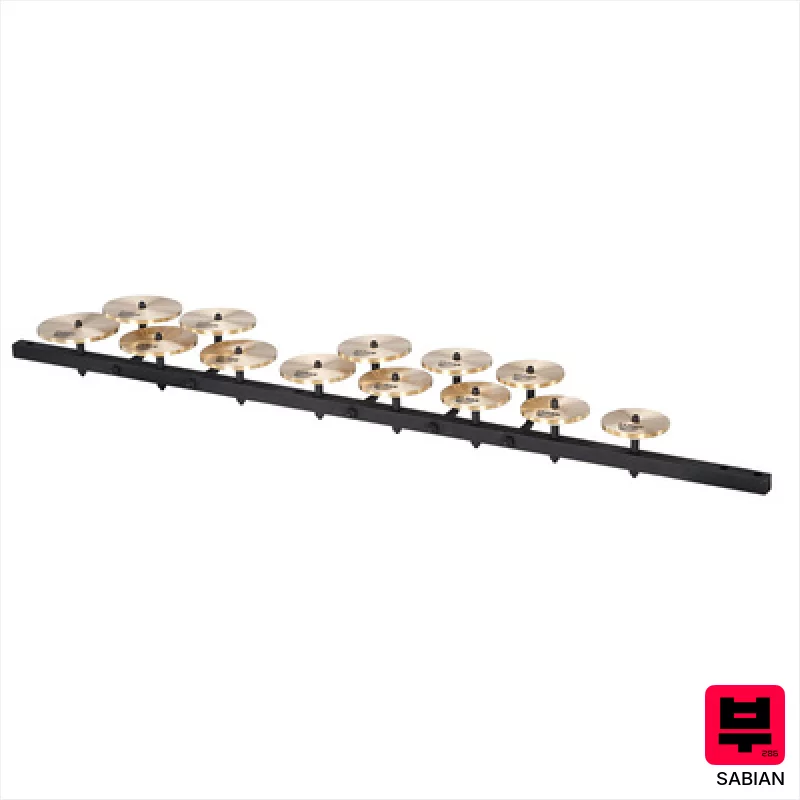
Sabian Crotales Set (13) High Octave
- • Exceptional clarity and sustain, characteristic of Sabian's alloy blend
- • Precise tuning across the 13-note range, ideal for complex passages
- • Robust holding rail provides stable, professional mounting options
- • Excellent intonation at 442 Hz, crucial for orchestral settings
- • Premium-priced investment, not suitable for casual or student use
- • Limited dynamic range compared to other percussion instruments
- • Requires careful handling to prevent scratches and maintain pristine tone

Sabian Crotales Set (13) Low Octave
- • Exceptional clarity and sustain across the low octave range.
- • Sabian’s bronze alloy delivers a warm, resonant tone.
- • Durable holding rail facilitates easy and secure mounting.
- • Precision-tuned slices ensure accurate intonation and consistent voicing.
- • The extensive range demands considerable player skill and technique.
- • Premium-priced, making it a significant investment for smaller ensembles.
- • Limited dynamic range compared to other orchestral percussion instruments.
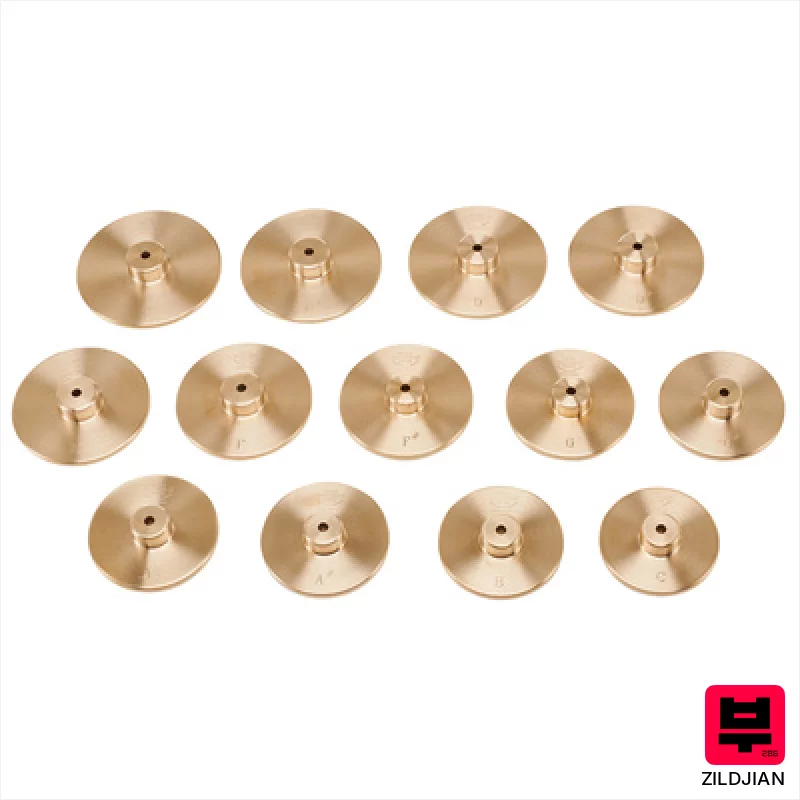
Zildjian Crotales High Oktave A=440
- • Exceptional clarity and shimmer, characteristic of Zildjian’s bronze alloy.
- • Carefully tuned to A=440, ensuring accurate orchestral intonation.
- • Robust construction with thick-gauge bronze for durability and resonance.
- • Traditional design offers a pure, unaltered crotales tone – no gimmicks.
- • Premium-priced, representing a significant investment for most percussionists.
- • Limited tonal range compared to other orchestral percussion instruments.
- • Requires highly skilled mallets and precise technique to avoid unwanted overtones.
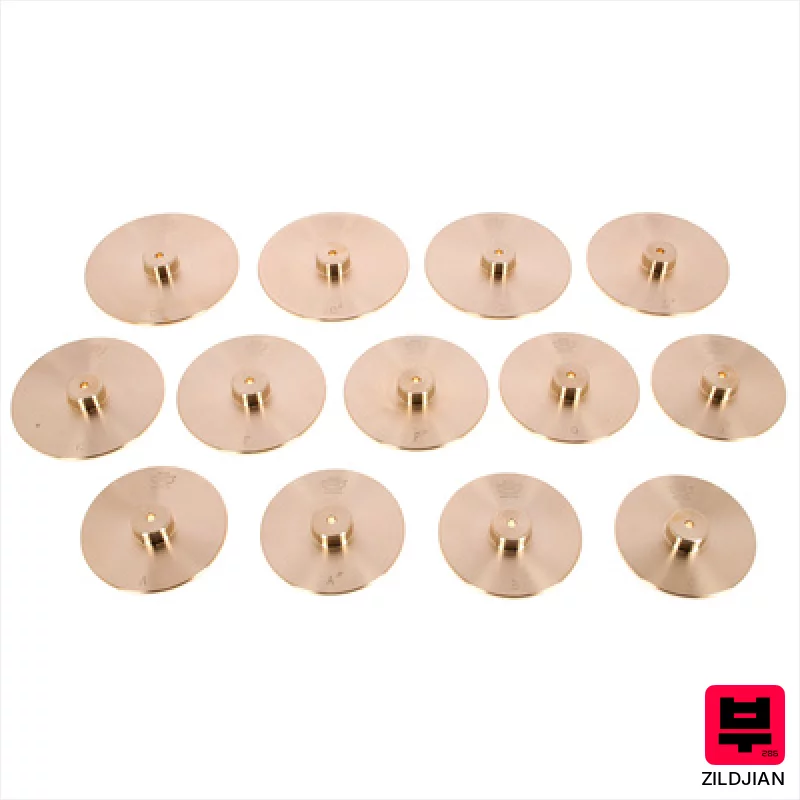
Zildjian Crotales Low Oktave A=440
- • Exceptional clarity and sustain, characteristic of Zildjian’s bronze alloys
- • Precise, consistent intonation across the 13-note range
- • Traditional finish enhances the instrument's aesthetic appeal and resonance
- • Robust construction ensures durability for frequent orchestral use
- • High-end price point makes it a significant investment for many percussionists
- • Requires careful malleting technique to avoid unwanted overtones and damage
- • Lack of included mounting hardware necessitates a separate purchase
Crotales by the numbers
Measured across all 7 models in this category, so «wide», «short» or «expensive» mean something you can check.
How to Choose the Best Crotales
Tuning Accuracy
This isn't just about being 'in tune'; it's about consistent intonation across the entire series. A few cents out on one note can throw off a whole passage, especially when layering multiple crotales. Professional players need absolute reliability here.
Sustain & Decay
Crotales aren't known for their massive sustain, but the quality of that sustain matters. We're looking for a clean, ringing decay without unwanted overtones or a metallic 'clink.' A shorter, cleaner sustain often translates to better articulation in complex passages.
Action & Playability
The action - the distance from the striking point to the surface - needs to be consistent and comfortable. A sloppy action leads to uneven strikes and a muddy sound. It's a feel thing; some players prefer a lower action for quicker response, others a slightly higher one for more controlled damping.
Harmonic Complexity
Cheap crotales sound thin and brittle. The best sets have a richer harmonic spectrum - a subtle warmth alongside the brightness. That's what gives them character and allows them to blend well with other instruments without sounding harsh or ice-picky.
Material & Construction
Bronze is the standard for a reason - it offers a beautiful, complex tone. However, the alloy composition (and the casting process) significantly impacts the sound. Thicker, heavier crotales generally offer more sustain and projection, but they're also harder to control. It's a trade-off.
Buying Guide
Don't be fooled by flashy finishes or inflated marketing claims. The most expensive crotales aren't always the best for you. Pay close attention to the tuning accuracy - a chromatic set is a must for versatility. Listen carefully for unwanted overtones; a slightly 'dirty' tone might sound interesting in one context, but will be unusable in others. Solid bronze construction is non-negotiable; anything else is a compromise you probably don't want to make at a professional level.
How This List Is Built
We don't play these instruments — we're a catalog, not a review desk, and we'd rather say so than pretend otherwise. This page covers 7 crotales from the Thomann catalogue, which is the largest single source of specification data in this category: 7 in detail, the rest listed with their specifications.
Position is computed, not curated. We parse the manufacturer's own description into actual values — nut width, scale, fret count, fingerboard radius, size, alloy — and rank on them: how many specifications a model has published, how many of them are measurable numbers, and how precisely it meets this page's criterion. A product image adds a little. Price is not a ranking signal: it tells you nothing about whether a neck fits your hand. The same inputs always produce the same order, so nothing here is shuffled to look fresh.
What this list is good for: narrowing a category down to a shortlist by spec and budget. What it isn't: a substitute for hearing an instrument. Before you buy, read hands-on reviews and, where you can, play it. Full methodology.

