
Best Ortega Bass Ukuleles 2026
Okay, so you're looking at bass ukuleles, and you've landed on Ortega. Smart move. They're not your average Hawaiian souvenir; Ortega's got a serious pedigree, blending German craftsmanship with a love for acoustic instruments. If you want something that cuts through a band mix without sounding thin, or lays down a solid foundation for a solo performance, an Ortega bass uke is definitely worth a look, but let's dig into what makes them tick.
Last updated: April 11, 2026
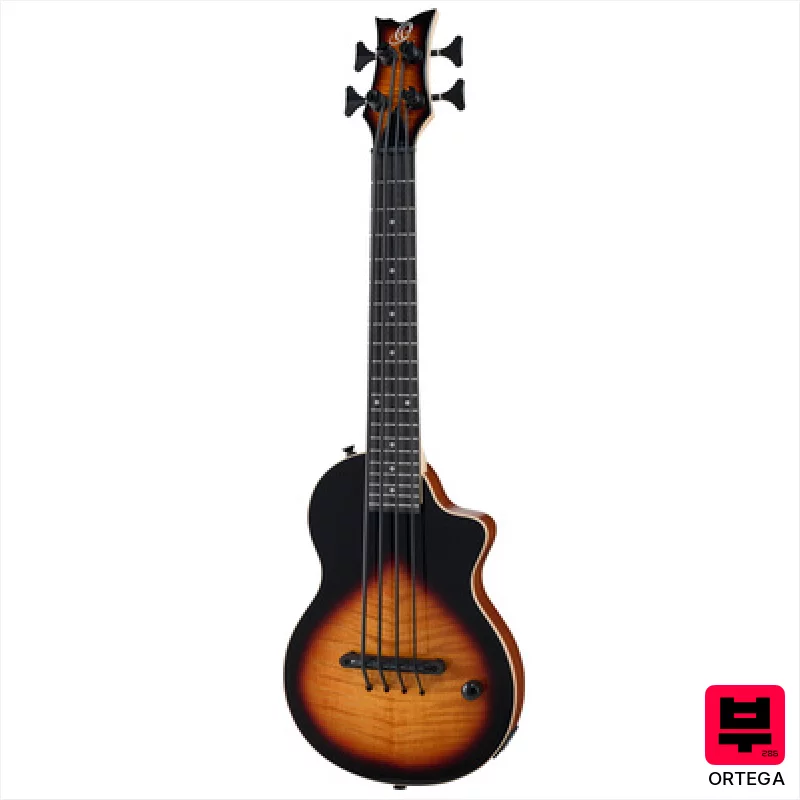
Ortega Neo Series Solid U-Bass TSB
- • Okoume body provides warmth and resonance; flamed maple top adds sparkle.
- • MagusExpress pickup system delivers surprisingly powerful and articulate tone.
- • Purpleheart fingerboard offers a smooth, fast playing experience.
- • Compact scale (512mm) is comfortable, offering easy access to all frets.
- • Okoume can be a bit soft, requiring careful handling to avoid dings.
- • Solid body design makes it heavier than many smaller u-basses.
- • Limited tonal flexibility compared to a full-size bass; lacks true low-end extension.

Ortega Neo Series Solid U-Bass TGB
- • Okoume body provides a warm, resonant foundation.
- • Flamed maple top adds brightness and visual appeal.
- • MagusExpress pickup system delivers a surprisingly powerful, defined tone.
- • Purpleheart fingerboard offers a smooth, fast playing experience.
- • Okoume can be prone to dents if not handled carefully.
- • 512mm scale feels shorter, potentially affecting experienced bassists’ technique.
- • Transparent Grey Burst finish shows fingerprints easily.

Ortega RUNAB-UB
- • Solid bamboo construction delivers a uniquely warm, mellow, and resonant low-end tone.
- • Ortega MagusUkePro pickup provides a surprisingly articulate and usable amplified signal.
- • The 45mm nut width is comfortable for bass players transitioning from standard bass guitars.
- • Bamboo neck offers excellent stability and a surprisingly smooth playing feel, comparable to rosewood.
- • Bamboo's inherent fragility requires careful handling and may not suit aggressive playing.
- • The shorter scale length (530mm) limits low-end extension compared to a full-size bass.
- • Natural matte finish, while aesthetically pleasing, can be more susceptible to scratches.
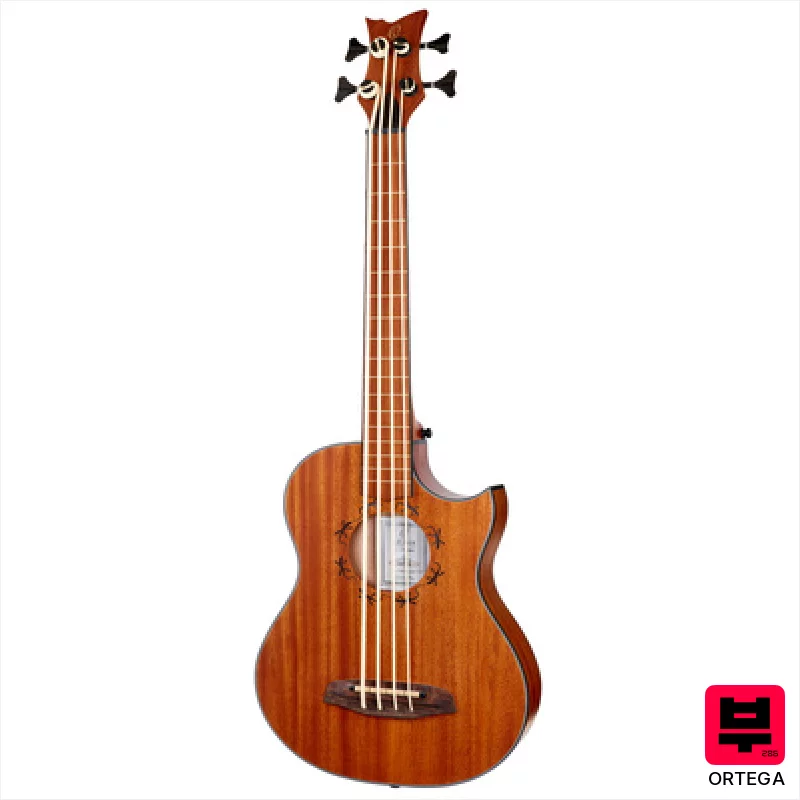
Ortega Lizzy Pro Bass Ukulele
- • Solid mahogany construction delivers a warm, resonant, and surprisingly full tone.
- • The Ortega MagusUkebass pickup provides a usable, amplified signal with decent clarity.
- • Longer 625mm scale improves string tension, offering more defined low-end response.
- • Rosewood fretboard adds a touch of refinement and contributes to a comfortable playing experience.
- • Mahogany can be prone to feedback at higher volumes without careful EQing.
- • The solid construction makes it noticeably heavier than many other ukulele models.
- • Cutaway access to higher frets is present, but somewhat limited due to ukulele scale.
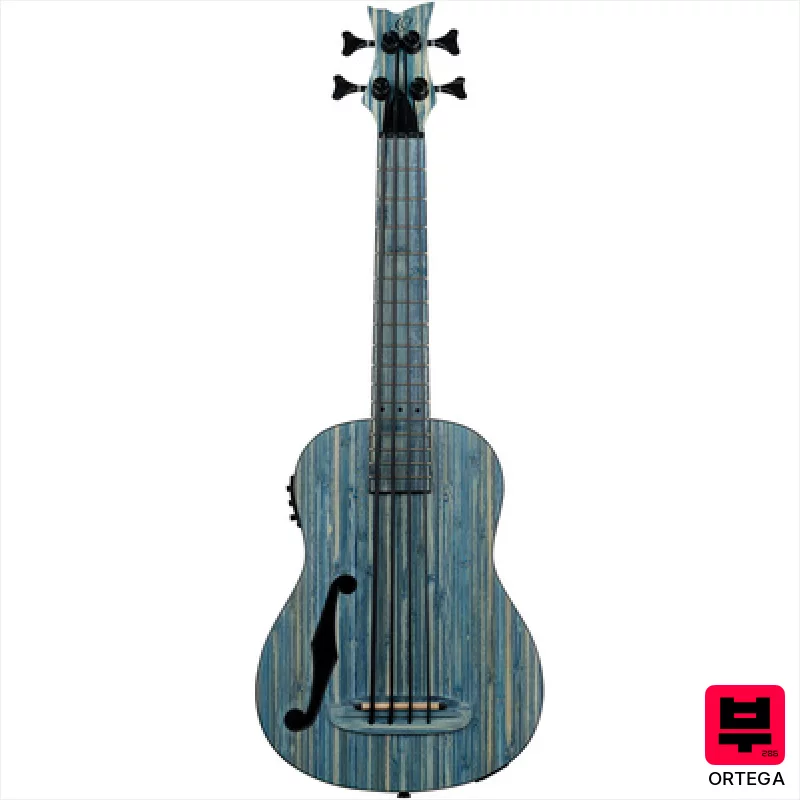
Ortega RUSWB-UB
- • Solid bamboo construction delivers a surprisingly warm, resonant, and unique tone.
- • Ortega MagusUkePro pickup provides a clear, amplified signal suitable for stage or recording.
- • The 45mm nut width and 530mm scale offer comfortable bass playing ergonomics.
- • Bamboo neck contributes to a stable, responsive feel and pleasant upper-midrange clarity.
- • Bamboo can be more susceptible to humidity changes than traditional hardwoods.
- • The stonewashed finish might not appeal to players preferring a glossier look.
- • Limited tonal versatility compared to a full-sized bass – best for specific genres.
How to Choose the Best Bass Ukuleles
Heritage & Construction
Ortega's roots are in German instrument making, which means a focus on solid wood construction - often mahogany or sapele - rather than laminate. This translates to a richer, more resonant tone with better sustain than many cheaper alternatives, though it also means they can be a bit more sensitive to humidity changes.
Pickup Voicing & Electronics
Ortega's pickups are generally well-voiced for a bass ukulele, avoiding that brittle, ice-picky high-end you sometimes hear. They aim for a warm, woody tone that can still cut through, but it's not always a 'plug-and-play' situation; you might still want to experiment with EQ to dial in exactly what you're after. Some models feature preamps with onboard EQ, which is a huge plus for live performance.
Neck Profile & Playability
Ortega necks are usually comfortable, often with a slightly wider feel than some other bass ukes. The action is generally well-set from the factory, but a quick setup can really optimize it for your playing style - lower action for easier chording, slightly higher for more defined articulation when fingerpicking.
Aesthetic & Build Quality
Let's be honest, Ortega instruments have a distinctive, almost vintage vibe. The attention to detail in the finish and hardware is solid, though you might find minor cosmetic imperfections on some models - it's part of the charm. The headstock design, with its distinctive shape, is also instantly recognizable.
Low-End Response & Projection
The real test of a bass uke is how well it delivers that low-end thump. Ortega's generally excel here, offering a surprising amount of fundamental frequency without sounding muddy. They project well acoustically, which is crucial for unplugged gigs or recording acoustic sets.
Buying Guide
Don't be swayed by flashy features - the core tone is what matters. Entry-level Ortega models (like the RU20) are a great starting point, but if you're serious about recording or gigging, step up to a solid-wood model with a preamp. Watch out for humidity-related issues with solid wood instruments - a case with a hygrometer is a worthwhile investment. And remember, a good setup can transform even a decent bass uke into a seriously playable instrument.
How This List Is Built
We don't play these instruments — we're a catalog, not a review desk, and we'd rather say so than pretend otherwise. This page ranks 5 bass ukuleles from the Thomann catalogue, which is the largest single source of specification data in this category.
Position is computed, not curated. Four signals, in order of weight: how completely the manufacturer documents the instrument (number of published specifications), where it sits in the price range, how specific the model designation is — which filters out generic accessories — and whether a product image exists. The same inputs always produce the same order, so nothing here is shuffled to look fresh.
What this list is good for: narrowing a category down to a shortlist by spec and budget. What it isn't: a substitute for hearing an instrument. Before you buy, read hands-on reviews and, where you can, play it. Full methodology.

