Best Recording King Banjos 2026

Premium Recording King banjos - legendary tone and craftsmanship

Last updated: September 7, 2026

The best banjos in 2026 are Recording King Songster Resonator Banjo (top pick), Recording King Dirty 30s 3S Open Back Banjo for tighter budgets, and Recording King RK-R36-BR for pros — selected from 5 options, priced $347–$1,742, ranked by brand, price and popularity.
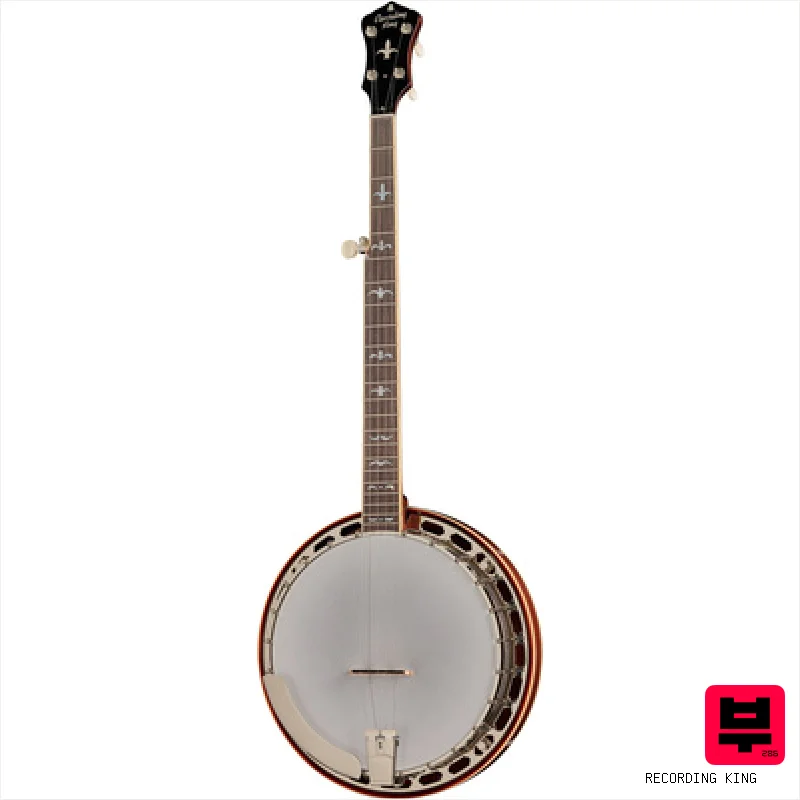
Recording King Songster Resonator Banjo - Professional Music Instrument Photo
#1

Recording King Songster Resonator Banjo

Scale 667 mm (26.26") Frets 22 frets Strings 5-string
Traditional Music Folk Celtic
Key Feature:
This banjo has a nice natural look with ivory binding and a sturdy mahogany body. It plays with a classic resonator sound thanks to the brass hoop and rolled tone ring. It is perfect for bluegrass players who want traditional tone without needing electronics.
PROS
  • • Solid mahogany neck and resonator body provide sturdy support
  • • Revebond fingerboard with hearts and flowers inlays adds visual appeal
  • • Ivory binding and nickel-plated hardware ensure durable, polished finish
  • • Rolled tone ring with brass hoop delivers traditional resonator resonance
CONS
  • • Heavy natural finish may be difficult for smaller players
  • • No electronic pickups or preamp for modern amplification needs
  • • Standard tuning only lacks chromatic frets for extended musicality
4.7/5 AudioFu Score
Specs:
6/10
Detail:
9/10
Value:
8/10
Art. 622910
$580
Recording King Dirty 30s 3S Open Back Banjo - Professional Music Instrument Photo
#2

Recording King Dirty 30s 3S Open Back Banjo

Scale 667 mm (26.26") Frets 22 frets Strings 5-string
Country Bluegrass Americana
Key Feature:
This is a solid workhorse banjo for bluegrass players who like natural looks. The maple neck and extra frets make it easy to play complex chords. It is budget-friendly and perfect for practice or jam sessions.
PROS
  • • Multi-ply rim adds durability for heavy play
  • • Natural finish shows wood grain clearly
  • • Maple neck provides sturdy feel
  • • 22 frets offer extended range access
CONS
  • • Open back design lacks volume
  • • No adjustable action system listed
  • • Lacks built-in electronics
4.6/5 AudioFu Score
Specs:
6/10
Detail:
6/10
Value:
9/10
Art. 622901
$348
Recording King RK-R36-BR - Professional Music Instrument Photo
#3

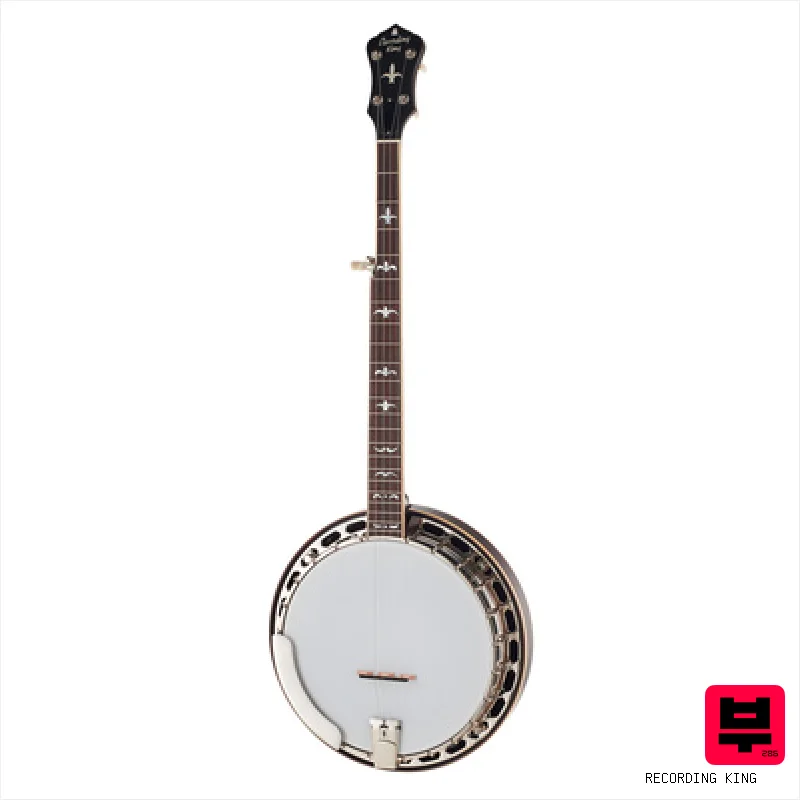
Recording King RK-R36-BR

Scale 666.8 mm (26.25") Frets 22 frets Strings 5-string
Bluegrass Traditional Music Country
Key Feature:
This banjo feels like a workhorse built for live gigs. The mahogany neck and strong rim give it a solid sound that cuts through a band. It looks great with those pearl inlays, but it lacks electronics for recording or stage lighting. Best for players who want a traditional, robust instrument without extra tech.
PROS
  • • Heavy-duty 24-clamp tension hoop for rock stability
  • • Strong mahogany neck provides solid sustain and tone
  • • Seagull Pearl inlays add classic bluegrass visual flair
  • • Planetary tuners ensure reliable pitch during playing
CONS
  • • Heavy one-piece mahogany construction adds significant mass
  • • Lacks electronic pickups for studio or stage use
  • • No adjustable truss rod mentioned in specifications
4.7/5 AudioFu Score
Specs:
6/10
Detail:
10/10
Value:
6/10
Art. 553817
$1,103
Recording King RK-R35-BR - Professional Music Instrument Photo
#4

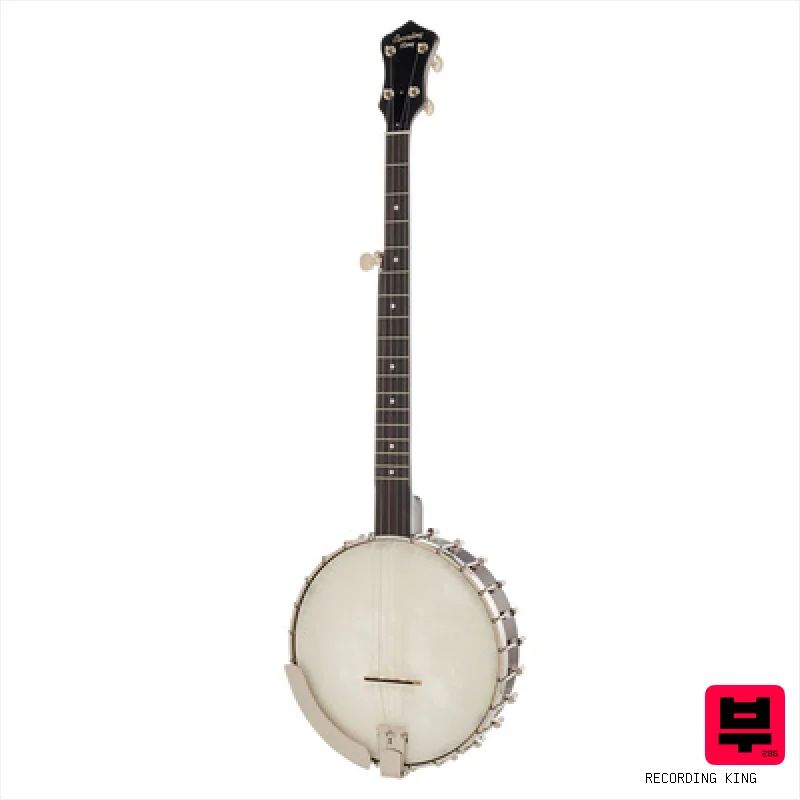
Recording King RK-R35-BR

Scale 670 mm (26.38") Frets 22 frets Strings 5-string
Country Bluegrass Celtic
Key Feature:
This banjo feels solid thanks to its maple neck and brass tone ring. The high crown helps it cut through a band, though it is heavy and lacks electronics. It suits players who love traditional acoustic sound over modern effects.
PROS
  • • Solid maple neck provides stable playability
  • • Prestigio-style tailpiece ensures strong tone
  • • High crown design improves volume projection
  • • Brass cast tone ring adds rich sustain
CONS
  • • Heavy weight may strain smaller players
  • • No electronic pickups or controls available
  • • Traditional setup lacks modern pickup options
4.6/5 AudioFu Score
Specs:
6/10
Detail:
9/10
Value:
6/10
Art. 255756
$1,080
Recording King RK-Elite-75 - Professional Music Instrument Photo
#5

Recording King RK-Elite-75

Scale 700 mm (27.56") Frets 22 frets Strings 5-string
Country Bluegrass Americana
Key Feature:
This banjo looks classic with its Flying Eagle inlays and natural finish. The Mahogany neck feels solid, and the Frosted head should give you a crisp sound. It's a great choice for players who want a vintage look without breaking the bank. Just note that the strings and exact weight aren't listed, so check those before buying.
PROS
  • • Mahogany neck offers solid stability and sustain
  • • Flying Eagle inlays add classic visual appeal
  • • High Crown Frosted head provides bright attack
  • • One-piece flange ensures structural integrity
CONS
  • • Strings are not listed in the specs
  • • Weight is not specified in the description
  • • No pickup system is mentioned for amplification
4.6/5 AudioFu Score
Specs:
6/10
Detail:
10/10
Value:
4/10
Art. 255760
$1,742

Banjos by the numbers

Measured across all 130 models in this category, so «wide», «short» or «expensive» mean something you can check.

Price
median $812
from $185 to $3,718
Scale
median 665 mm (26.18")
from 495 mm (19.49") to 670 mm (26.38") · 110 models
Frets
median 22
from 17 to 22 · 115 models
Strings
median 5-string
from 4-string to 6-string · 122 models
Nut width
median 31.8 mm (1.25")
from 30 mm (1.18") to 43 mm (1.69") · 99 models
Body
sapele, mahogany, maple
most common · 19 models
Fingerboard
ebony, rosewood, maple
most common · 42 models
Weight
median 1.9 kg
from 1 kg to 1.9 kg · 5 models

How This List Is Built

We don't play these instruments — we're a catalog, not a review desk, and we'd rather say so than pretend otherwise. This page covers 5 of 130 banjos from the Thomann catalogue, which is the largest single source of specification data in this category: 5 in detail, the rest listed with their specifications.

Position is computed, not curated. We parse the manufacturer's own description into actual values — nut width, scale, fret count, fingerboard radius, size, alloy — and rank on them: how many specifications a model has published, how many of them are measurable numbers, and how precisely it meets this page's criterion. A product image adds a little. Price is not a ranking signal: it tells you nothing about whether a neck fits your hand. The same inputs always produce the same order, so nothing here is shuffled to look fresh.

What this list is good for: narrowing a category down to a shortlist by spec and budget. What it isn't: a substitute for hearing an instrument. Before you buy, read hands-on reviews and, where you can, play it. Full methodology.

How to Choose the Best Banjos

Budget Planning

  • • Under $200: Entry-level
  • • $200-$500: Intermediate
  • • $500-$1000: Advanced
  • • $1000+: Professional

Quality Check

  • • Sound clarity & tone
  • • Build materials & finish
  • • Hardware durability
  • • Overall craftsmanship

Key Features

  • • Your musical style
  • • Skill level match
  • • Intended use case
  • • Brand reputation

Frequently Asked Questions

Key factors include build quality, sound characteristics, playability, brand reputation, warranty coverage, and value for money. Consider your musical style, skill level, and intended use to find the best match.
Budget depends on your needs and experience level. Beginners can find quality options for $200-500, intermediate players should consider $500-1500 range, while professionals often invest $1500+ for premium features.
Higher-priced banjos typically offer better materials, craftsmanship, and performance. They're worth it if you're serious about music, perform regularly, or need professional-grade features.
Top brands combine quality, innovation, and reliability. We evaluate brands based on build quality, sound performance, durability, and customer satisfaction to recommend the best options for different budgets.
Both have advantages. Online offers better prices and selection, while stores allow hands-on testing. We recommend researching online first, then testing in stores if possible. Many online retailers offer excellent return policies.

We use cookies to improve your experience. Learn more