
Best Analogue Mixing Desks for Analog Recording 2026
So, you're chasing that classic analog recording vibe, huh? Forget the pristine digital clarity - we're talking about warmth, glue, and a certain character that's tough to replicate. Finding the right analog mixing desk is crucial for that; it's more than just routing signals - it's shaping the entire sonic fingerprint of your tracks. Let's break down some desks that'll actually deliver what you're after, not just hype.
Last updated: July 8, 2026 • Next update: July 15, 2026

Yamaha AG 03 MK2 Live Stream Pack BK
- • Compact design maximizes desk space for smaller streaming setups.
- • Built-in DSP effects offer basic processing without external plugins.
- • The YCM-01 mic delivers surprisingly decent clarity for the price point.
- • USB audio interface simplifies digital recording and streaming workflows.
- • Limited channel count restricts complexity for larger productions.
- • Headphones are budget-grade; sound isolation and comfort are lacking.
- • Line inputs lack individual gain control, limiting flexibility.
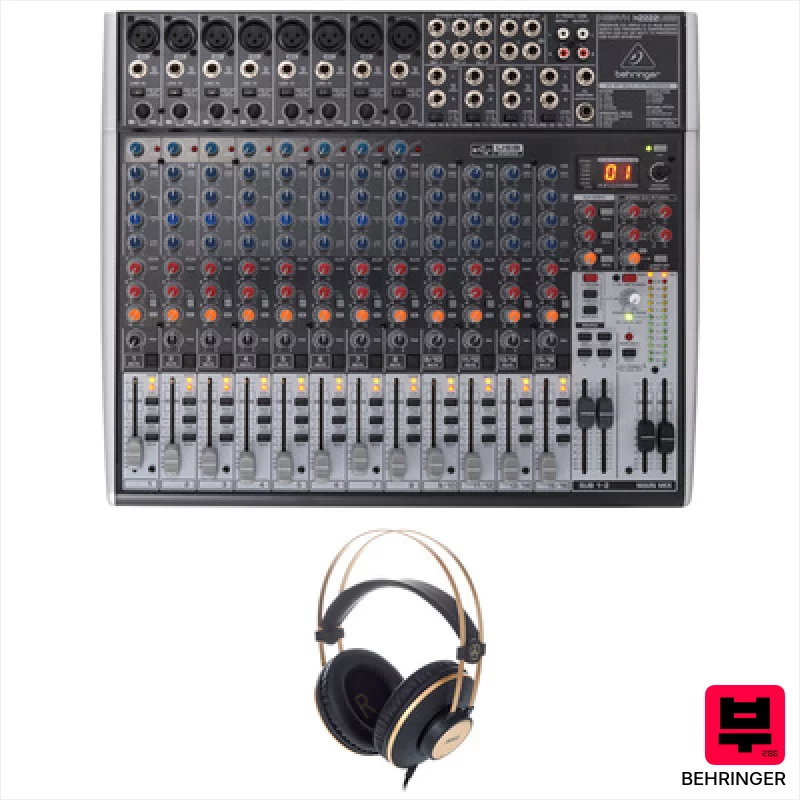
Behringer Xenyx X2222USB HP Bundle
- • 8 mic preamps with phantom power handle larger ensembles
- • Parametric mid-band EQ offers precise tonal shaping
- • Built-in effects unit adds creative flexibility quickly
- • Rack mountable design simplifies studio integration and transport
- • Xenyx preamps can exhibit a slightly colored, less transparent sound
- • 60mm faders feel plasticky and lack the smoothness of higher-end desks
- • Limited headroom – can get noisy pushing the preamps hard
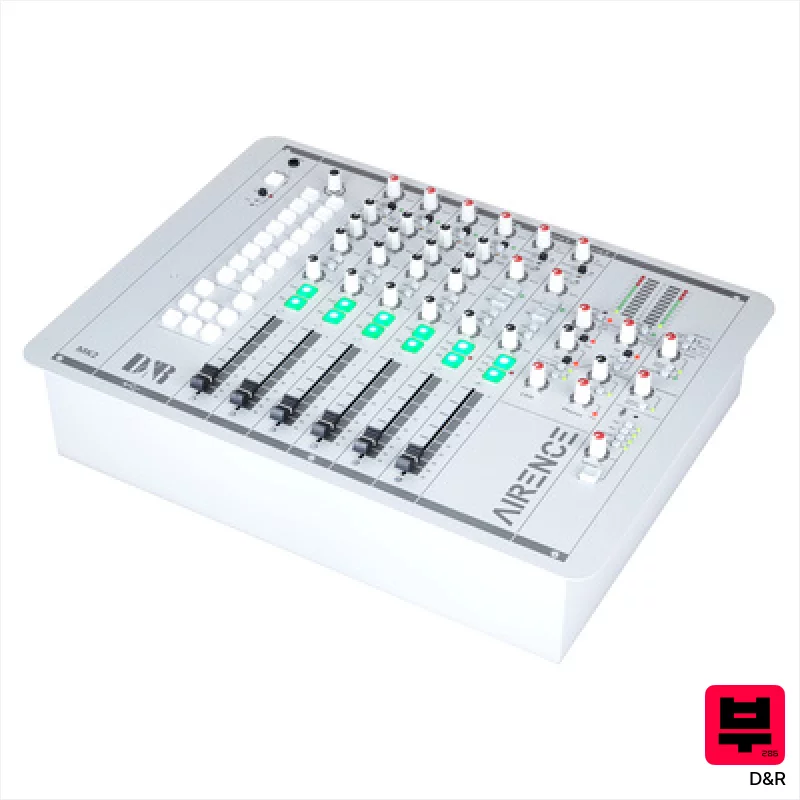
D&R Airence USB Main Unit MKII
- • Solid build quality with robust 100mm faders for precise control.
- • Integrated USB HID control module simplifies DAW integration and workflow.
- • Telephone hybrid provides professional-grade broadcast connectivity and clarity.
- • RingLED illumination offers excellent visibility in various studio lighting conditions.
- • The split design necessitates an expansion unit for full functionality, adding to cost.
- • MKII 16V incompatibility limits power supply and expansion options.
- • Premium-priced, making it a significant investment for smaller studios.
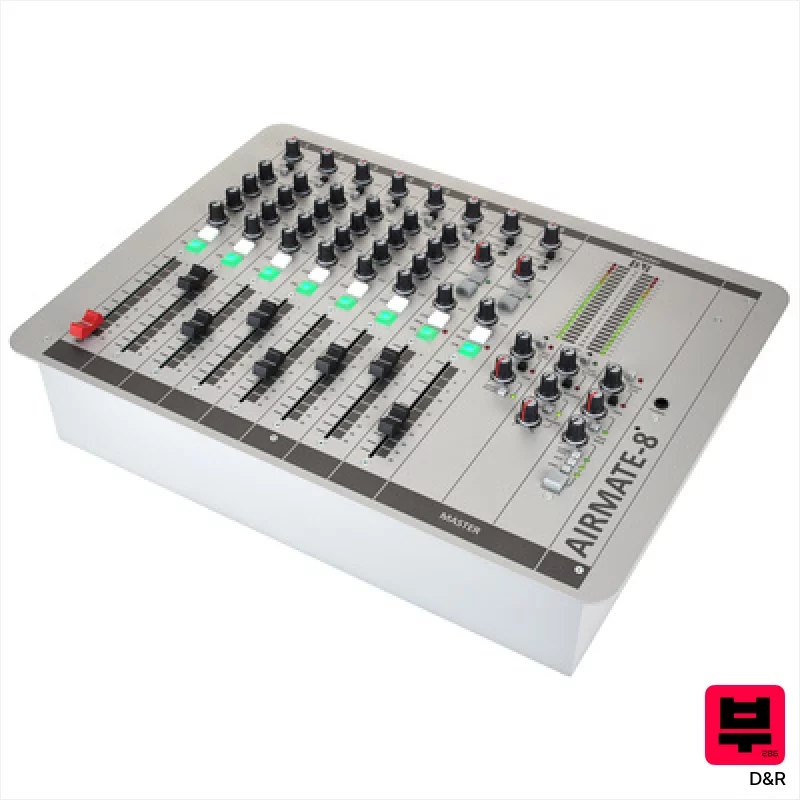
D&R Airmate USB Radio Production
- • Solid build quality, feels robust for a compact radio console
- • Balanced mic preamps deliver clean, low-noise performance
- • Fader start functionality streamlines live radio workflows
- • Flexible aux sends offer versatile routing options for monitoring and effects
- • Limited channel count might restrict complex productions
- • 19 in rack format restricts placement options in smaller studios
- • Telephone hybrid integration may require additional configuration
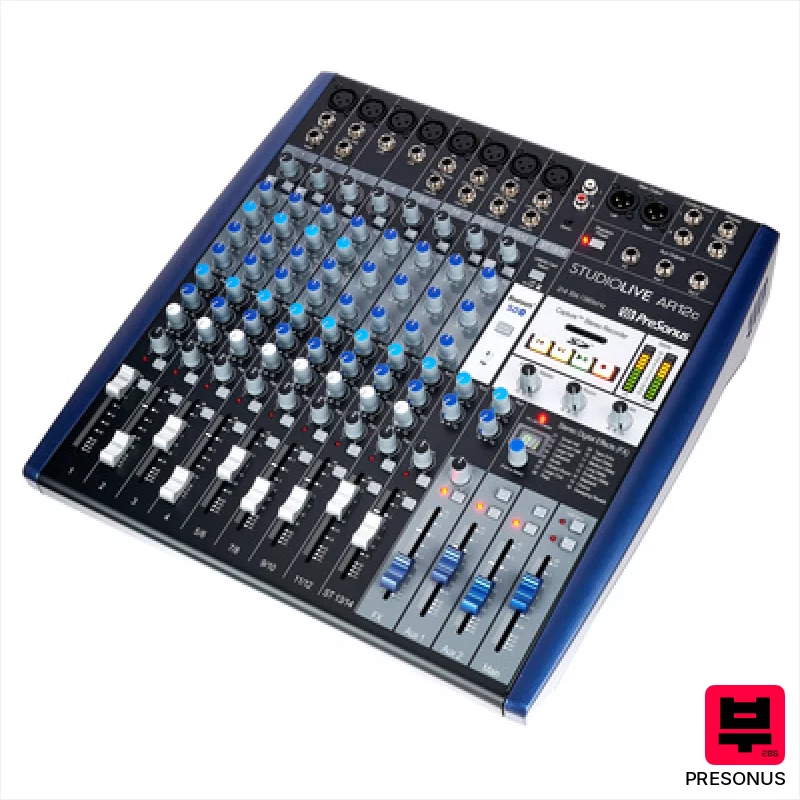
Presonus StudioLive AR12c
- • Excellent class-A mic preamps deliver clean, low-noise performance.
- • The integrated USB interface simplifies recording directly to your computer.
- • Super Channel offers flexible input routing for diverse sources.
- • SD card recorder provides a convenient backup and standalone recording option.
- • EQ is basic; lacks the finesse of more premium consoles.
- • Build quality is adequate, but the chassis feels somewhat plasticky.
- • Limited headroom on some channels when pushing the preamps hard.

Behringer Xenyx X2442 USB
- • 10 mic preamps with phantom power offer versatile recording options
- • Parametric mids on EQ provide precise tonal shaping
- • Built-in effects unit adds creative possibilities without extra hardware
- • Rack mountable design allows for flexible studio integration
- • Plastic construction feels less robust than higher-end consoles
- • USB interface is basic, limiting advanced routing capabilities
- • Aux sends are somewhat limited for complex monitor setups

D&R Webstation
- • Robust metal chassis provides excellent stability and durability.
- • Dedicated auto-silence feature simplifies on-air workflows significantly.
- • VoiceOverIP integration streamlines remote broadcasting and interviews.
- • USB control panel offers intuitive, illuminated button functionality.
- • Limited channel count restricts flexibility for complex productions.
- • EQ is basic; lacks the precision for detailed tonal sculpting.
- • USB connectivity might be a bottleneck for high-resolution audio.

SSL Big SiX Decksaver Bundle
- • SuperAnalogue preamps deliver SSL's signature clean, powerful gain.
- • The simplified Bus Compressor offers that classic SSL glue and warmth.
- • Decksaver protection ensures long-term preservation of the mixer's hardware.
- • USB-C interface provides convenient, high-quality digital recording capabilities.
- • The simplified Bus Compressor lacks the full feature set of the original SSL console.
- • Limited channel expansion options restrict its scalability for larger projects.
- • The compact form factor, while convenient, can feel cramped during complex routing.

Behringer Xenyx X1832USB
- • Solid build for the price, surprisingly robust metal chassis
- • Mic preamps offer usable gain, decent clean headroom
- • Comprehensive feature set: compressors, FX, subgroups, USB
- • Rack mountable design enhances studio workflow flexibility
- • EQ is basic; lacks precision for nuanced mixing
- • Plastic faders feel cheap, prone to wear with heavy use
- • USB interface latency can be noticeable with some systems
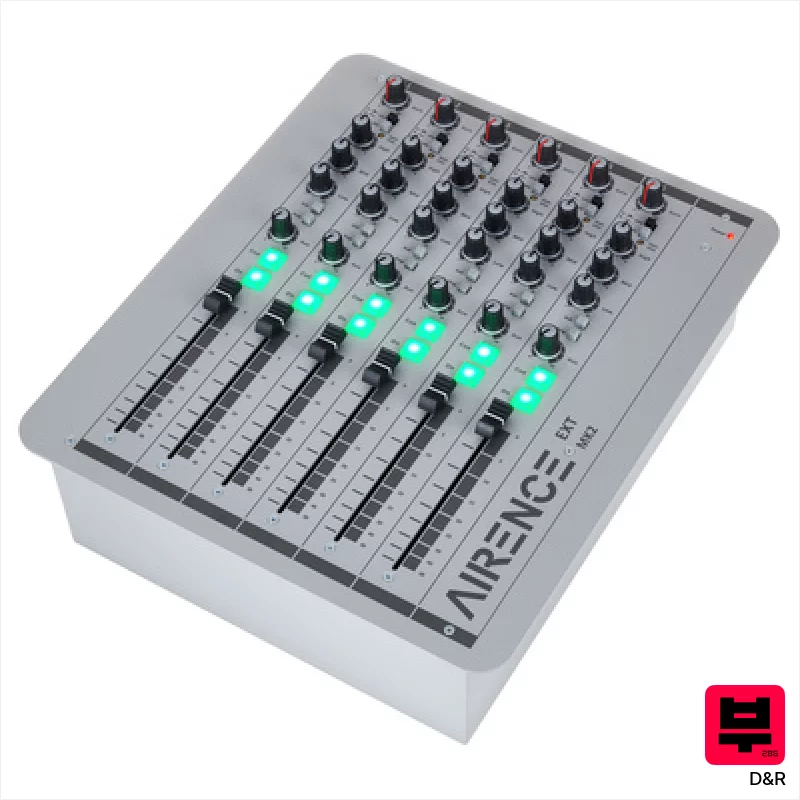
D&R Airence Expansion Unit MKII
- • Robust D&R build quality ensures years of reliable service.
- • 3-band EQ provides essential tonal shaping capabilities.
- • 6 microphone/stereo inputs expand Airence console flexibility.
- • 16V power supply compatibility simplifies integration for newer systems.
- • Requires the Masterunit for full functionality; a separate purchase.
- • Limited compatibility with older Airence power supplies and USB units.
- • Designed specifically for D&R Airence consoles; not a standalone solution.
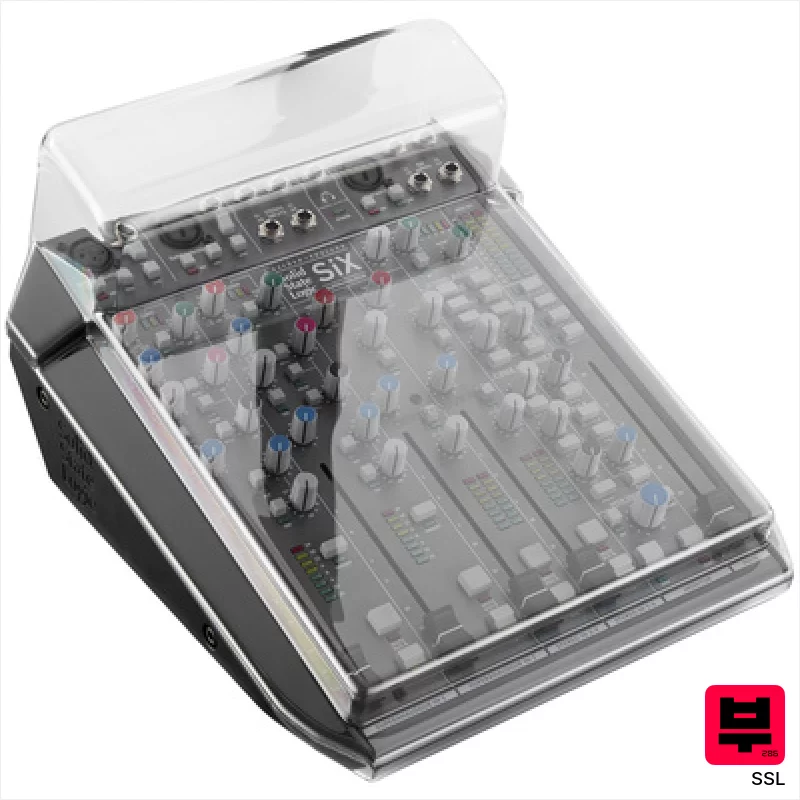
SSL SiX Decksaver Bundle
- • SuperAnalogue preamps deliver exceptional clarity and low-noise performance.
- • The G Series bus compressor adds a signature SSL warmth and glue.
- • 100mm motorized faders offer precise level control and a professional feel.
- • Decksaver protection safeguards the console from dust and accidental damage.
- • Limited channel count restricts flexibility for larger, complex mixes.
- • The fixed attack/release on the bus compressor may lack desired customization.
- • Premium-priced, making it a significant investment for smaller studios.
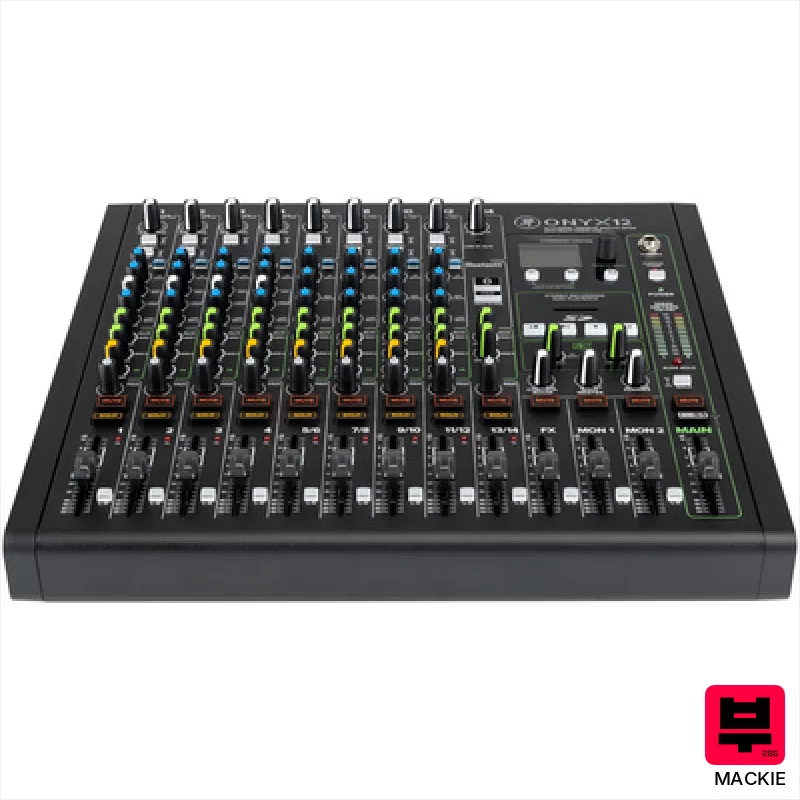
Mackie Onyx12
- • Mackie’s Onyx mic preamps deliver surprisingly clean, low-noise performance.
- • Parametric mids on the first four channels offer excellent tonal sculpting.
- • The built-in effects processor is surprisingly versatile and usable, a real bonus.
- • SD card recording provides a convenient, self-contained recording option.
- • The plastic case feels a little budget-oriented compared to fully metal desks.
- • Limited aux sends restrict more complex routing scenarios for larger productions.
- • USB track count is adequate but not a powerhouse for truly expansive projects.
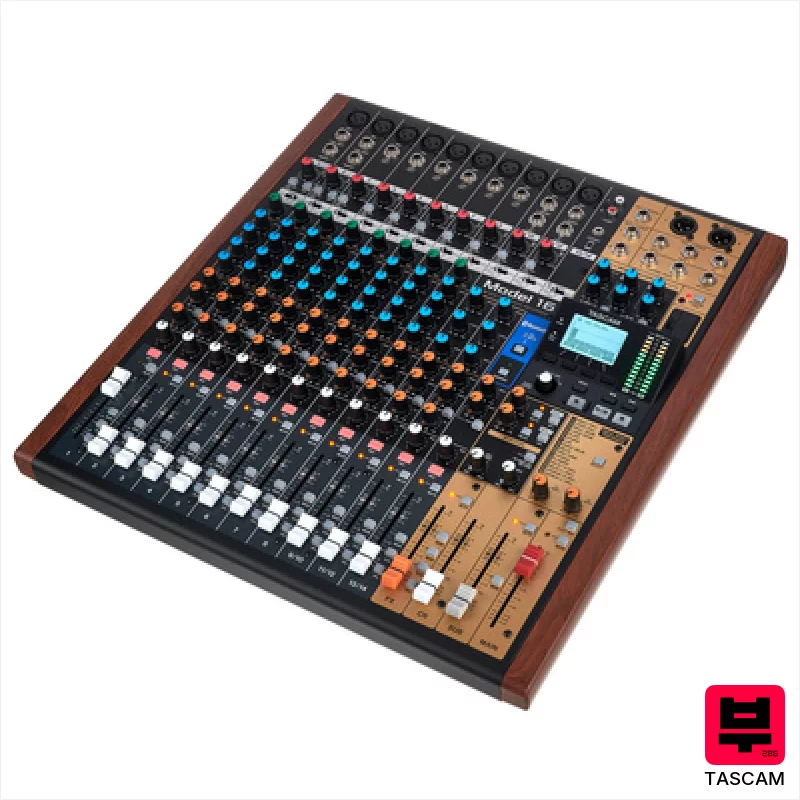
Tascam Model 16
- • Solid build quality with robust metal chassis for reliable use.
- • Integrated recorder eliminates need for separate multi-track setup.
- • Flexible EQ with tunable mids provides detailed tonal shaping.
- • Bluetooth connectivity adds modern convenience for playback and remote control.
- • Limited aux sends restrict complex routing options.
- • Compact size may feel cramped for users accustomed to larger consoles.
- • Lack of dedicated pan pots on some channels can impact stereo imaging.

Behringer XENYX 1204 USB Bundle
- • Compact size makes it ideal for smaller home studios and mobile setups
- • Built-in USB interface simplifies recording directly to a computer
- • Compressors on each mic channel offer basic dynamic control
- • 60mm faders provide a more professional feel than rotary pots
- • Plastic construction feels budget-oriented; lacks long-term durability
- • EQ is basic – lacks precision for detailed sonic sculpting
- • Phantom power can be noisy with certain microphones and cables
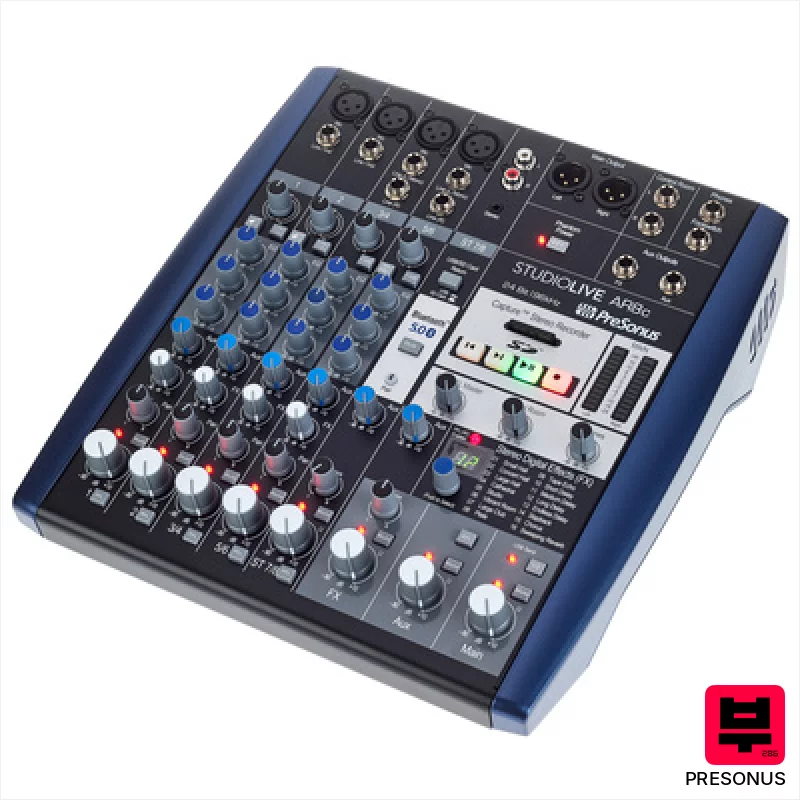
Presonus StudioLive AR8c
- • Excellent class-A preamps deliver clean, low-noise recordings.
- • The integrated SD card recorder provides reliable standalone recording.
- • Bluetooth 5.0 offers convenient wireless audio input options.
- • Super Channel versatility handles diverse input sources effectively.
- • EQ is basic; lacks the precision of more advanced consoles.
- • Limited headroom on the master bus can cause clipping at higher levels.
- • The plastic case feels a little budget-oriented, not as robust as all-metal options.
How to Choose the Best Analogue Mixing Desks
EQ Characteristics
Analog EQ isn't about surgical precision; it's about flavor. We're looking for desks with a musical response - a gentle high-end roll-off, a warm low-midrange boost, that fat midrange honk that just sits in a mix. Harsh, brittle EQ is a dealbreaker.
Preamp Sonics
This is the heart of the analog character. Do the preamps impart a subtle saturation, a pleasing harmonic distortion, or just pass the signal through neutrally? Some desks have a noticeable 'vintage' warmth, while others are cleaner and more transparent.
Noise Floor
Let's be real; analog isn't silent. But a usable noise floor is essential. Excessive hiss or hum will bury your subtle details and force you to crank the gain, which only exacerbates the problem. A quiet desk is a working desk.
Routing & Flexibility
Beyond just sending signals to your interface, consider aux sends for creative effects loops, subgroups for drum buss processing, and insert points for external hardware. The more flexibility, the more creative you can get.
Headroom & Dynamic Range
You need headroom to handle unexpected peaks without clipping and distortion. A desk with good dynamic range will allow your recordings to retain their natural dynamics and transient response - essential for drums, acoustic instruments, and anything with a lot of movement.
Buying Guide
Don't get seduced by the 'vintage' label alone. Many older desks are riddled with noisy components and unreliable faders. A solid-state console from the 90s or early 2000s can often be a smarter investment than a flaky 70s board. Pay attention to the build quality - robust construction and reliable components are key for longevity, especially if you're gigging with it too.
Our Methodology
We're not looking at spec sheets here. Our evaluations are based on hands-on experience - tracking drums, recording vocals, dialing in guitars, and A/B comparisons against known classics. We've run these desks through everything from bedroom practice sessions to full band rehearsals and even a few gigs, so we know what they can really handle.

