
Best Alto Saxophones for Classical 2026
So, you're diving into classical sax? Excellent choice - it's a challenging but incredibly rewarding genre. Forget about the screaming rock tones you hear on pop records; classical demands a different beast - something with a focused, dark core and the agility to nail those intricate passages. Finding the right alto can be tricky; it's not just about 'good sound,' it's about nuanced projection, clarity, and a level of response that lets you whisper and roar with equal control.
Last updated: July 22, 2026 • Next update: July 29, 2026
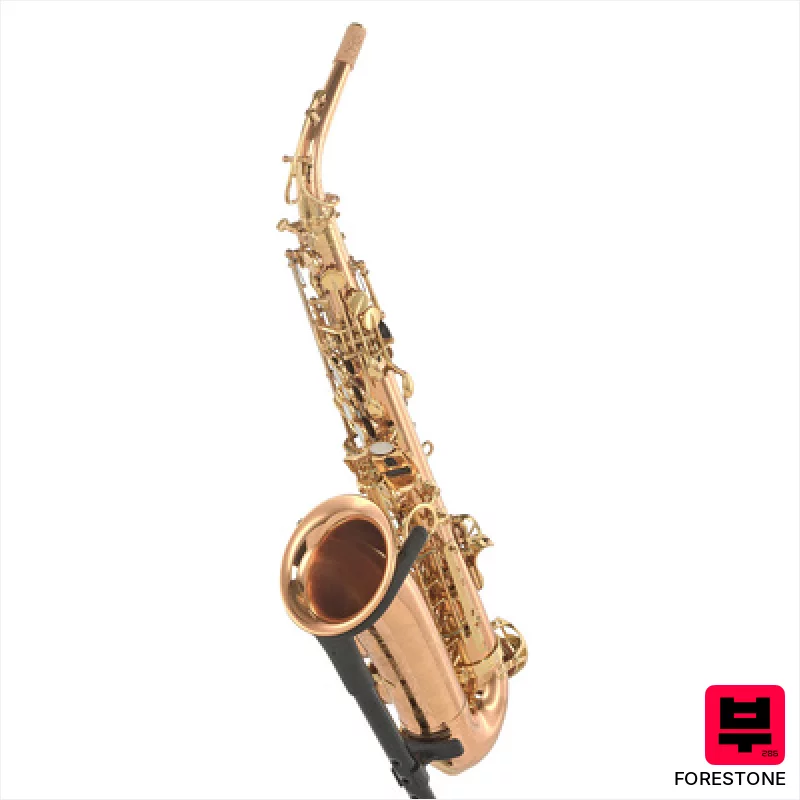
Forestone RX Red Brass GL Alto Sax
- • Red brass provides a uniquely warm, resonant, and complex tonal palette.
- • Flanged tone holes improve intonation and responsiveness across the range.
- • Pisoni pads with metal resonators offer exceptional leak resistance and projection.
- • Hybrid post construction minimizes key wobble and enhances overall instrument stability.
- • The red brass construction can be slightly denser, contributing to a heavier feel.
- • The premium-priced nature puts it out of reach for many student or intermediate players.
- • While versatile, its classic tone may not be ideal for modern, heavily processed genres.
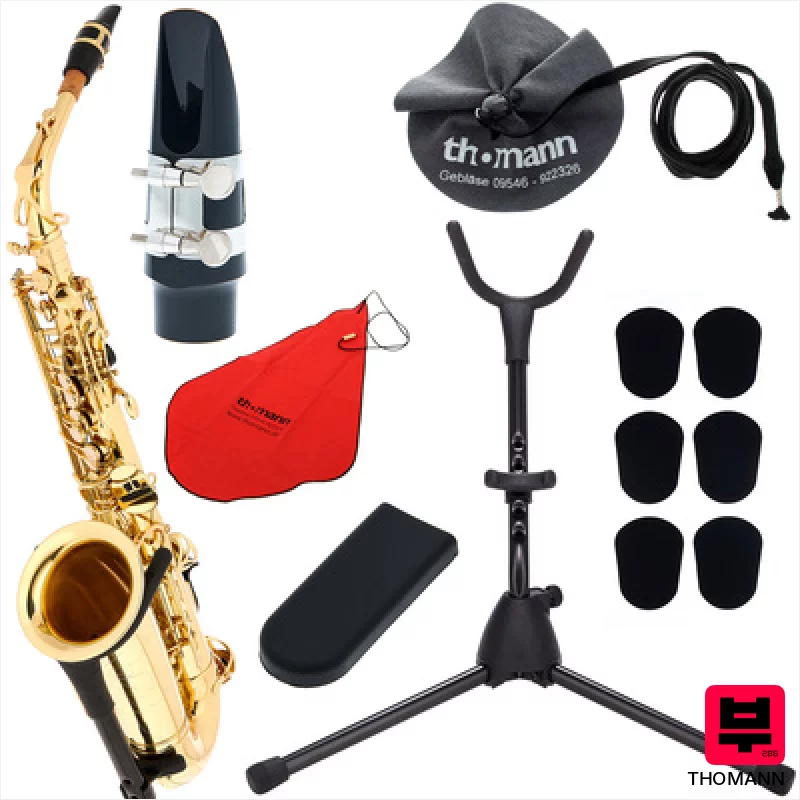
Thomann TAS-180 Alto Sax Set II
- • Solid brass body provides a warm, resonant core tone.
- • Narrow scale is ideal for developing players and beginners.
- • Ergonomic keywork minimizes finger fatigue during extended practice.
- • Included stand is robust and adaptable for both alto and tenor saxes.
- • Lacquered finish, while attractive, may be prone to wear with heavy use.
- • Standard mouthpiece likely needs upgrading for serious players.
- • 2.40 kg weight can be tiring for younger or smaller players.
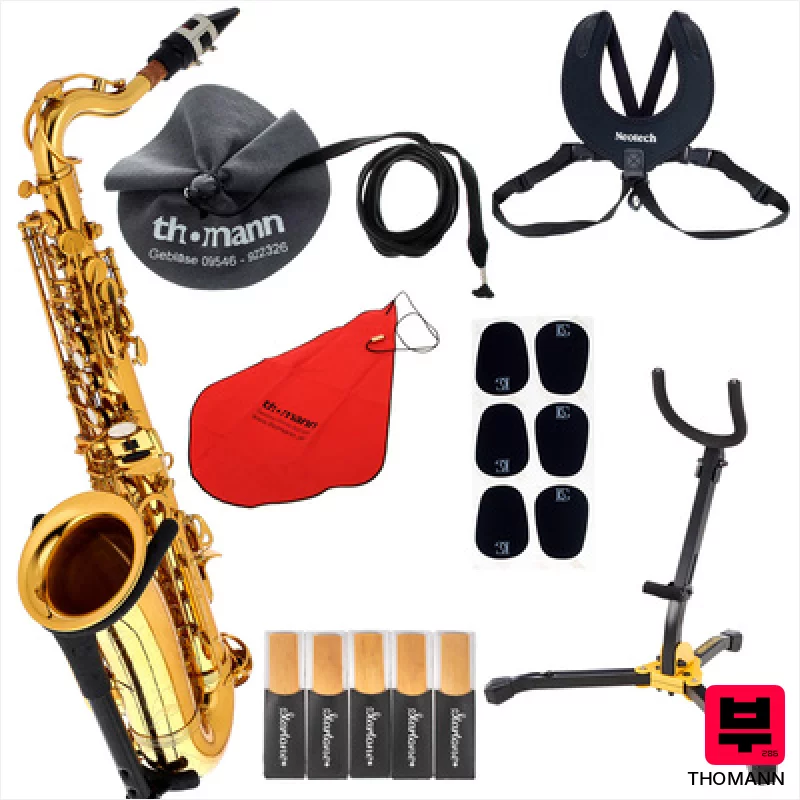
Thomann Little Bee Kids Saxophone Set
- • Brass keys and body offer a warmer tone than plastic alternatives.
- • Child-friendly key system simplifies fingering for young learners.
- • Included Neotech harness strap improves comfort and posture.
- • Hercules stand provides secure storage and portability for beginners.
- • Esprit mouthpiece is basic; an upgrade will significantly improve tone.
- • Delivery color is random, limiting aesthetic personalization.
- • Limited high register capabilities compared to professional models.
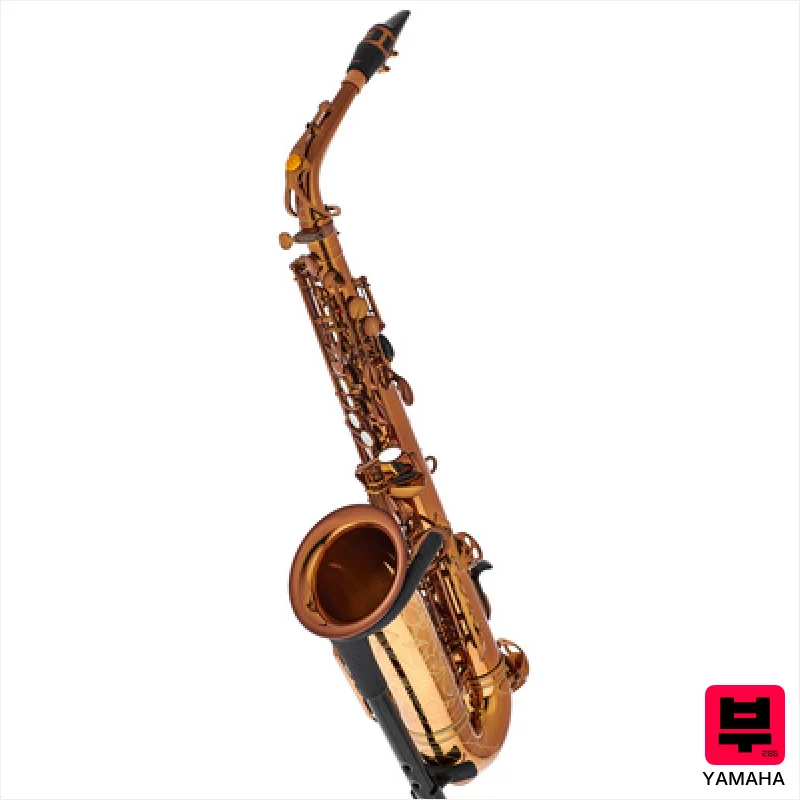
Yamaha YAS-82 ZA Alto Sax
- • Hammered bell delivers exceptional projection and resonance across the range.
- • V1 S-bow design enhances response and intonation consistency.
- • Improved low B/C# connection simplifies complex passages and improves accuracy.
- • Lighter bases improve ergonomics and reduce hand fatigue during extended playing.
- • The amber lacquer, while beautiful, is susceptible to wear and requires careful maintenance.
- • The included 4CM mouthpiece is decent, but serious players will likely upgrade.
- • Premium-priced, representing a significant investment for most players.
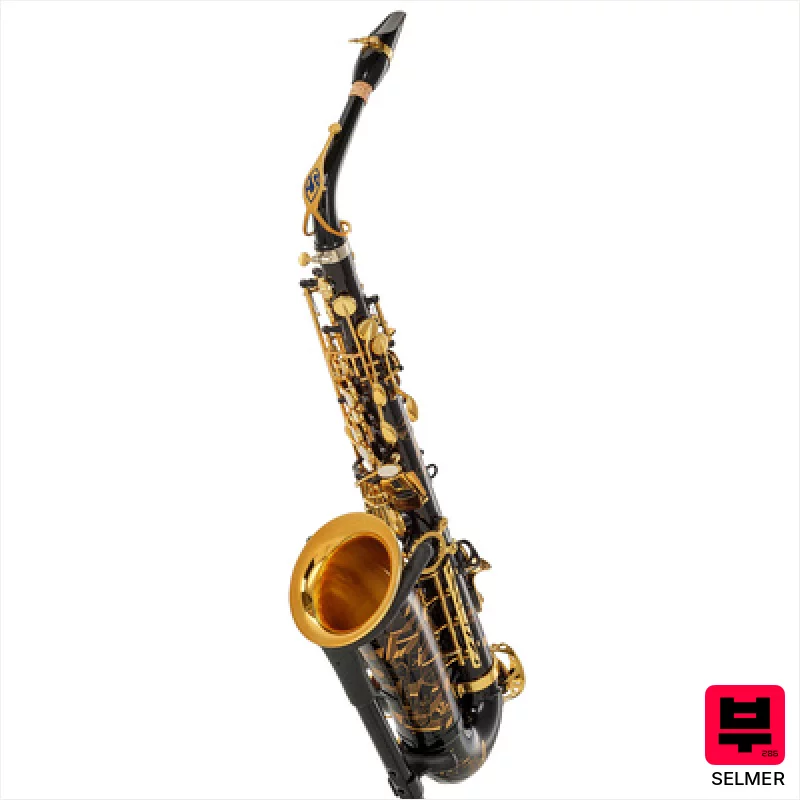
Selmer Signature Alto Sax SE-ASIB
- • Exceptional intonation, noticeably improved in the upper register.
- • Art Deco engraving elevates aesthetics and feel.
- • New S-bow bore delivers a richer, more responsive low end.
- • Leather pads with resonators ensure a consistent, reliable response.
- • Premium-priced, represents a significant investment for most players.
- • The gold-lacquered keys may require more frequent polishing.
- • Ergonomics, while improved, might still feel bulky for smaller hands.
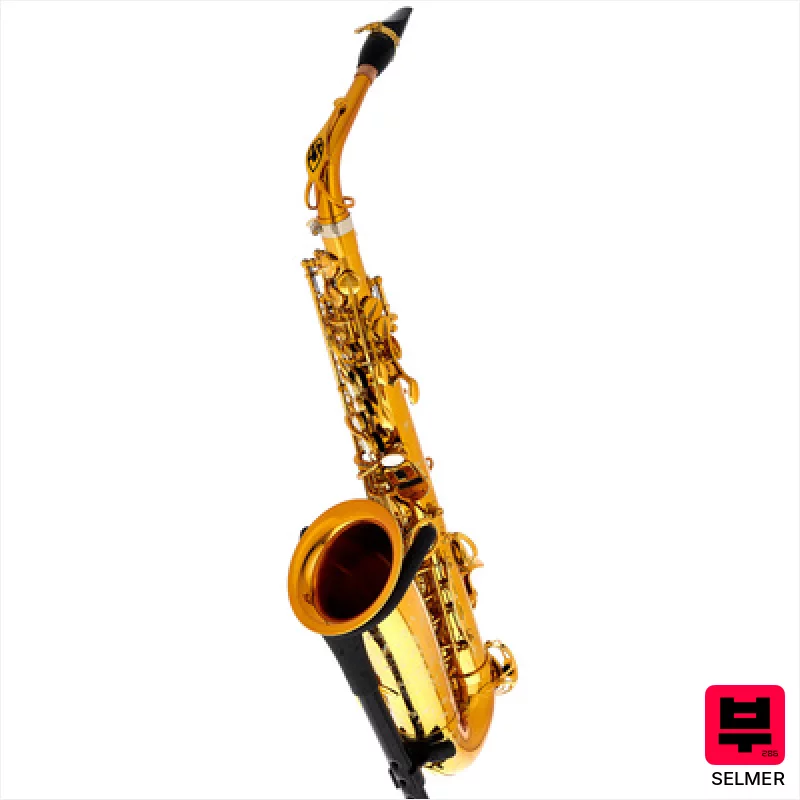
Selmer Supreme Alto Sax SE-ASUL
- • The S-bow bore delivers exceptional projection and a focused tone.
- • Nickel silver adjustable sleeve allows for precise intonation fine-tuning.
- • Directly coupled F#/F key improves response and speed for advanced players.
- • Leather pads with resonators provide a remarkably even and resonant sound.
- • The premium-priced tag puts it out of reach for many aspiring saxophonists.
- • The complex ergonomics may require a period of adjustment for some players.
- • The dark gold lacquer, while beautiful, can be susceptible to wear over time.
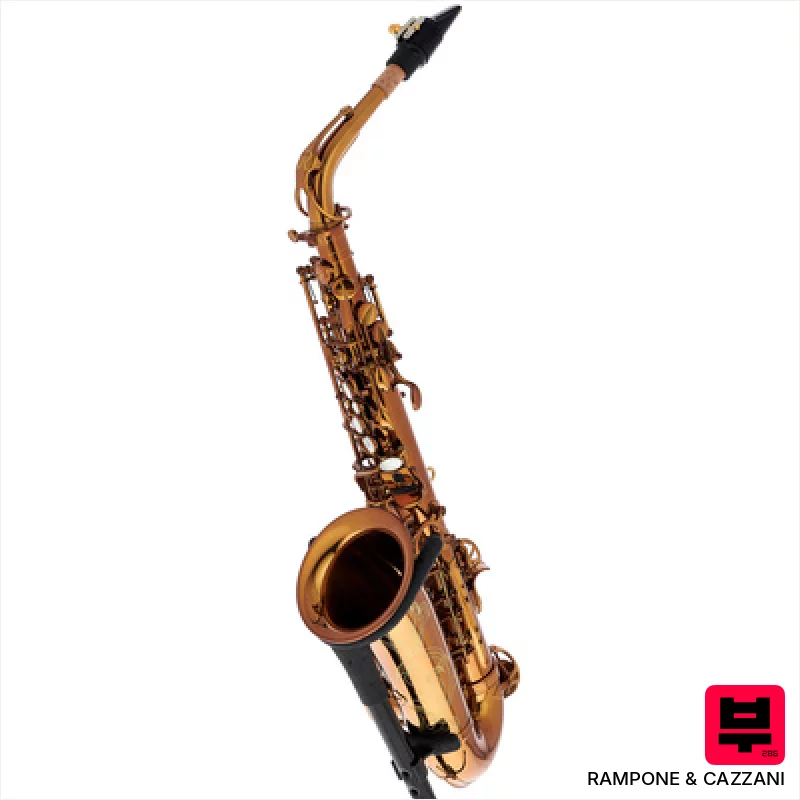
Rampone & Cazzani Performance Line Alto Sax
- • Hand engraving elevates aesthetics and perceived value significantly.
- • Prisoni Pro pads offer exceptional responsiveness and sealing.
- • Vintage brass body delivers a warm, focused, and resonant tone.
- • Lightweight case with backpack straps adds practicality for gigging musicians.
- • Vintage finish, while attractive, can be more susceptible to wear and tear.
- • Mouthpiece included is likely a basic model, upgrade recommended for optimal tone.
- • The brushed brass finish may require more diligent cleaning to prevent tarnish.
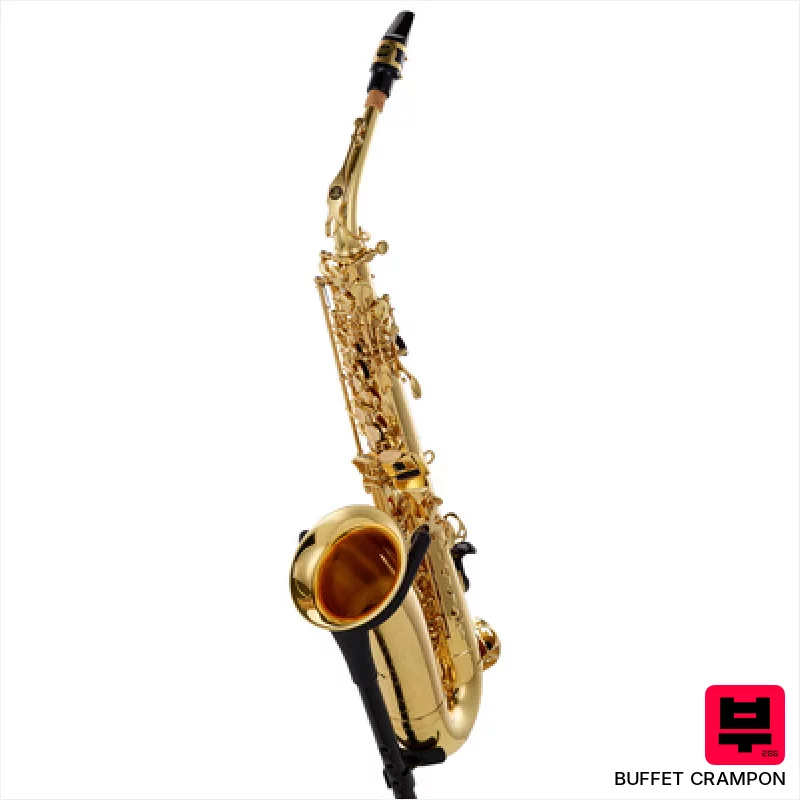
Buffet Crampon Prodige Alto Sax
- • Gold brass body offers a warmer, more responsive tone.
- • Ergonomic key design eases fingerings, ideal for smaller hands.
- • Robust construction ensures durability for student use and beyond.
- • Well-chosen leather pads provide excellent resonance and intonation.
- • Gold brass can be more prone to dents than other alloys.
- • Mouthpiece is basic; upgrading will significantly improve tone.
- • Limited upper register response compared to professional models.
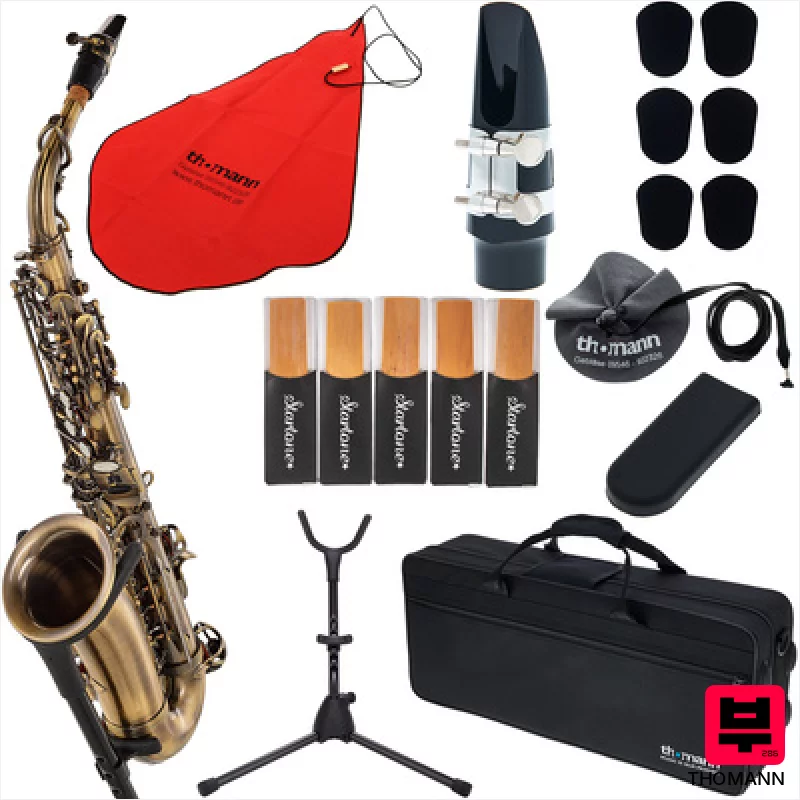
Thomann Antique Alto Sax Alto Sax Set
- • Solid brass construction promotes a warm, responsive tone.
- • The included Yamaha 4C mouthpiece offers a surprisingly balanced and focused sound.
- • High F# key expands range and versatility for more advanced players.
- • K&M stand provides secure, stable instrument support, a nice touch.
- • Antique finish may be prone to scratches and wear with regular use.
- • Ligature and capsule omission adds to the initial investment.
- • Phenolic resin mouthpiece, while decent, isn't a premium upgrade.
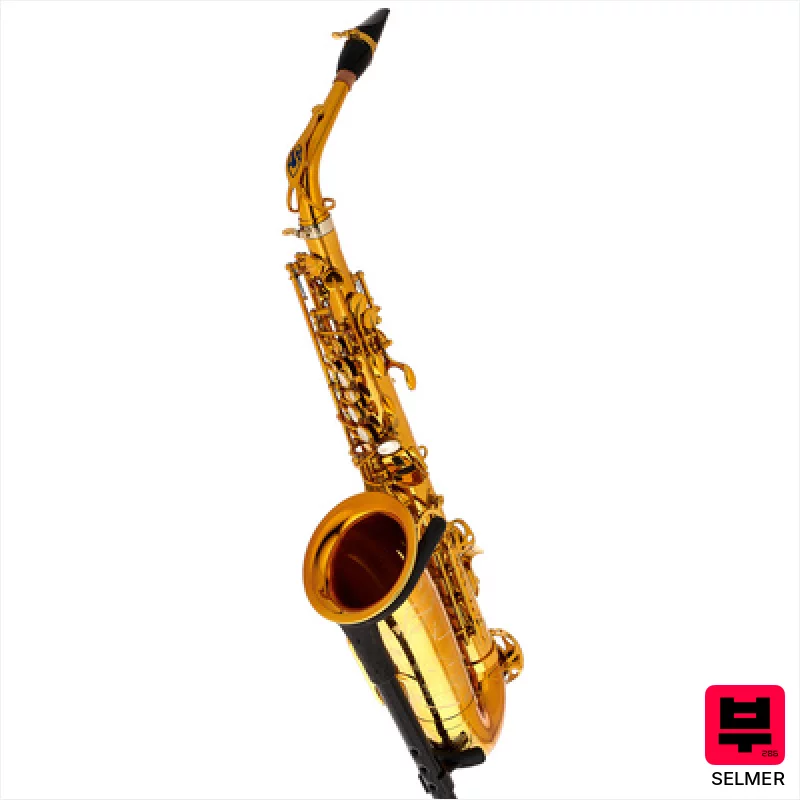
Selmer Signature Alto Sax SE-ASIL
- • Exceptional intonation across the entire range, a Selmer hallmark.
- • Art Deco engraving elevates the instrument's aesthetic appeal significantly.
- • New S-bow bore delivers a richer, more focused tone than previous models.
- • Ergonomic improvements reduce hand fatigue, especially during extended playing.
- • The gold lacquer, while beautiful, requires meticulous care to prevent wear.
- • Premium-priced, representing a significant investment for most players.
- • The included 'Concept' mouthpiece is competent, but experienced players will likely upgrade.
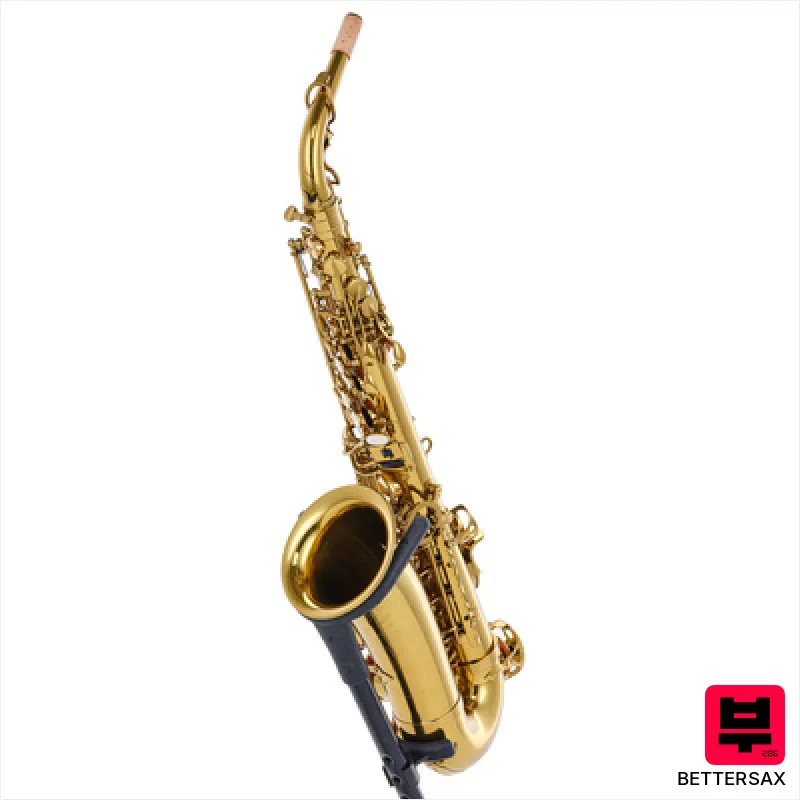
BetterSax Classic Alto Saxophone
- • Excellent intonation across the range, a noticeable improvement over entry-level horns.
- • The Pisoni pads offer a remarkably responsive and airtight seal.
- • Cognac lacquer provides a warm, visually appealing aesthetic and good protection.
- • King/Yanagisawa-inspired octave key improves accuracy and ease of high register playing.
- • The hand engraving, while present, feels somewhat superficial compared to truly high-end instruments.
- • The 'professional bore' may lack the extreme flexibility of top-tier models, limiting advanced techniques.
- • The included mouthpiece is likely a decent stock option but will almost certainly be upgraded.
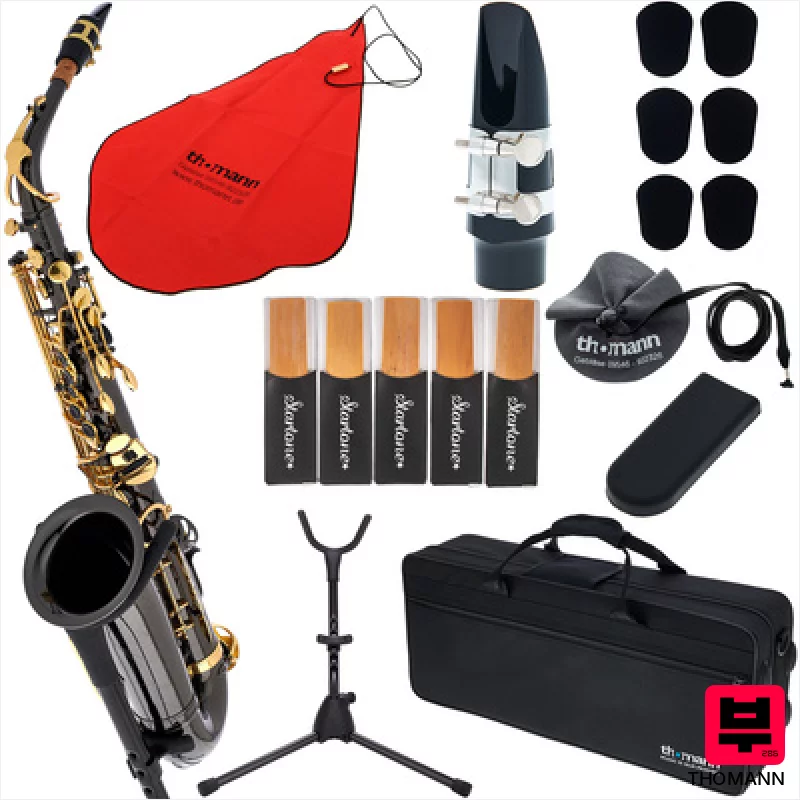
Thomann TAS-180 Black Alto Sax Set II
- • Brass body construction lends a warmer, more resonant tone than cheaper nickel-plated options.
- • Separate adjustment screws allow for precise intonation tweaking across the range.
- • Detachable bell simplifies maintenance and offers potential for future upgrades.
- • Included K&M stand provides a stable and reliable resting place for the instrument.
- • Plastic thumb rest is a cost-saving measure; metal would offer better durability and feel.
- • Gold lacquer, while attractive, may require more diligent care to prevent tarnishing.
- • Black pads with metal resonators can occasionally be prone to minor leaks initially.

Startone SAS-75 Alto Sax Set II
- • Lacquered brass body provides a warm, resonant tone.
- • Included Yamaha 4C mouthpiece offers a surprisingly balanced and clear sound.
- • Adjustable thumb rest improves comfort and playing ergonomics.
- • Workshop check ensures a playable, reliable instrument right out of the box.
- • Lacquer finish, while attractive, can be prone to wear with heavy use.
- • The included case is functional, but lacks robust protection for travel.
- • While versatile, the tone leans towards a more traditional sound, limiting modern styles.
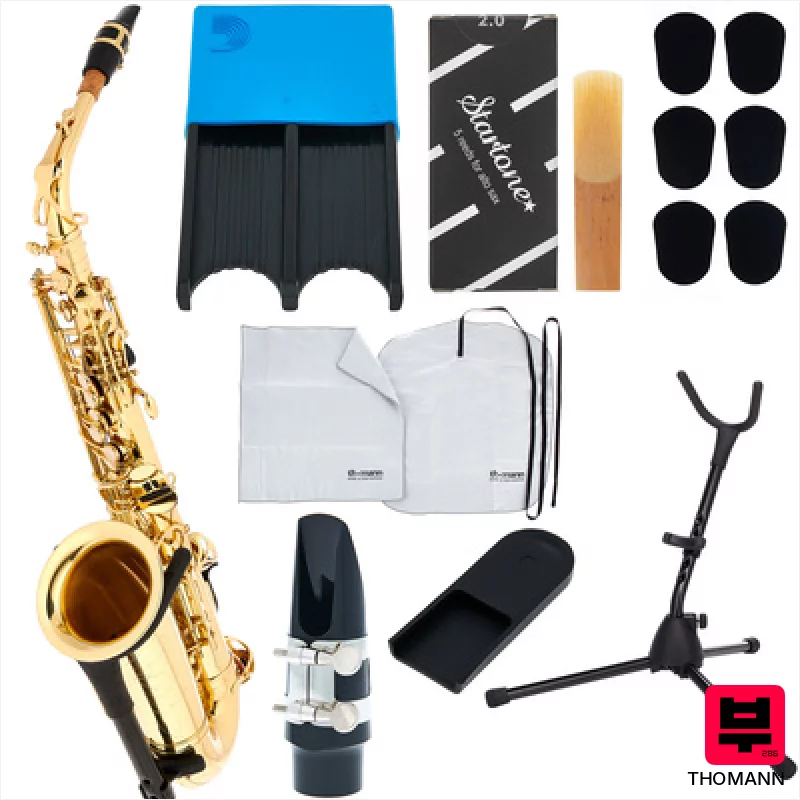
Thomann TAS-180 Alto Sax Set
- • Brass body provides a warm, resonant core tone.
- • Narrow scale suits beginners and players seeking a focused sound.
- • Ergonomic keywork eases finger transitions, improving playability.
- • Detachable bell allows for potential future upgrades or customization.
- • Lacquered finish is likely a thinner coating, prone to wear with heavy use.
- • Included mouthpiece is a standard model, limiting tonal flexibility.
- • The plastic thumb rest may feel less premium than metal alternatives.
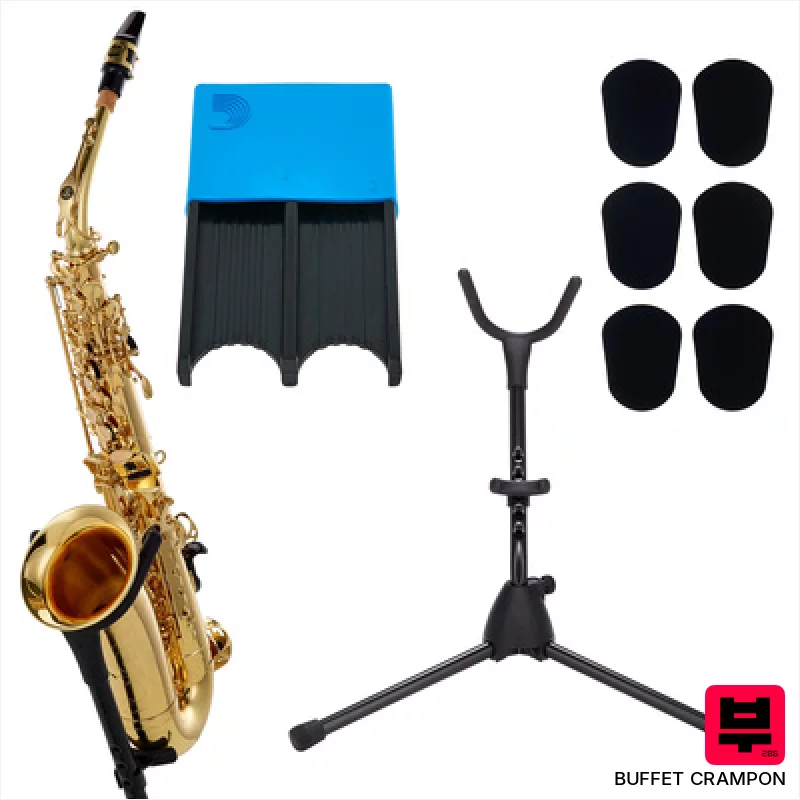
Buffet Crampon Prodige Alto Sax Set
- • Gold brass construction offers a warm, responsive tonal foundation.
- • Leather pads with resonators provide excellent intonation and projection.
- • Ergonomic key system eases the learning curve for younger or smaller players.
- • Included K&M stand provides stable, adjustable support for safe instrument storage.
- • Clear lacquer finish, while attractive, can be prone to wear with heavy use.
- • Stock mouthpiece is adequate but likely a limiting factor for advanced players.
- • The backpack case, while convenient, lacks the robust protection of a hard case.
How to Choose the Best Alto Saxophones
Tonal Core
Classical demands a dark, focused tone. We're looking for a core that avoids excessive brightness or a thin, reedy quality. That fat midrange honk that cuts through an orchestra without sounding harsh is the goal.
Response & Articulation
The horn needs to respond instantly and evenly across the range. Sloppy articulation or uneven response will kill your performance. We evaluate this by playing fast passages and quiet dynamics.
Dynamic Range
Classical playing is all about subtlety. A great horn will allow you to go from a breathy whisper to a powerful projection without a sudden change in timbre. Lack of dynamic headroom sounds flat and lifeless.
Keywork & Ergonomics
Comfortable keywork is absolutely crucial. A poorly designed mechanism will fight you and impact your accuracy, especially in complex passages. Neck profile and overall balance also play a big role in comfort and control.
Intonation
This is non-negotiable. Consistent intonation across the range is vital for ensemble playing. A horn that's consistently sharp or flat will be a nightmare to tune and frustrating to play.
Buying Guide
Don't chase the latest models just because they look shiny. Many modern horns prioritize a 'bright' sound that's great for jazz, but a liability for classical. Vintage horns (especially Selmers from the 60s and 70s) often have the tonal depth and responsiveness you're after, but be prepared for potential repairs. Action is key - a too-tight action can choke the response, while a loose action leads to sloppy playing. Budget for a good mouthpiece - it will make a bigger difference than the horn itself.
Our Methodology
We're not relying on manufacturer specs here. We've spent countless hours playing these horns - in rehearsal rooms, on stage, and in studio - comparing them directly to one another. Our evaluations are based on how they feel under the fingers, how they project in a concert hall, and how they respond to the subtle nuances of classical phrasing. We're listening for the details, not just the broad strokes.

