
Best Alternative Design Ukuleles for Experimental Music 2026
So, you're not chasing Hawaiian vibes with your uke, huh? Good. You want to mangle it, process it, turn it into something... else. Forget the koa parlor guitars - we're diving into alternative uke designs built for experimental music, where weirdness is the goal and a little bit of sonic chaos is expected. These aren't your grandma's instruments; they're tools for sculpting sound.
Last updated: July 8, 2026 • Next update: July 15, 2026

Romero Creations D HO 6-String Guitarlele Nylon
- • Exceptional spruce top delivers a clear, resonant tone with surprising projection
- • Mahogany back and sides add warmth and sustain, beautifully balanced
- • Ebony fretboard and bridge provide excellent clarity and sustain, premium feel
- • The Pepe Romero strings are perfectly matched, offering a rich, baritone voice
- • The 49mm nut width requires adaptation for guitarists used to standard neck profiles
- • Premium-priced, representing a significant investment for many players
- • Limited versatility compared to a full-size guitar; niche instrument

Gold Tone Resouke Tenor
- • Steel resonator delivers a uniquely resonant, metallic tone unlike standard ukuleles
- • Mahogany neck provides comfortable playability and warmth complementing the steel body
- • Kluson-style tuners offer reliable tuning stability and a vintage aesthetic
- • Biscuit cone design maximizes volume and projection, ideal for performance
- • All-steel construction makes it noticeably heavier than traditional ukuleles
- • Brushed aluminum finish can be prone to minor scratches and fingerprints
- • Limited tonal versatility; excels in resonator sounds, less suited for delicate strumming

Ortega OUBJ100-SBK
- • Maple construction delivers a bright, focused, and surprisingly resonant tone.
- • Chrome hardware and Fiberskyn head provide a vintage aesthetic and reliable tuning stability.
- • Ovangkol fretboard offers a smooth playing experience with comfortable action.
- • The included gig bag provides adequate protection for transport and storage.
- • The maple rim and resonator can feel a little stiff compared to more open-backed ukuleles.
- • While versatile, the banjo-uke sound isn't a perfect substitute for a traditional ukulele.
- • The smaller size (soprano) might be challenging for players with larger hands.

Martin Guitar Martin Guitar 0X Ten Uke SuLH
- • Flamed mahogany HPL back/sides offer a warm, resonant tone.
- • Birch laminate neck provides stability and comfortable playability.
- • Martin's M620 strings deliver a balanced, pleasing ukulele sound.
- • Left-handed model caters to a niche, often underserved, market.
- • HPL construction, while durable, lacks the tonal complexity of solid wood.
- • Sunset finish, while attractive, might not appeal to all players.
- • The neck profile might feel a little thick for some smaller hands.
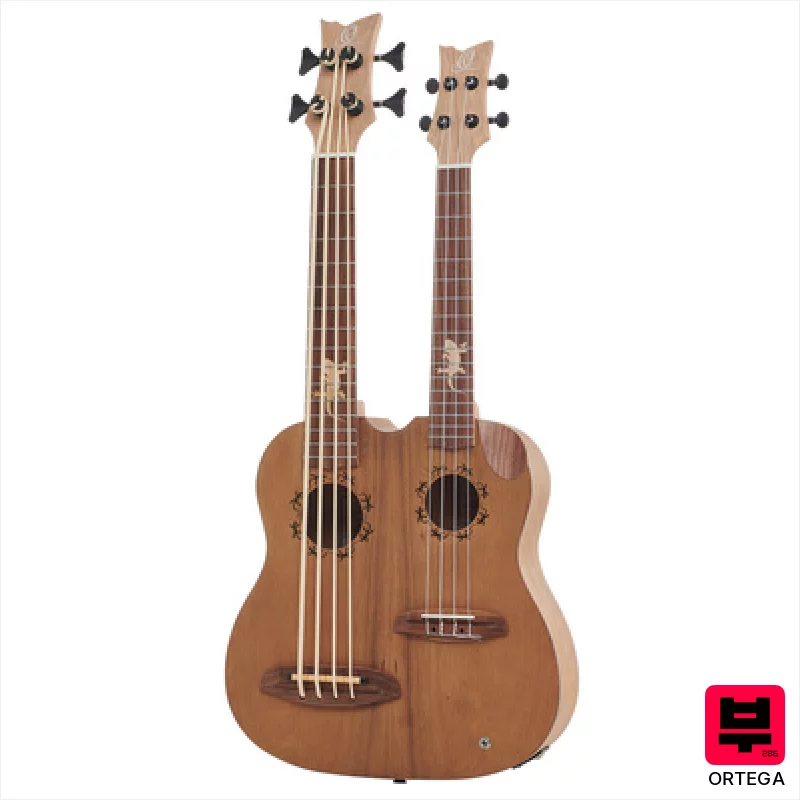
Ortega HYDRA-BSTE
- • Sapele top delivers a warm, resonant tone with surprising projection.
- • Ortega MagusUke pickup provides a usable, clean amplified sound for performance.
- • Walnut fretboard and bridge offer a smooth playing experience and tonal clarity.
- • The uke-bass string combination expands harmonic possibilities and creative potential.
- • Double neck design significantly increases overall instrument weight and bulk.
- • Sapele construction, while good, lacks the premium feel of more exotic woods.
- • The integrated tuner, while convenient, might be basic for experienced players.
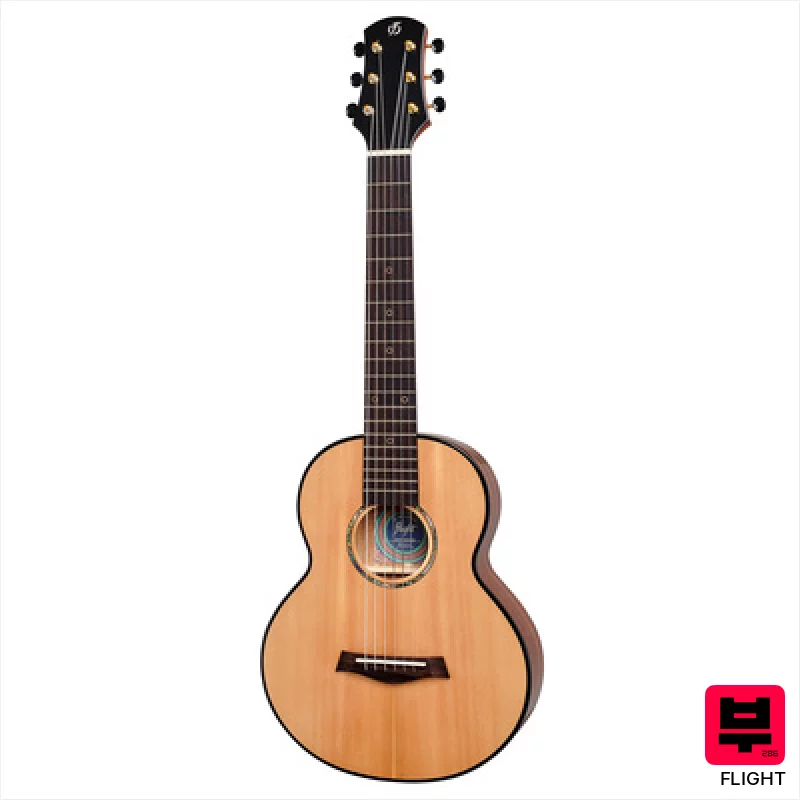
Flight GUT850 Guitarlele
- • Solid spruce top delivers a surprisingly resonant and clear voice for a guitarlele.
- • Acacia back and sides add warmth and complexity, avoiding a thin ukulele tone.
- • Rosewood fingerboard and bone nut contribute to improved sustain and a smoother playing feel.
- • Mahogany neck provides a comfortable profile and good stability, crucial for tuning accuracy.
- • The ADGCEA tuning can take some getting used to for guitar players; a unique learning curve.
- • Acacia, while lovely sounding, isn't as tonally complex as more premium tonewoods like koa.
- • While playable, the 45mm nut width might feel cramped for those with larger hands.

Harley Benton Solid Uke Natural w/Bag
- • Okoume body provides a surprisingly warm, resonant tone for the price.
- • Maple neck offers smooth playability and comfortable access to higher frets.
- • GraphTech nut minimizes friction and improves tuning stability significantly.
- • Diecast tuners ensure accurate and reliable tuning, a step above cheaper options.
- • Piezo pickup system, while functional, lacks the nuance of magnetic pickups.
- • The natural finish can be prone to scratches and requires careful handling.
- • The 430mm scale length might feel slightly long for ukulele beginners.

Baton Rouge V2-GT sun
- • Mahogany body delivers warm, resonant tones ideal for folk and mellow styles.
- • Nubone nut and saddle enhance sustain and improve overall tonal clarity.
- • 43mm nut width provides comfortable spacing for fingerstyle playing, guitar-like feel.
- • Savarez strings offer a balanced, articulate voice, avoiding overly bright ukulele tones.
- • Natural matte finish, while attractive, can be prone to fingerprints and minor blemishes.
- • 17 frets limit higher register access, a compromise for guitarlele ergonomics.
- • Nato neck, while stable, lacks the premium feel of mahogany or other exotic woods.

Kala KA-S8E 8-String Tenor Ukulele
- • Solid spruce top delivers a bright, resonant tone with good projection
- • Mahogany back and sides add warmth and sustain, balancing the spruce
- • GraphTech NuBone nut and saddle improve clarity and tuning stability
- • UK-300TR electronics offer usable amplified tones, surprisingly clean
- • The 8-string configuration can feel cramped for players with larger hands
- • Mahogany construction, while warm, can lack the sparkle of koa in certain settings
- • High-gloss finish, while attractive, can be prone to fingerprints and smudging
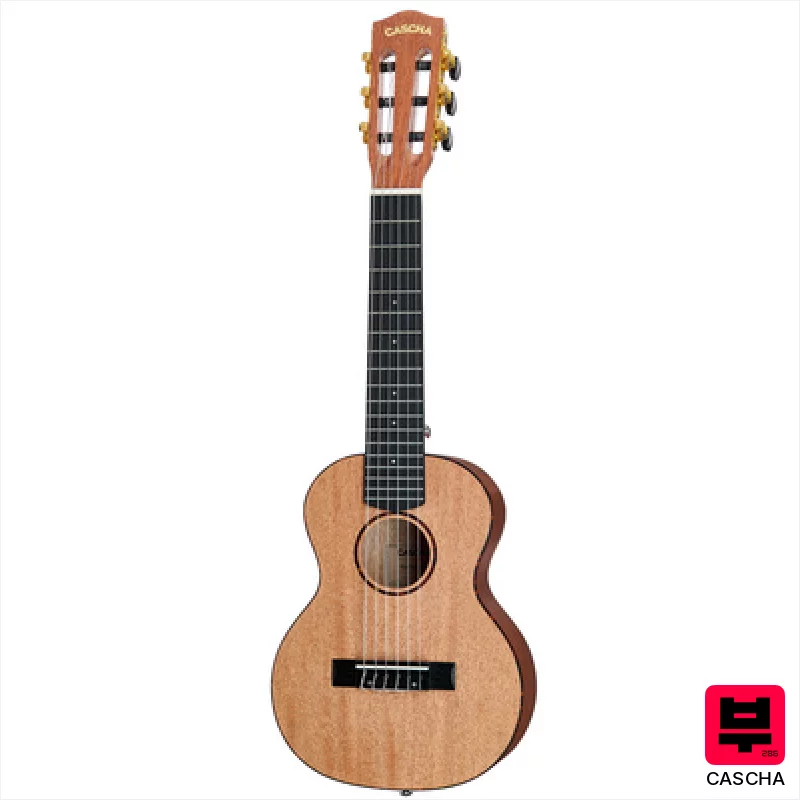
Cascha Guitarlele Mahogany
- • Solid mahogany top provides a warm, focused tone with surprising projection.
- • Rosewood fingerboard offers a smooth playing experience, comfortable for various hand sizes.
- • 430mm scale length balances ukulele portability with guitar-like playability.
- • Mahogany construction delivers a pleasing resonance and balanced tonal character.
- • Limited tonal versatility compared to instruments with different wood combinations.
- • Nut width of 48mm might feel narrow for guitarists accustomed to wider necks.
- • Gig bag is functional but basic; a hard case would offer better protection.
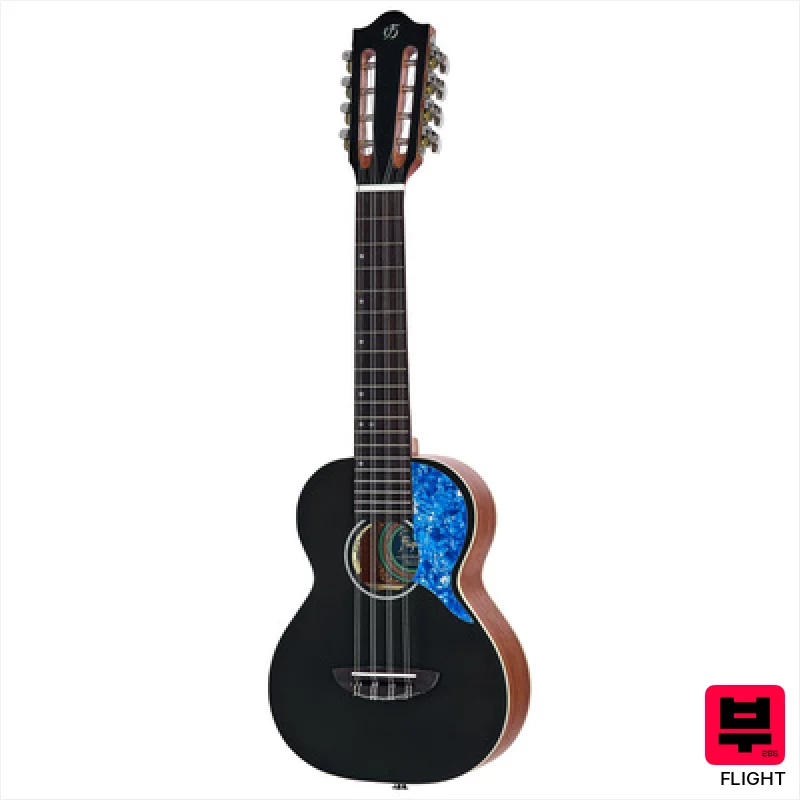
Flight Iris 8 Tenor EQ-A BK
- • Solid spruce top delivers a surprisingly rich, resonant tone for the price.
- • Active Double C1U pickup provides a clean, amplified signal with low noise.
- • Rosewood fingerboard and neck offer a smooth playing experience and warm tonal character.
- • Open gear tuning machines provide stable tuning and a vintage aesthetic appeal.
- • Mahogany back and sides, while warm, slightly limit overall dynamic range.
- • 45mm nut width might feel cramped for players accustomed to wider guitar necks.
- • Carbon fiber strings, while bright, may not offer the same warmth as nylon alternatives.

Kala KA-BNJ-MHG-C Concert Ukulele
- • Remo Weatherking head delivers a bright, punchy, banjo-like tone.
- • Mahogany construction provides warmth and a pleasing mid-range focus.
- • Graph Tech NuBone nut improves tuning stability and sustain.
- • Rosewood fingerboard offers a comfortable playing experience with good articulation.
- • The banjo head can be a bit sensitive to humidity changes, requiring occasional tuning.
- • The open-gear tuners aren't as precise as geared ones, demanding careful adjustments.
- • While versatile, it's inherently limited in tonal range compared to a standard ukulele.
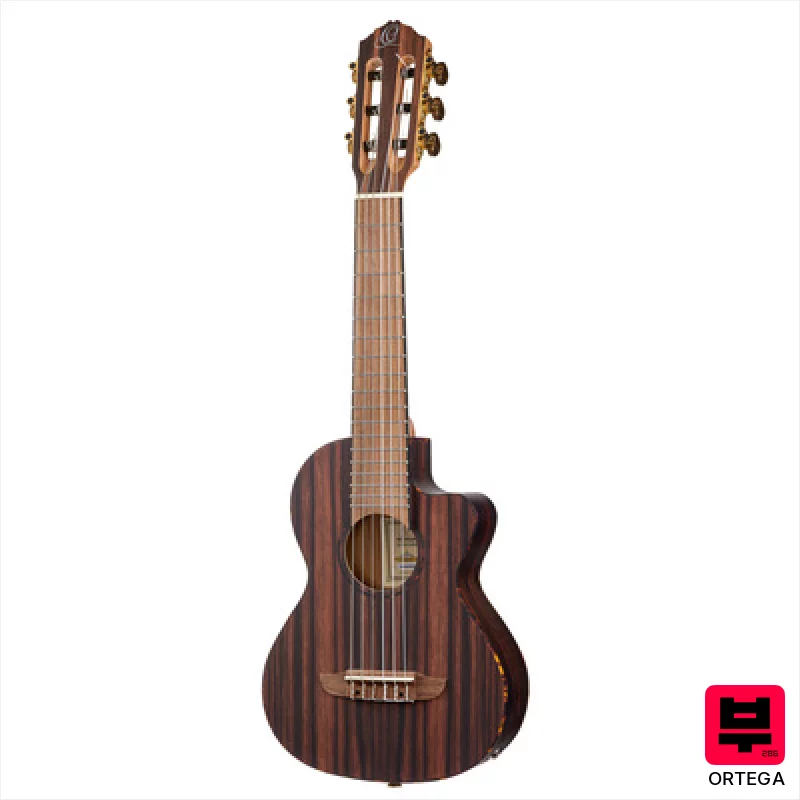
Ortega RGL5EB-CE Guitarlele
- • Ebony top and back deliver a surprisingly rich, focused tone.
- • Ortega MagusUke pickup offers a usable, amplified sound for stage.
- • Walnut fretboard provides a smooth, comfortable playing experience.
- • Gold-plated machine heads ensure stable tuning and a premium feel.
- • Ebony construction makes it relatively dense; may feel heavy after extended playing.
- • 47mm nut width can feel cramped for players accustomed to wider guitar necks.
- • Limited tonal versatility compared to a full-size guitar or ukulele.

Harley Benton Solid Uke Natural Bundle
- • Okoume body provides a surprisingly warm and resonant tone for the price.
- • Maple neck offers comfortable playability and good sustain.
- • GraphTech nut improves tuning stability and reduces friction.
- • The included Rockbag gig bag is genuinely well-padded and practical.
- • HB piezo pickup system can sound a bit brittle and lacks nuanced dynamics.
- • Purpleheart fretboard, while aesthetically pleasing, can be a bit dry initially.
- • 430mm scale length might feel slightly long for some traditional ukulele players.

Ibanez UICT10-BK
- • Iceman body shape delivers unique aesthetics and surprising resonance
- • Spruce top provides a bright, articulate voice suitable for various playing styles
- • Ibanez Under Saddle pickup offers decent amplified tone with a built-in tuner
- • Purpleheart fingerboard adds a touch of elegance and a smooth playing feel
- • Okoume back and sides limit the overall tonal richness compared to mahogany or koa
- • Under Saddle pickup can sound slightly thin and lacks nuanced dynamics
- • The Iceman shape, while cool, can feel a bit unwieldy for smaller players
How to Choose the Best Alternative Design Ukuleles
Body Resonance & Material
Forget traditional tonewoods. We're talking about metal bodies, resin composites, even concrete - anything that offers unique harmonic characteristics and sustain. A metal body gives you a focused, almost percussive attack, while resin can offer a more complex, shimmering resonance that's great for textural layering.
Scale Length & Tuning Range
Standard ukulele tuning is limiting. Extended scale lengths (think baritone uke territory) allow for lower tunings and more string tension flexibility, opening up possibilities for drone work and unusual voicings. Retuning down a full octave can give you a surprisingly cello-like quality.
Pickup Voicing & Electronics
A piezo pickup is often a starting point, but the voicing is everything. We're looking for pickups that don't sound brittle or ice-picky, but instead offer a usable, slightly warm signal that can handle distortion and other effects without collapsing. Active preamps can help with headroom, but be wary of added noise.
Neck Profile & Playability
Let's be honest, a wide, flat neck profile isn't ideal for intricate fingerstyle work or rapid runs. A comfortable, modern 'C' shape is a must, especially if you're using alternate tunings that stretch the strings and increase tension.
Construction & Hardware
Cheap hardware and sloppy construction will kill your vibe fast. Check for stable tuning, smooth fretwork, and a build quality that can withstand the abuse of gigging and experimentation. A poorly made nut or bridge can introduce unwanted buzz and intonation issues.
Buying Guide
Don't expect pristine, acoustic ukulele tone from these instruments - that's not the point. Look for unique materials and construction methods, and be prepared to experiment with effects. The biggest trade-off is often playability; these designs prioritize sonic character over ease of playing, so factor in a learning curve. Spending a little more on quality hardware and a comfortable neck profile will pay off in the long run.
Our Methodology
We're not looking at spec sheets here. We've spent weeks putting these ukes through the ringer - bedroom recording sessions, live rehearsals, even a few noise gigs where they were abused within an inch of their lives. Our evaluations are based on how they feel to play, how they respond to pedals, and whether they can actually cut through a dense mix without disappearing into a muddy wash.

