
Best 44 Size Classical Guitars 2026
So, you're diving into the world of classical guitar? Excellent choice - there's a depth of tone and nuance you just don't get with a steel-string. But finding the right 4/4 size instrument can be overwhelming. This isn't just about size; it's about finding a guitar that responds to your touch, has a voice that inspires, and can handle everything from quiet bedroom practice to a gig where you need to cut through a string section. Let's break down what to look for.
Last updated: May 13, 2026 • Next update: May 20, 2026
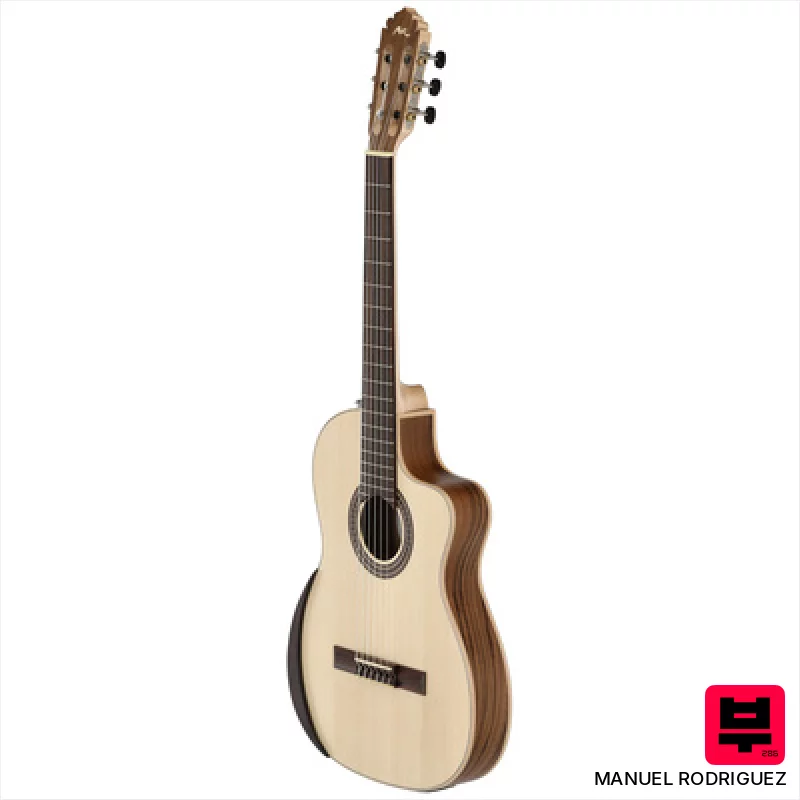
Manuel Rodriguez Ecologia Samba Plano Truss Rod
- • Solid European spruce top delivers a clear, responsive, and articulate tone.
- • Walnut back and sides add warmth and sustain, balancing the spruce’s brightness.
- • Double action truss rod allows for precise neck adjustments, crucial for stability.
- • Solidflex pickup with SQ-3 EQ provides a usable amplified sound, surprisingly clean.
- • Acacia fingerboard, while functional, lacks the premium feel of ebony or rosewood.
- • Open pore matte finish, while aesthetically pleasing, may require more diligent care to prevent stickiness.
- • The 650mm scale length might feel slightly long for players accustomed to shorter classical scales.
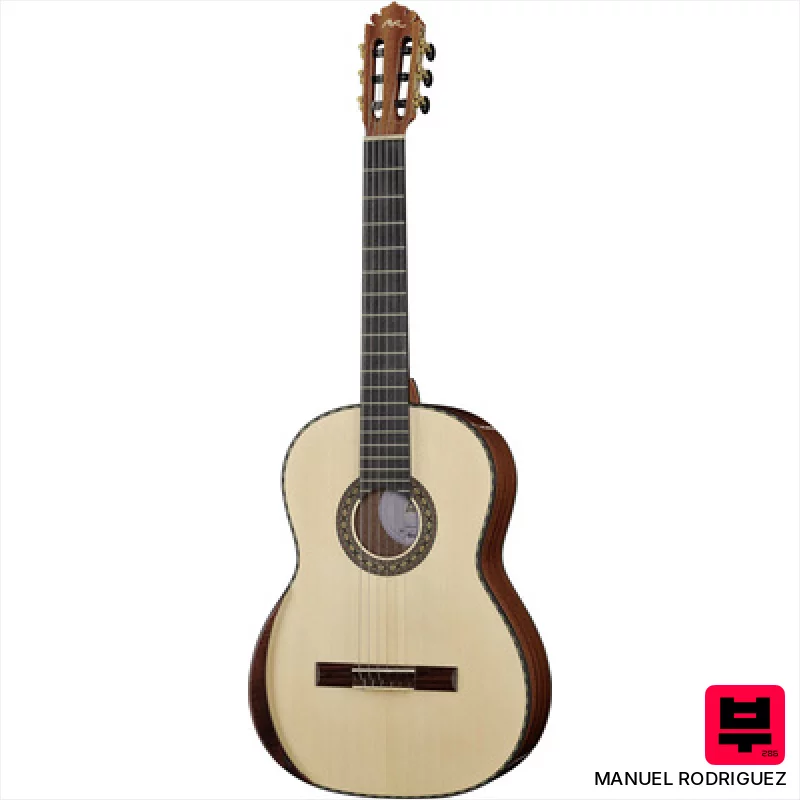
Manuel Rodriguez Magistral D-S
- • Solid spruce top delivers a clear, responsive, and nuanced tone.
- • Solid mahogany back & sides add warmth and sustain, beautifully balanced.
- • Spanish neck joint provides exceptional playability and comfortable access.
- • Ebony fingerboard offers smooth, fast action and excellent note definition.
- • Water-based lacquer, while eco-friendly, may not have the depth of traditional finishes.
- • Mahogany can be prone to movement with significant humidity changes.
- • The natural shellac finish requires careful maintenance to prevent stickiness.
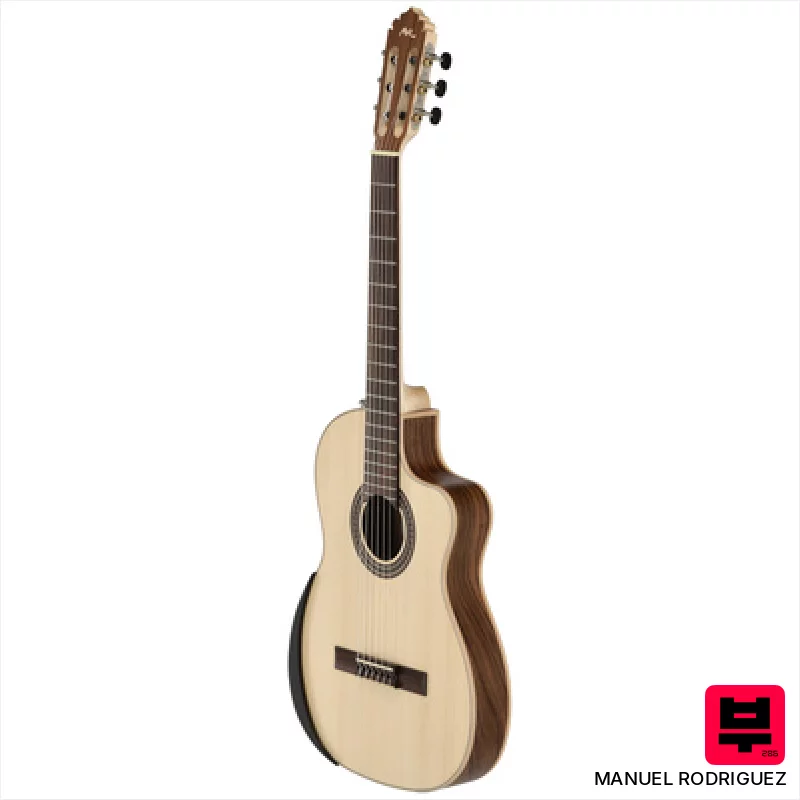
Manuel Rodriguez Ecologia Samba Plano
- • Solid spruce top delivers a clear, responsive tone with good projection.
- • Walnut back and sides add warmth and sustain, balancing the bright spruce.
- • Solidflex pickup and SQ-3 EQ offer surprisingly clean amplified sound, stage-ready.
- • Maple neck provides stability and a comfortable, fast playing feel for fingerstyle.
- • Open pore finish, while aesthetically pleasing, may require more diligent care to prevent moisture issues.
- • Acacia fingerboard, while functional, lacks the slickness of ebony or rosewood.
- • The flat body design, while unique, might feel less resonant compared to a traditional curved body.

Manuel Rodriguez Ecologia Samba
- • Solid European spruce top delivers a clear, responsive, and articulate tone.
- • Walnut back and sides add warmth and sustain, balancing the spruce's brightness.
- • Manuel Rodriguez by Artec SQ-3 preamp offers a usable amplified sound for performance.
- • Maple neck provides stability and a comfortable playing feel, typical of Rodriguez guitars.
- • Acacia fingerboard can feel a bit harder than rosewood, affecting slide work.
- • Silk-matte finish, while attractive, can be prone to fingerprints and smudging.
- • Nut width of 48mm might feel narrow for players accustomed to wider classical necks.
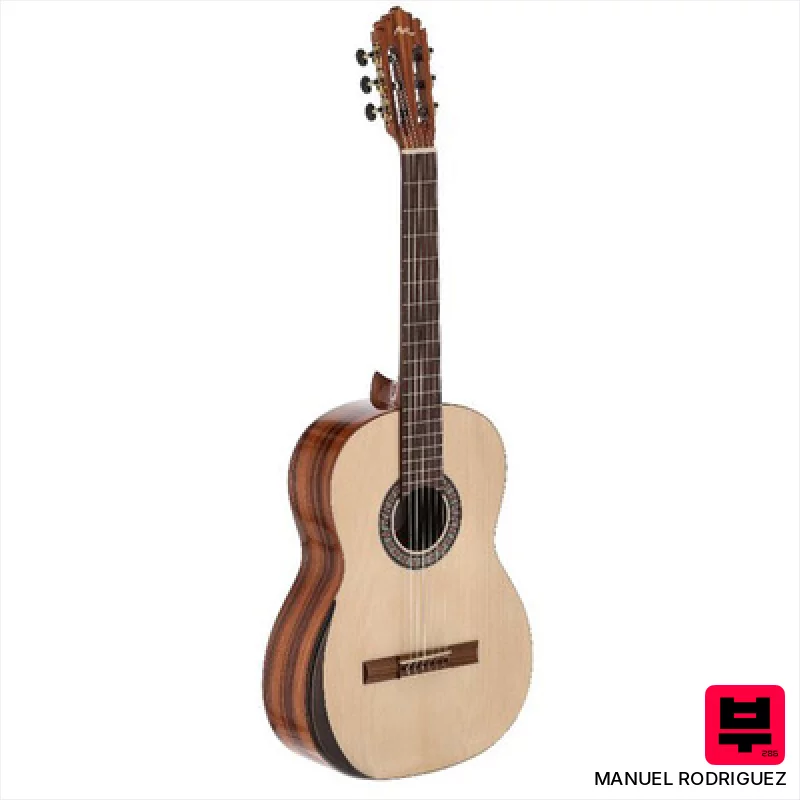
Manuel Rodriguez Exotica Santos Real EX-SS G
- • Santos rosewood back/sides deliver warm, resonant bass response and projection.
- • Solid spruce top provides clarity and headroom for dynamic playing.
- • Bone nut and compensated saddle enhance intonation and sustain.
- • Genuine Spanish neck tenon construction ensures stability and longevity.
- • Ovangkol fingerboard can feel slightly harder than ebony for some players.
- • High-gloss finish might be prone to fingerprints and require diligent care.
- • Hannabach strings are decent, but an upgrade will likely reveal the guitar's full potential.
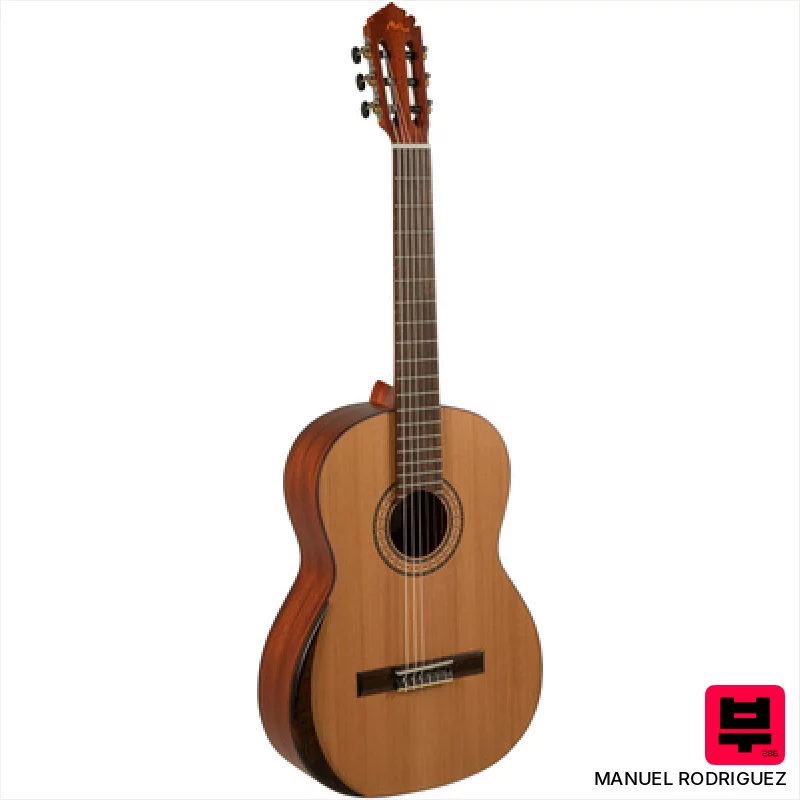
Manuel Rodriguez T-65
- • Solid cedar top delivers a warm, responsive tone ideal for classical and fingerstyle.
- • Mahogany back and sides provide a balanced, grounded resonance and sustain.
- • Ovangkol fingerboard offers a smooth playing experience and good durability.
- • Sonokilin bridge with compensated Bonoid saddle enhances intonation and tone transfer.
- • Mahogany construction can be slightly less projection than rosewood alternatives.
- • Hannabach 815HTC strings are decent, but a worthwhile upgrade for advanced players.
- • The armrest, while functional, might feel a bit bulky for some players.

Amalio Burguet 1DV Spruce w/ Case
- • Exceptional spruce top delivers clarity and nuanced projection.
- • Solid rosewood back/sides provide rich, warm tonal foundation.
- • Ebony fretboard offers smooth playability and note definition.
- • Bone nut and saddle contribute to improved sustain and intonation.
- • Premium-priced, making it a significant investment for many players.
- • Spruce top can be somewhat unforgiving of aggressive playing styles.
- • Natural finish might require more diligent care to prevent scratches.

Manuel Rodriguez Exotica Santos Real EX-SS S
- • Solid spruce top delivers a clear, responsive, and articulate tone.
- • Santos rosewood back/sides add warmth and projection, a nice balance.
- • Mahogany neck with Spanish tenon offers stability and a comfortable feel.
- • Hannabach strings provide a bright, modern voice ready to play.
- • Ovangkol fingerboard, while durable, isn't as tonally vibrant as ebony.
- • Satin finish, while attractive, can feel a bit less refined than gloss.
- • The armrest is a nice addition but might feel bulky to some players.
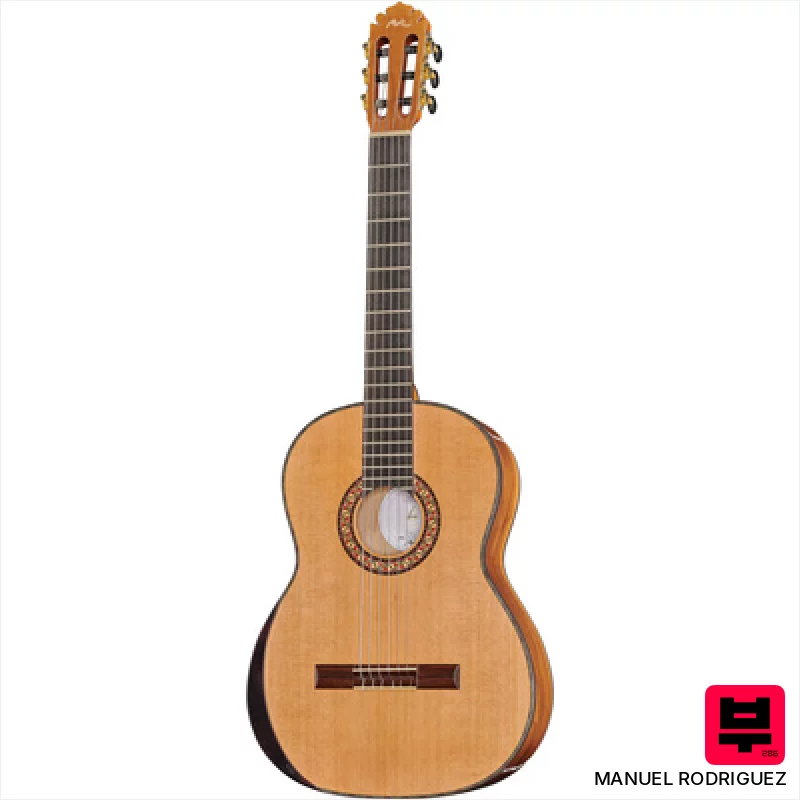
Manuel Rodriguez Magistral E-C
- • Solid cedar top delivers a warm, responsive, and expressive tone.
- • Walnut back and sides add complexity and projection to the sound.
- • Spanish neck joint provides excellent access to upper registers and comfortable feel.
- • Ebony fingerboard offers smooth playability and a crisp, defined attack.
- • Walnut's tonal character might be too subdued for players seeking a brighter voice.
- • Shellac finish can be prone to cracking with significant humidity fluctuations.
- • The eco-lacquer, while environmentally friendly, might not offer the same depth of gloss as traditional finishes.

Asturias Kodaira AST-100
- • Solid spruce top delivers a clear, responsive, and balanced tone with excellent projection.
- • Indian rosewood back and sides add warmth and complexity to the overall sonic character.
- • Japanese craftsmanship ensures exceptional build quality and meticulous attention to detail.
- • Gold-plated machine heads offer smooth tuning stability and a touch of premium aesthetic.
- • Rosewood is becoming increasingly regulated, potentially impacting future resale value.
- • The 52mm nut width might feel a bit wide for players accustomed to narrower necks.
- • High gloss finish, while beautiful, can be prone to fingerprints and requires careful maintenance.
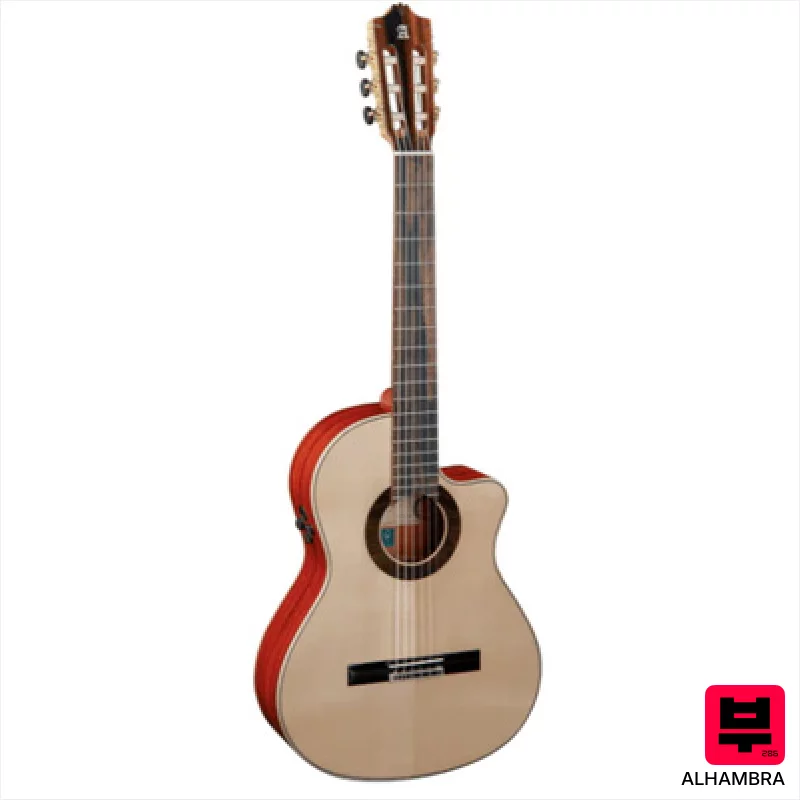
Alhambra Green Sustain Cut E8 w/Gig Bag
- • Solid German spruce top delivers a clear, projecting voice.
- • Padauk back and sides offer warmth and sustain.
- • Fishman Flex M Blend pickup system provides excellent amplified tone.
- • Ergoneck neck profile enhances comfort and playability for longer sessions.
- • Padouk can be prone to cracking if humidity isn't carefully managed.
- • The cutaway, while functional, slightly compromises upper-body resonance.
- • High-gloss finish might be a fingerprint magnet for some players.
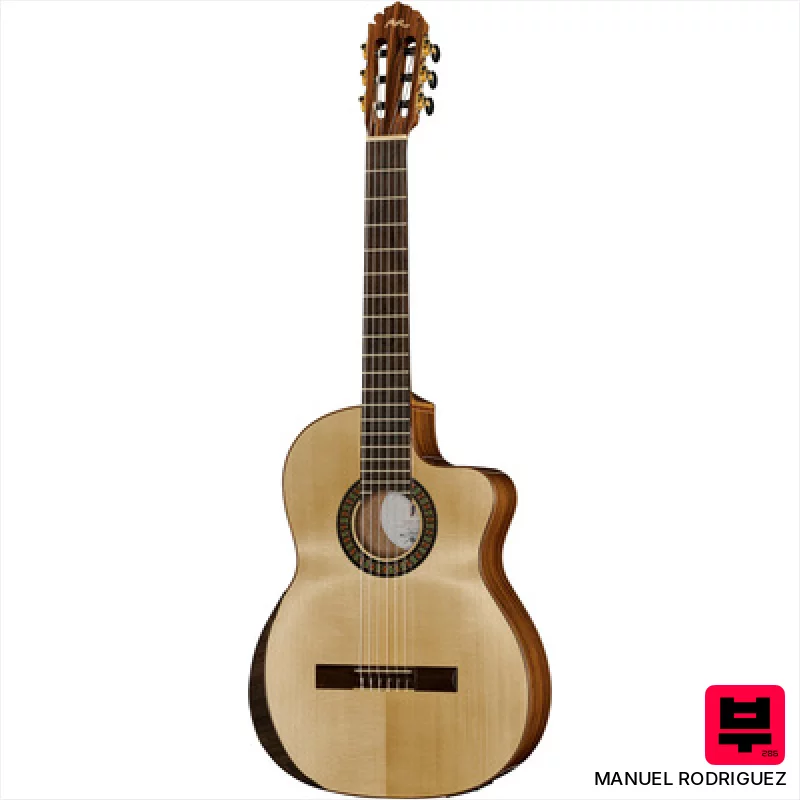
Manuel Rodriguez Santos Pavo EX-SS-CUT G
- • Solid spruce top delivers a clear, responsive voice with good projection.
- • Santos rosewood back and sides add warmth and sustain to the overall tone.
- • The MR by ARTEC SQ-3 pickup system is surprisingly clean and usable for amplification.
- • Genuine Spanish neck tenon contributes to excellent stability and resonance over time.
- • Ovangkol fingerboard can feel a bit harder than ebony for some players.
- • The high-gloss finish, while beautiful, might be a bit too reflective for stage performance.
- • While versatile, its classical setup limits its suitability for non-classical playing styles.
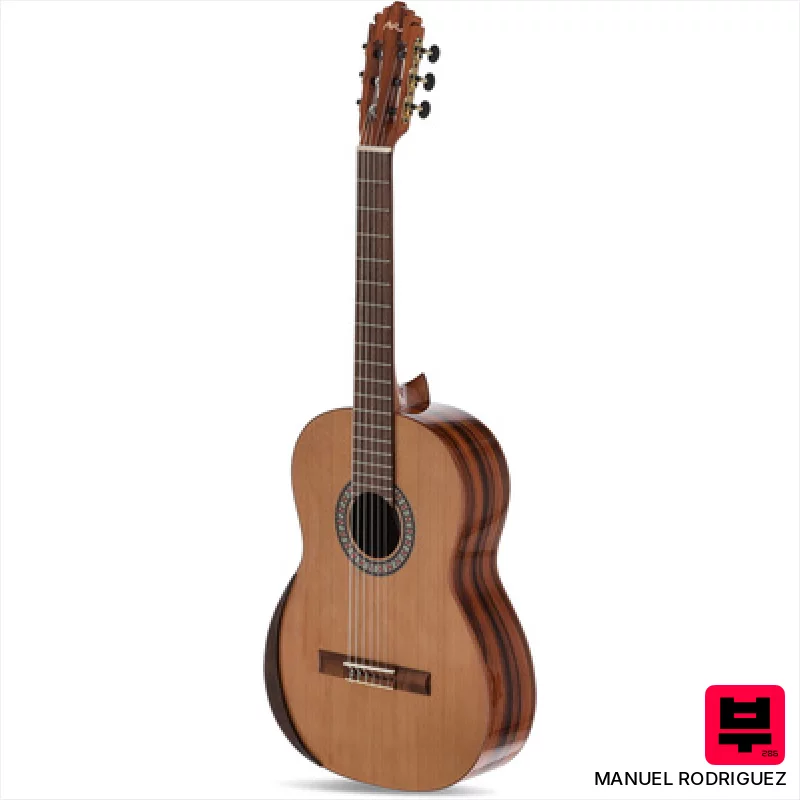
Manuel Rodriguez Exotica Santos Real EX-SC G
- • Solid cedar top provides warm, responsive fundamental tones.
- • Santos rosewood back/sides offer excellent projection and clarity.
- • Genuine Spanish neck tenon ensures stability and reliable action.
- • Hannabach strings deliver a bright, articulate, and balanced sound.
- • Ovangkol fingerboard can feel slightly harder than ebony for some players.
- • Satin finish, while attractive, may show fingerprints more readily.
- • Academy series implies a slightly more basic level of finish detail.
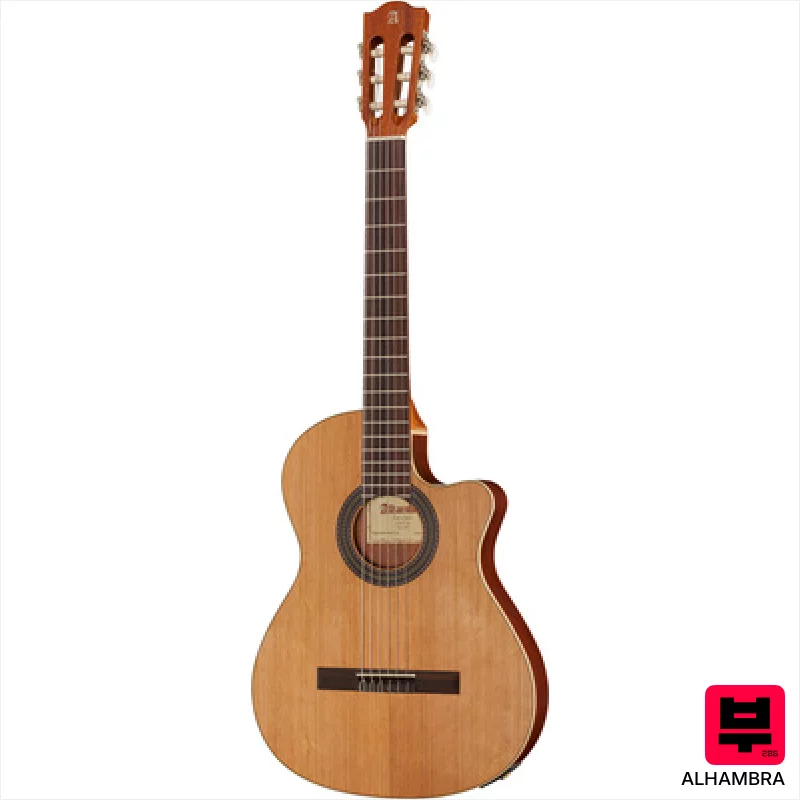
Alhambra Z Nature CT EZ
- • Solid cedar top delivers a warm, responsive, and articulate tone.
- • Fishman Classic II pickup provides reliable amplified sound for performance.
- • Mahogany back and sides offer balanced projection and sustain.
- • Maple binding adds a touch of elegance and enhances the guitar's durability.
- • Nature Open Pore finish can be more susceptible to humidity changes.
- • Rosewood fingerboard might require occasional oiling to prevent dryness.
- • The 50mm nut width can feel slightly wider for players accustomed to narrower necks.
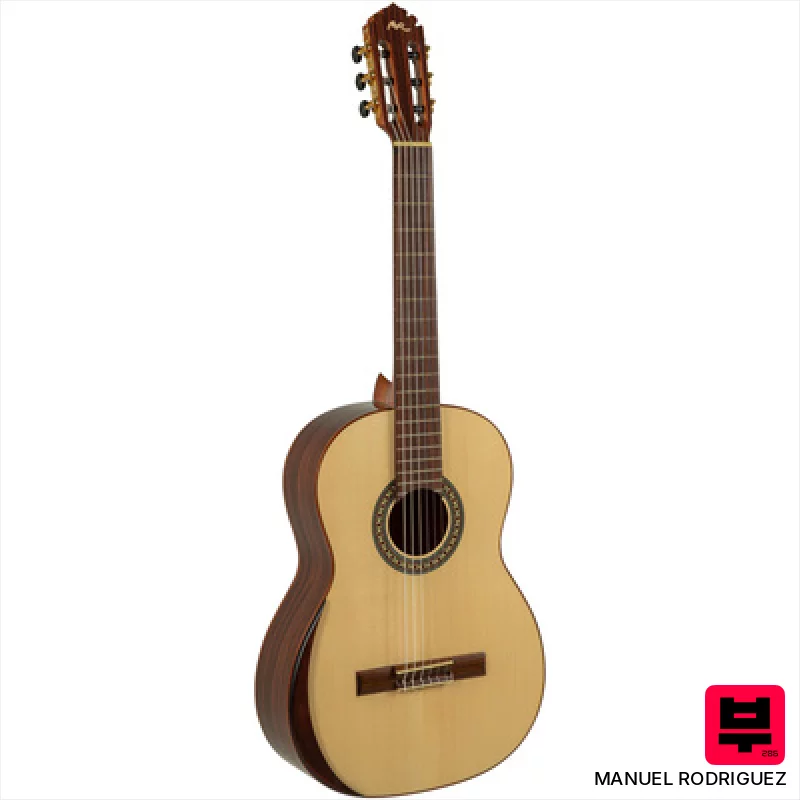
Manuel Rodriguez 60-S Spruce
- • Solid spruce top delivers a clear, responsive, and articulate tone.
- • Rosewood back and sides add warmth and sustain, expanding tonal possibilities.
- • Bone nut and compensated bridge enhance intonation and overall playability.
- • Hannabach 815HTC strings offer a balanced, professional sound right out of the box.
- • Ovangkol fingerboard, while functional, lacks the richness of ebony.
- • The armrest, while convenient, might feel bulky to some players.
- • Spruce top can be susceptible to humidity changes, requiring careful maintenance.
How to Choose the Best 44 Size Classical Guitars
Tonewoods
Spruce tops generally give you a brighter, more articulate sound - great for clarity and recording. Cedar offers a warmer, more immediate response, fantastic for a lush, resonant tone. Back and sides (rosewood, mahogany, cypress) heavily influence the low-end thump and overall projection; rosewood tends to be darker and more complex, mahogany a bit more focused, and cypress lighter and more direct.
Bracing Pattern
This dictates the guitar's structural integrity and affects its tonal character. Fan bracing, common on higher-end instruments, generally provides more even response and sustain. X-bracing is often found on more affordable models and can sometimes lead to a slightly boxier sound, but it's not inherently bad - it depends on the execution.
Action & Neck Profile
Lower action makes for easier playing, especially for beginners, but too low can cause buzzing. The neck profile (shape) is hugely personal - some prefer a slim, modern feel, while others like a thicker, vintage vibe. A comfortable neck is essential for long practice sessions or a demanding performance.
Scale Length
Standard scale is around 650mm. A slightly longer scale can provide more string tension and a more robust low end, while a shorter scale might feel more flexible and easier on the fingers. This is a subtle difference but can impact your overall playing experience.
Finish
A thinner finish allows the wood to breathe more, theoretically leading to better resonance. Thick, glossy finishes can dampen the tone. While the difference can be subtle, a well-executed, thinner finish often contributes to a more vibrant sound, but can also be more prone to scratches - a trade-off to consider.
Buying Guide
Don't get caught up in flashy aesthetics. A beautiful guitar doesn't necessarily sound great. Focus on the feel and the tone - does it inspire you to play? Cheap guitars often use lower-grade tonewoods and simpler bracing, which can translate to a less responsive, more constricted sound. Spending a bit more for better materials and construction will pay off in terms of playability and tonal richness, especially when you're trying to capture a delicate recording or cut through a band rehearsal. Ultimately, the best guitar is the one that feels right in your hands.
Our Methodology
We're not basing this on spec sheets or marketing claims. We've spent years playing these guitars - in studios, on stages, and in countless practice rooms - and we're evaluating them based on what actually matters: the feel in your hands, the response across the fretboard, and the tonal character when mic'd up or played acoustically. We A/B tested a wide range of instruments, paying close attention to sustain, articulation, and how each guitar responds to different playing styles.

