
Best 4-String P-Basses for Beginner 2026
So you're diving into the bass world? Awesome. The Precision Bass is the workhorse for a reason - it's versatile and reliable, but not all P-basses are created equal, especially for beginners. Finding one that's comfortable, sounds decent without breaking the bank, and won't make learning frustrating is key. Let's cut through the noise and find you a solid starting point.
Last updated: October 8, 2026
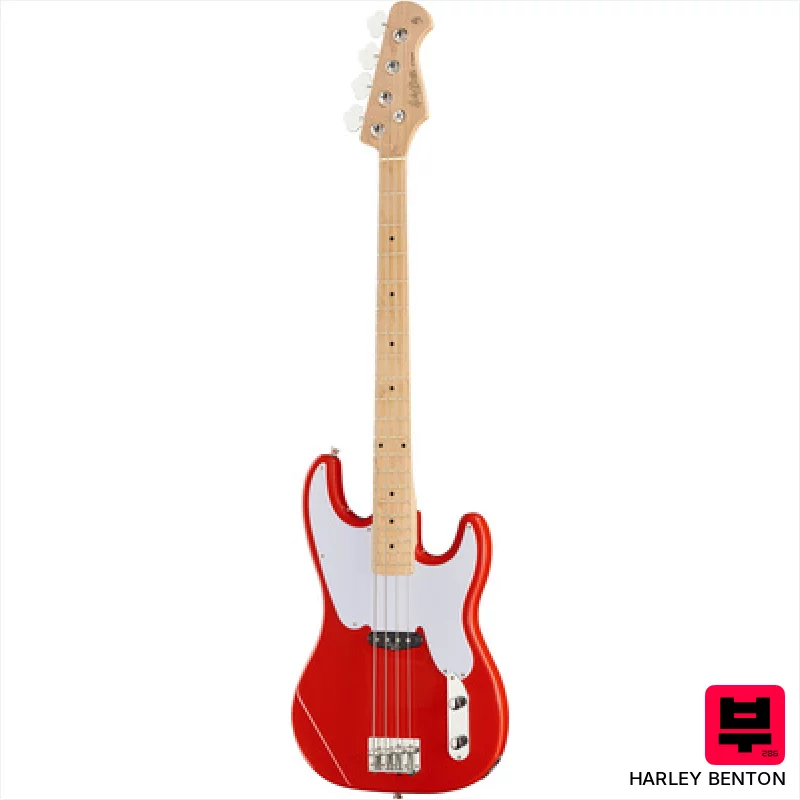
Harley Benton PB-50 FR Vintage Series
- • Roswell VTN4 pickups deliver a surprisingly authentic vintage P-bass tone.
- • Bolt-on maple neck provides a snappy, responsive feel ideal for quicker playing.
- • Deluxe chrome hardware elevates the aesthetic beyond the budget price point.
- • Canadian maple neck offers stability and a comfortable, familiar 'C' profile.
- • Basswood body, while lightweight, lacks the resonance of mahogany or ash.
- • Simpler controls (volume & tone only) limit tonal shaping possibilities.
- • Hardware, while decent, isn't quite on par with premium brands.

Harley Benton PB-50 SB Vintage Series
- • Roswell VTN4 pickup delivers surprisingly authentic vintage P-bass tone.
- • Bolt-on maple neck provides snappy response and comfortable playability.
- • Basswood body offers a lightweight feel, easing extended playing sessions.
- • Deluxe chrome hardware elevates the aesthetic beyond the budget price point.
- • Basswood body, while lightweight, lacks the sustain of more premium woods.
- • Bolt-on neck construction limits upper fret access compared to set necks.
- • While decent, the hardware isn't quite on par with higher-end brands.

Harley Benton PJ-74 VW Vintage Series
- • Roswell PBA pickup delivers a surprisingly authentic, warm P-bass tone.
- • Canadian maple neck with a comfortable 'D' profile feels well-played and stable.
- • Laurel fingerboard offers a smooth playing experience with a slightly warmer tone than rosewood.
- • Deluxe brass saddles improve sustain and intonation compared to standard hardware.
- • Poplar body, while resonant, lacks the premium feel of mahogany or ash.
- • Vintage-style machine heads might not offer the precision of locking tuners.
- • Limited tonal versatility; excels at vintage tones, less suited for modern genres.

Harley Benton PJ-74 VW Vintage Series Bundle
- • Roswell/JBA pickups deliver a surprisingly versatile, punchy tone.
- • Canadian maple neck offers a comfortable, familiar 'D' profile feel.
- • Deluxe brass saddles improve sustain and intonation accuracy.
- • HB-20B amp provides decent clean tones and basic shaping options.
- • Poplar body can feel a little 'soft' and prone to dents.
- • Laurel fretboard may require some initial fretwork for optimal playability.
- • Limited amp features restrict advanced tone sculpting possibilities.

Harley Benton PB-50 SB Vintage Series Bundle
- • Basswood body delivers a warm, rounded tone suitable for vintage styles.
- • Roswell VTN4 pickup provides a surprisingly articulate and punchy single-coil sound.
- • Bolt-on maple neck offers a bright, snappy feel and easy adjustability.
- • Accessory pack adds immediate playability; gig bag, strap, tuner included.
- • Basswood can lack sustain compared to mahogany or ash; a minor trade-off.
- • Bolt-on neck construction limits high-end upgrade potential and sustain.
- • Hardware, while functional, feels a bit basic and could benefit from an upgrade.

Harley Benton PJ-74 VW Vintage Series w/Bag
- • Roswell PBA pickup delivers a surprisingly warm and articulate low-end.
- • Canadian maple neck offers a comfortable, familiar 'D' profile feel.
- • Laurel fingerboard provides a smoother playing experience than rosewood.
- • Deluxe brass saddles enhance sustain and improve intonation slightly.
- • Poplar body can feel a bit 'soft' and prone to dents with rough handling.
- • Bolt-on neck construction limits the overall resonance and sustain potential.
- • Vintage-style machine heads may lack the precision of higher-end options.

Harley Benton PB-50 FR Vintage Series Bundle
- • Basswood body delivers a warm, punchy low-end characteristic of vintage P-basses.
- • Roswell VTN4 pickups provide a surprisingly authentic vintage single-coil tone.
- • Bolt-on maple neck offers a snappy, responsive feel ideal for quicker playing.
- • Accessory pack provides immediate playability - gig bag, strap, tuner included.
- • Basswood body can lack sustain compared to mahogany or other denser woods.
- • Bolt-on neck construction may not appeal to players seeking a more integrated feel.
- • Finish, while attractive, may be a thinner nitro finish, more prone to wear.
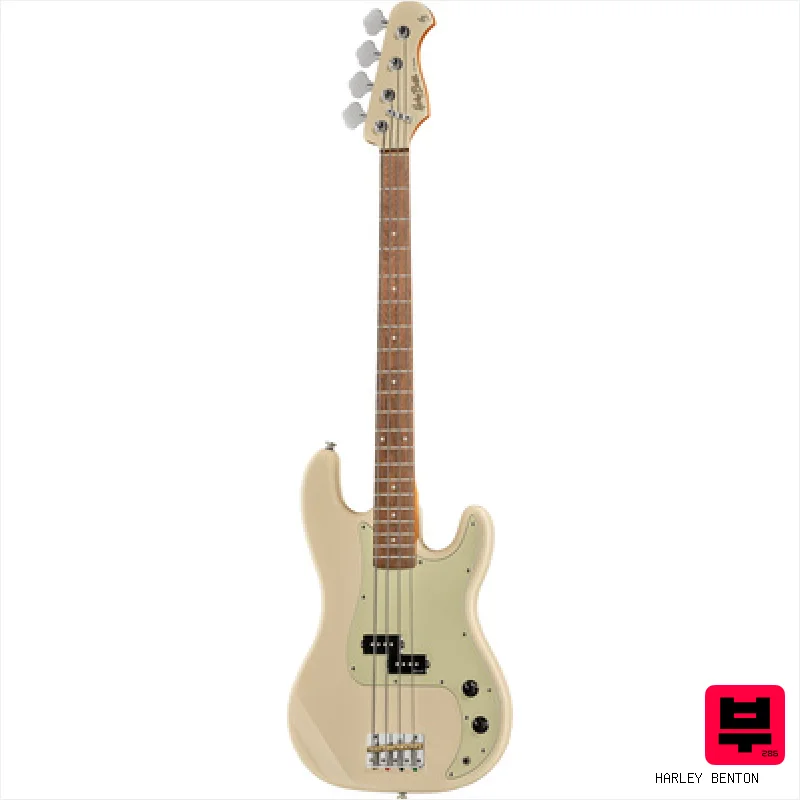
Harley Benton PB-62CC Olympic White
- • Affordable entry point for new bassists
- • Vintage maple neck with comfortable C profile
- • AlNiCo 5 pickups offer classic warm tone
- • Solid bolt-on construction for stability
- • No active electronics boost for cut
- • Single tone control limits frequency shaping
- • Lightweight body may feel thin in hands
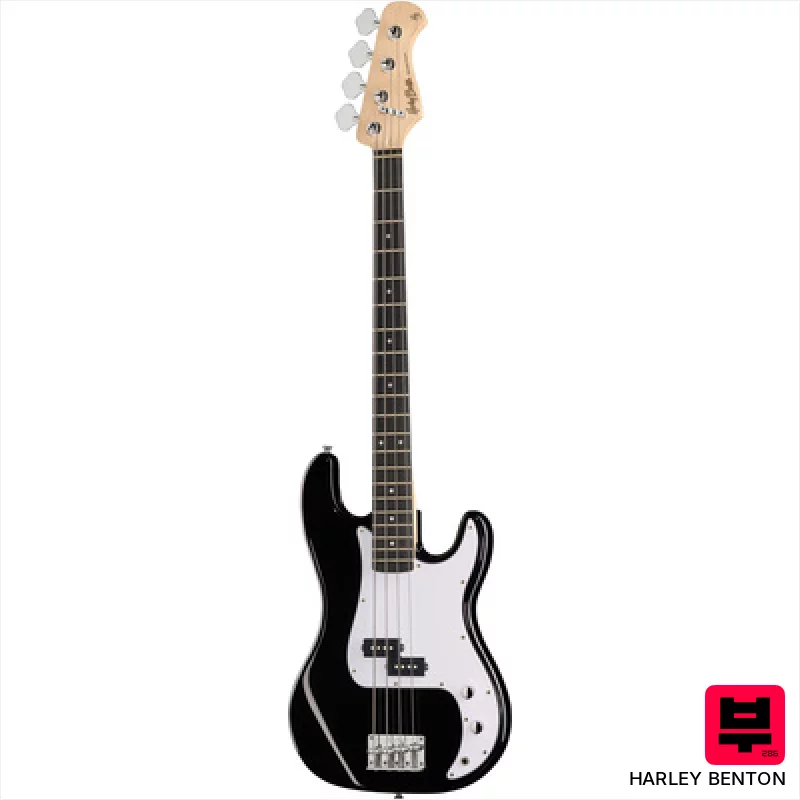
Harley Benton PB-20 BK Standard Series
- • Poplar body offers a surprisingly resonant and balanced tone.
- • Maple neck with a modern C profile is comfortable and easy to play.
- • Laurel fingerboard provides a smooth playing experience with good note definition.
- • PB-style pickup delivers a classic, punchy P-bass growl.
- • Hardware, particularly the tuners, feels budget-oriented and may need upgrading.
- • Single pickup limits versatility; lacks tonal complexity for modern styles.
- • Poplar body, while resonant, can be prone to finish checking with temperature changes.

Harley Benton PB-20 BK Standard Serie Bundle
- • Poplar body offers a surprisingly resonant and balanced tone.
- • Bolt-on maple neck provides snappy response and easy playability.
- • Laurel fingerboard is smooth and comfortable under the hand.
- • Complete accessory pack adds immediate value and convenience.
- • Single pickup limits tonal versatility; lacks the complexity of dual pickups.
- • Chrome hardware might show wear quicker than higher-grade finishes.
- • Poplar body, while good, isn’t as tonally complex as Alder or Ash.
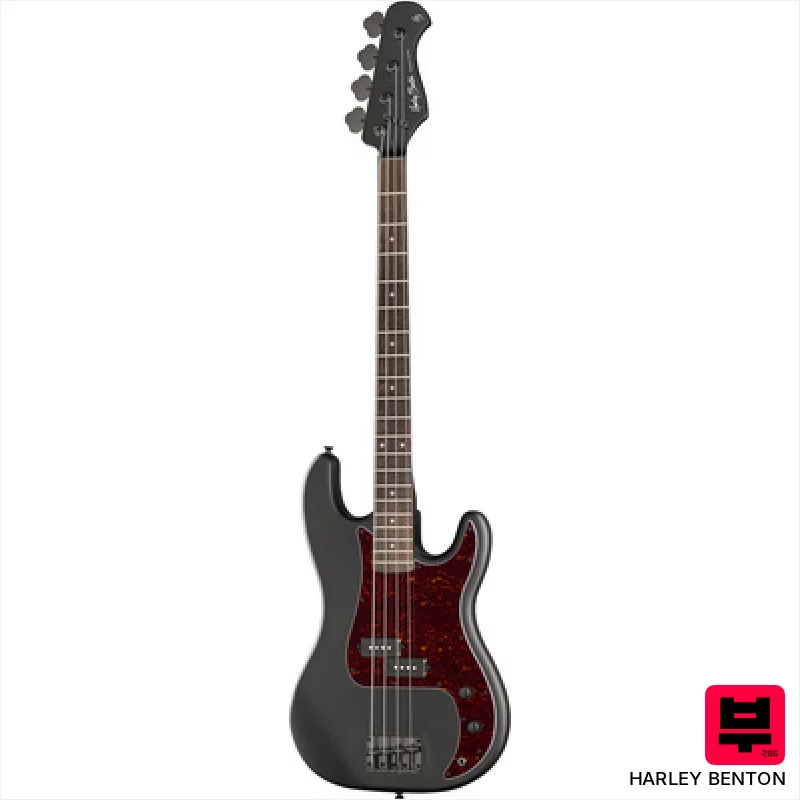
Harley Benton PB-20 SBK Standard Series
- • Poplar body provides a surprisingly resonant and balanced tonal foundation.
- • Modern 'inCin' neck profile offers comfortable playability for various hand sizes.
- • Laurel fingerboard provides a smooth playing surface, avoiding the harshness of some rosewood alternatives.
- • PB-style split coil pickup delivers a thick, vintage-inspired tone with plenty of growl.
- • Hardware, while functional, feels budget-grade and might benefit from an upgrade later.
- • Bolt-on neck construction limits sustain compared to neck-through designs.
- • Matt black finish can show fingerprints and grime more readily than gloss finishes.
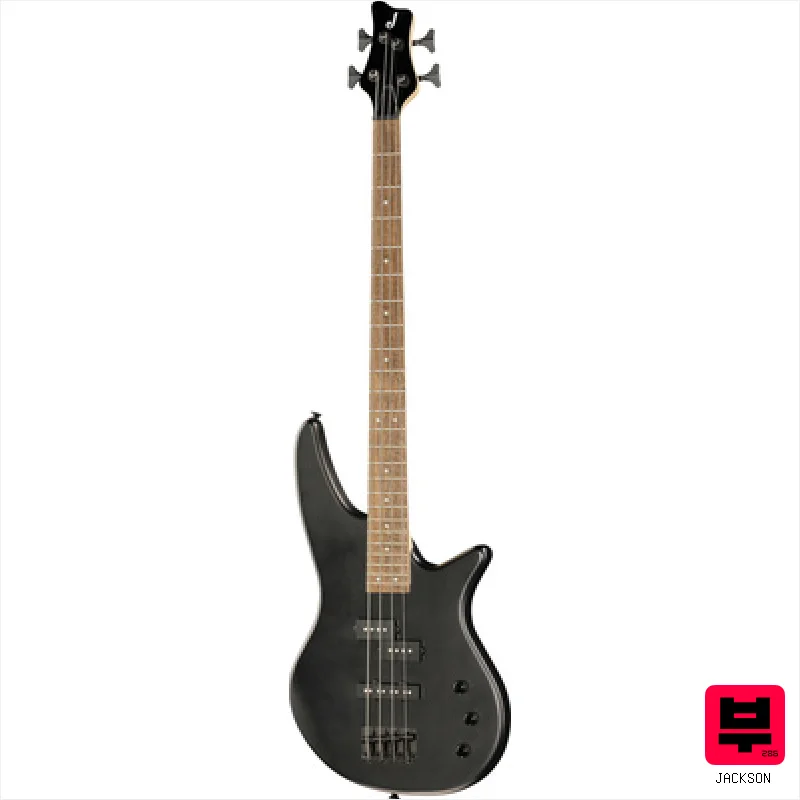
Jackson JS2 Spectra Bass STN BLK
- • Solid poplar body keeps the bass heavy and tight.
- • Maple neck offers a stable, smooth playing surface.
- • J-style and P-style single coils give a classic punch.
- • Active electronics let you shape the sound easily.
- • Hardtail bridge limits sustain and vibrato options.
- • Laurel fingerboard can wear down faster than rosewood.
- • No weight spec listed makes shipping and comfort guesswork.
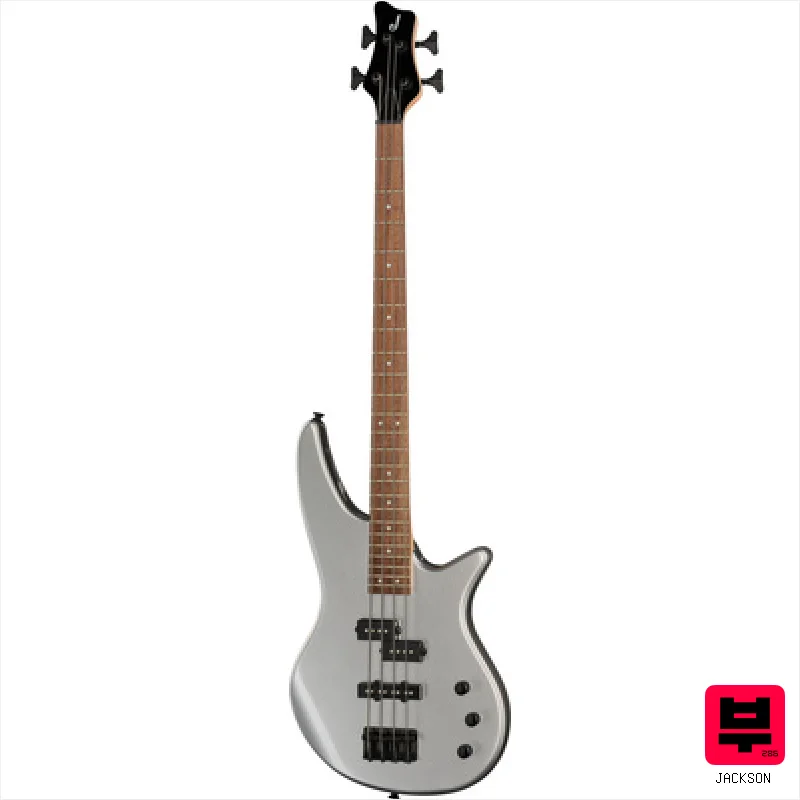
Jackson JS2 Spectra Bass QSV
- • Solid poplar body offers a bright, punchy attack for rock players.
- • Maple bolt-on neck provides a fast, responsive feel under the fingers.
- • Active electronics let you shape tone with blend and bass boost controls.
- • J-style and P-style pickups deliver a classic, tight low-end response.
- • Single coil pickups can sound noisy in high-gain settings.
- • No weight spec is listed, so heft might be unknown to buyers.
- • Lacks humbuckers or active EQ options for a wider tonal range.
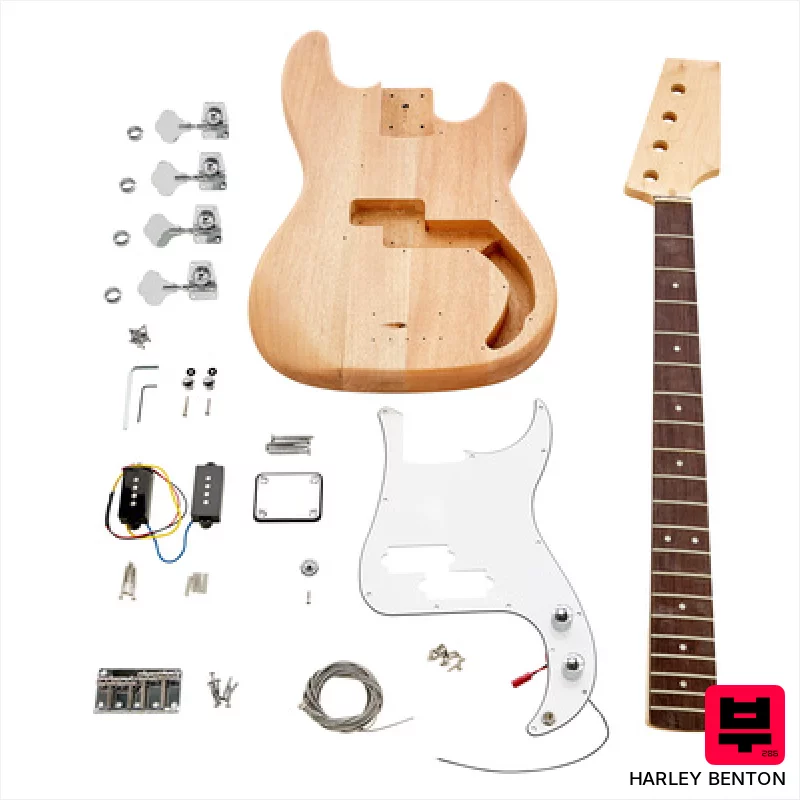
Harley Benton Bass Guitar Kit P-Style
- • Rengas body offers surprisingly resonant and warm tonal foundation.
- • Bolt-on maple neck provides a snappy, responsive feel ideal for quicker playing.
- • Die-cast machine heads ensure stable tuning, a step above cheaper options.
- • Primed body and neck simplify customization for DIY enthusiasts.
- • Requires assembly, a significant time commitment and some skill.
- • Single P-style pickup limits tonal versatility compared to multi-pickup basses.
- • Rengas wood, while good, isn't as tonally complex as ash or alder.

Harley Benton PB-62 Sunburst
- • Roswell pickups deliver a surprisingly warm, vintage-voiced tone.
- • Bolt-on maple neck offers comfortable playability and snappy response.
- • Laurel fingerboard provides a smooth, familiar playing surface.
- • Solid basswood body contributes to a resonant, balanced sound.
- • Bolt-on neck construction limits high-end sustain compared to set-neck designs.
- • Graphite nut, while stable, can feel slightly less 'organic' than bone.
- • Basswood body, while resonant, lacks the premium feel of mahogany or ash.
Every 4-string p-basses that matches
213 models match this page. The 15 above are covered in detail; the rest are listed here with their published specifications.
| # | Model | Specifications | Price |
|---|---|---|---|
| 16 | Harley Benton MV-4PJ Daphne Blue | Nut width 38 mm (1.5") · Scale 864 mm (34.02") · Fingerboard radius 305 mm (12.01") · Neck profile D-shape neck · Body Alder body · Fingerboard Laurel fingerboard | $256 |
| 17 | Harley Benton MV-4PJ Natural | Nut width 38 mm (1.5") · Scale 864 mm (34.02") · Fingerboard radius 305 mm (12.01") · Neck profile D-shape neck · Body Alder body · Fingerboard Laurel fingerboard | $256 |
| 18 | Squier Sonic P Bass LRL MNB | Nut width 38.1 mm (1.5") · Scale 864 mm (34.02") · Fingerboard radius 241 mm (9.49") · Body Poplar body · Fingerboard Laurel fingerboard | $200 |
| 19 | Harley Benton PJ-4 HTR Deluxe Series | Nut width 42 mm (1.65") · Scale 864 mm (34.02") · Frets 20 frets · Body Poplar body | $144 |
| 20 | Harley Benton PB-50 LH SB Vintage Ser Bundle | Nut width 42 mm (1.65") · Scale 864 mm (34.02") · Frets 20 frets · Neck profile C-shape neck | $155 |
| 21 | Harley Benton MV-4PJ Natural w/Case | Nut width 38 mm (1.5") · Scale 864 mm (34.02") · Fingerboard radius 305 mm (12.01") · Neck profile D-shape neck · Body Alder body · Fingerboard Laurel fingerboard | $289 |
| 22 | Harley Benton MV-4PJ Daphne Blue w/Case | Nut width 38 mm (1.5") · Scale 864 mm (34.02") · Fingerboard radius 305 mm (12.01") · Neck profile D-shape neck · Body Alder body · Fingerboard Laurel fingerboard | $289 |
| 23 | Harley Benton MV-4PJ Seafoam Green w/Case | Nut width 38 mm (1.5") · Scale 864 mm (34.02") · Fingerboard radius 305 mm (12.01") · Neck profile D-shape neck · Body Alder body · Fingerboard Laurel fingerboard | $292 |
| 24 | Harley Benton MV-4PJ Black | Nut width 38 mm (1.5") · Scale 864 mm (34.02") · Fingerboard radius 305 mm (12.01") · Body Alder body · Fingerboard Laurel fingerboard | $256 |
| 25 | Harley Benton MV-4P Seafoam Green | Nut width 38 mm (1.5") · Scale 864 mm (34.02") · Fingerboard radius 305 mm (12.01") · Body Alder body · Fingerboard Laurel fingerboard | $256 |
| 26 | Harley Benton MV-4P Burgundy Mist | Nut width 38 mm (1.5") · Scale 864 mm (34.02") · Fingerboard radius 305 mm (12.01") · Body Alder body · Fingerboard Laurel fingerboard | $256 |
| 27 | Harley Benton MV-4P Daphne Blue | Nut width 38 mm (1.5") · Scale 864 mm (34.02") · Fingerboard radius 305 mm (12.01") · Body Alder body · Fingerboard Laurel fingerboard | $256 |
| 28 | Harley Benton MV-4P Shell Pink | Nut width 38 mm (1.5") · Scale 864 mm (34.02") · Fingerboard radius 305 mm (12.01") · Body Alder body · Fingerboard Laurel fingerboard | $256 |
| 29 | Harley Benton PB-62LA BK | Nut width 43 mm (1.69") · Scale 864 mm (34.02") · Fingerboard radius 305 mm (12.01") · Neck profile C-shape neck · Fingerboard Laurel fingerboard | $278 |
| 30 | Harley Benton PB-62HA BK | Nut width 43 mm (1.69") · Scale 864 mm (34.02") · Fingerboard radius 305 mm (12.01") · Neck profile C-shape neck · Fingerboard Laurel fingerboard | $278 |
| 31 | Harley Benton PB-62LA OW | Nut width 43 mm (1.69") · Scale 864 mm (34.02") · Fingerboard radius 305 mm (12.01") · Neck profile D-shape neck · Fingerboard Laurel fingerboard | $278 |
| 32 | Harley Benton PB-62HA OW | Nut width 43 mm (1.69") · Scale 864 mm (34.02") · Fingerboard radius 305 mm (12.01") · Neck profile C-shape neck · Fingerboard Laurel fingerboard | $278 |
| 33 | Harley Benton MV-4PJ Black w/Case | Nut width 38 mm (1.5") · Scale 864 mm (34.02") · Fingerboard radius 305 mm (12.01") · Body Alder body · Fingerboard Laurel fingerboard | $289 |
| 34 | Harley Benton MV-4P Seafoam Green w/Case | Nut width 38 mm (1.5") · Scale 864 mm (34.02") · Fingerboard radius 305 mm (12.01") · Body Alder body · Fingerboard Laurel fingerboard | $289 |
| 35 | Harley Benton MV-4P Shell Pink w/Case | Nut width 38 mm (1.5") · Scale 864 mm (34.02") · Fingerboard radius 305 mm (12.01") · Body Alder body · Fingerboard Laurel fingerboard | $289 |
| 36 | Harley Benton MV-4P Burgundy Mist w/Case | Nut width 38 mm (1.5") · Scale 864 mm (34.02") · Fingerboard radius 305 mm (12.01") · Body Alder body · Fingerboard Laurel fingerboard | $289 |
| 37 | Squier Affinity P Bass MN PJ BK | Nut width 41.3 mm (1.63") · Scale 864 mm (34.02") · Frets 20 frets · Neck profile C-shape neck · Body Poplar body | $289 |
| 38 | Squier Sonic Precision Black | Nut width 38.1 mm (1.5") · Scale 864 mm (34.02") · Body Poplar body · Fingerboard Laurel fingerboard | $200 |
| 39 | Squier Affinity P Bass MN PJ OW | Nut width 41.3 mm (1.63") · Scale 864 mm (34.02") · Frets 20 frets · Neck profile C-shape neck · Body Poplar body | $301 |
| 40 | Squier Affinity P Bass PJ LPB | Nut width 41.3 mm (1.63") · Scale 864 mm (34.02") · Frets 20 frets · Neck profile C-shape neck · Body Poplar body | $301 |
| 41 | Squier Sonic Precision California BL | Nut width 38.1 mm (1.5") · Scale 864 mm (34.02") · Body Poplar body · Fingerboard Maple fingerboard | $218 |
| 42 | Squier Sonic Precision 2TSB | Nut width 38.1 mm (1.5") · Scale 864 mm (34.02") · Body Poplar body · Fingerboard Maple fingerboard | $220 |
| 43 | Harley Benton PJ-4 SBK Deluxe Series | Nut width 42 mm (1.65") · Scale 864 mm (34.02") · Body Poplar body | $155 |
| 44 | Squier Affinity P Bass MN PJ B Bundle | Nut width 41.3 mm (1.63") · Scale 864 mm (34.02") · Frets 20 frets · Neck profile C-shape neck · Body Poplar body | $319 |
| 45 | Harley Benton PJ-4 SBK Deluxe Series Bundle | Nut width 42 mm (1.65") · Scale 864 mm (34.02") · Body Poplar body | $167 |
| 46 | Harley Benton PJ-4 SBK Deluxe Series w/Bag | Nut width 42 mm (1.65") · Scale 864 mm (34.02") · Body Poplar body | $173 |
| 47 | Squier Affinity P Bass PJ LPB Bundle | Nut width 41.3 mm (1.63") · Scale 864 mm (34.02") · Frets 20 frets · Neck profile C-shape neck · Body Poplar body | $330 |
| 48 | Squier Affinity P Bass MN PJ O Bundle | Nut width 41.3 mm (1.63") · Scale 864 mm (34.02") · Frets 20 frets · Neck profile C-shape neck · Body Poplar body | $330 |
| 49 | Squier Sonic Precision Califor Bundle | Nut width 38.1 mm (1.5") · Scale 864 mm (34.02") · Body Poplar body · Fingerboard Maple fingerboard | $248 |
| 50 | Harley Benton Enhanced MP-4MN Natural | Nut width 39 mm (1.54") · Scale 864 mm (34.02") · Fingerboard radius 355.6 mm (14") · Fingerboard Maple fingerboard | $334 |
| 51 | Harley Benton Enhanced MP-4MN Natural Bundle | Nut width 39 mm (1.54") · Scale 864 mm (34.02") · Fingerboard radius 355.6 mm (14") · Fingerboard Maple fingerboard | $345 |
| 52 | Markbass MB Yellow PB | Nut width 36 mm (1.42") · Scale 864 mm (34.02") · Body Poplar body · Fingerboard Laurel fingerboard | $334 |
| 53 | Harley Benton Enhanced MP-4EB Creme Bundle | Nut width 39 mm (1.54") · Scale 864 mm (34.02") · Weight 7.5 kg | $424 |
| 54 | Harley Benton Enhanced MP-4EB Creme | Nut width 39 mm (1.54") · Scale 864 mm (34.02") | $334 |
| 55 | Marcus Miller P5 Alder-4 MLG | Nut width 42 mm (1.65") · Fingerboard radius 241 mm (9.49") · Neck profile C-shape neck · Fingerboard Maple fingerboard | $479 |
| 56 | Jackson JS2P Spectra Bass BB | Nut width 38.1 mm (1.5") · Frets 24 frets | $368 |
| 57 | Squier CV 60s P-Bass LRL 3TS | Nut width 42.8 mm (1.69") · Neck profile C-shape neck · Body Poplar body | $412 |
| 58 | Squier CV 70s P Bass MN WN | Nut width 43 mm (1.69") · Scale 864 mm (34.02") · Neck profile C-shape neck | $479 |
| 59 | Squier CV 60s P-Bass LRL OWT | Nut width 42.8 mm (1.69") · Neck profile C-shape neck · Body Poplar body | $468 |
| 60 | Marcus Miller P7-4 Sandblasted CAR TE | Nut width 38 mm (1.5") · Scale 864 mm (34.02") · Frets 20 frets · Fingerboard radius 241 mm (9.49") · Neck profile C-shape neck · Body Mahogany body · Fingerboard Maple fingerboard | $670 |
| 61 | Marcus Miller P6-4 Sandblasted Butterscotch | Nut width 38 mm (1.5") · Scale 864 mm (34.02") · Frets 20 frets · Fingerboard radius 241 mm (9.49") · Neck profile C-shape neck · Body Mahogany body · Fingerboard Rosewood fingerboard | $569 |
| 62 | Sandberg California II VM 4 VW HCA | Nut width 39.5 mm (1.56") · Scale 864 mm (34.02") · Frets 22 frets · Body Alder body · Fingerboard Maple fingerboard · Weight 3.74 kg | $3,017 |
| 63 | Fender Am Ultra II P Bass MN AVL | Nut width 41.3 mm (1.63") · Scale 864 mm (34.02") · Frets 21 frets · Fingerboard radius 254 mm (10") · Body Alder body · Fingerboard Maple fingerboard | $2,625 |
| 64 | Fender Am Ultra II P Bass MN UBST | Nut width 41.3 mm (1.63") · Scale 864 mm (34.02") · Frets 21 frets · Fingerboard radius 254 mm (10") · Body Alder body · Fingerboard Maple fingerboard | $2,625 |
| 65 | Fender Am Pro Clsc P-Bass MN FLPB | Nut width 41.3 mm (1.63") · Scale 864 mm (34.02") · Frets 20 frets · Fingerboard radius 241 mm (9.49") · Body Alder body · Fingerboard Maple fingerboard | $1,706 |
| 66 | Fender Am Pro Clsc P-Bass RW 3TS | Nut width 41.3 mm (1.63") · Scale 864 mm (34.02") · Frets 20 frets · Fingerboard radius 241 mm (9.49") · Body Alder body · Fingerboard Rosewood fingerboard | $1,706 |
| 67 | Fender LTD Player Fusion P-Bass HH BK | Nut width 38.1 mm (1.5") · Scale 864 mm (34.02") · Frets 20 frets · Fingerboard radius 305 mm (12.01") · Body Alder body · Fingerboard Ebony fingerboard | $1,396 |
| 68 | Fender LTD Player Fusion P-Bass HH HM | Nut width 38.1 mm (1.5") · Scale 864 mm (34.02") · Frets 20 frets · Fingerboard radius 305 mm (12.01") · Body Alder body · Fingerboard Ebony fingerboard | $1,385 |
| 69 | Fender Vintera III L 60s P Bass FMG | Nut width 41.3 mm (1.63") · Scale 864 mm (34.02") · Frets 20 frets · Fingerboard radius 184 mm (7.24") · Body Alder body · Fingerboard Rosewood fingerboard | $1,374 |
| 70 | Fender Vintera III L 60s P Bass BK | Nut width 41.3 mm (1.63") · Scale 864 mm (34.02") · Frets 20 frets · Fingerboard radius 184 mm (7.24") · Body Alder body · Fingerboard Rosewood fingerboard | $1,356 |
| 71 | Fender Vintera III L 60s P Bass LPB | Nut width 41.3 mm (1.63") · Scale 864 mm (34.02") · Frets 20 frets · Fingerboard radius 184 mm (7.24") · Body Alder body · Fingerboard Maple fingerboard | $1,348 |
| 72 | Fender Vintera III L 60s P Bass 3CSB | Nut width 41.3 mm (1.63") · Scale 864 mm (34.02") · Frets 20 frets · Fingerboard radius 184 mm (7.24") · Body Alder body · Fingerboard Maple fingerboard | $1,329 |
| 73 | Fender Player II Mod P Bass MN SSY | Nut width 41.3 mm (1.63") · Scale 864 mm (34.02") · Frets 20 frets · Fingerboard radius 241 mm (9.49") · Body Alder body · Fingerboard Maple fingerboard | $1,215 |
| 74 | Fender Player II Mod P Bass RW HGM | Nut width 41.3 mm (1.63") · Scale 864 mm (34.02") · Frets 20 frets · Fingerboard radius 241 mm (9.49") · Body Alder body · Fingerboard Rosewood fingerboard | $1,117 |
| 75 | Fender Player II Mod P Bass MN DSK | Nut width 41.3 mm (1.63") · Scale 864 mm (34.02") · Frets 20 frets · Fingerboard radius 241 mm (9.49") · Body Alder body · Fingerboard Maple fingerboard | $1,115 |
| 76 | Fender Player II P Bass MN RLO | Nut width 41.3 mm (1.63") · Scale 864 mm (34.02") · Frets 20 frets · Fingerboard radius 241 mm (9.49") · Body Alder body · Fingerboard Maple fingerboard | $1,061 |
| 77 | Fender Player II P Bass RW CGR | Nut width 41.3 mm (1.63") · Scale 864 mm (34.02") · Frets 20 frets · Fingerboard radius 241 mm (9.49") · Body Alder body · Fingerboard Rosewood fingerboard | $1,055 |
| 78 | Fender Player II P Bass MN BLK | Nut width 41.3 mm (1.63") · Scale 864 mm (34.02") · Frets 20 frets · Fingerboard radius 241 mm (9.49") · Body Alder body · Fingerboard Maple fingerboard | $1,005 |
| 79 | Fender Player II P Bass MN BCG | Nut width 41.3 mm (1.63") · Scale 864 mm (34.02") · Frets 20 frets · Fingerboard radius 241 mm (9.49") · Body Alder body · Fingerboard Maple fingerboard | $1,004 |
| 80 | Fender Player II P Bass RW 3TS | Nut width 41.3 mm (1.63") · Scale 864 mm (34.02") · Frets 20 frets · Fingerboard radius 241 mm (9.49") · Body Alder body · Fingerboard Rosewood fingerboard | $1,004 |
| 81 | Fender Player II P Bass MN AQB | Nut width 41.3 mm (1.63") · Scale 864 mm (34.02") · Frets 20 frets · Fingerboard radius 241 mm (9.49") · Body Alder body · Fingerboard Maple fingerboard | $1,004 |
| 82 | Fender Player II P Bass RW PWT | Nut width 41.3 mm (1.63") · Scale 864 mm (34.02") · Frets 20 frets · Fingerboard radius 241 mm (9.49") · Body Alder body · Fingerboard Rosewood fingerboard | $984 |
| 83 | Fender Standard P Bass MN BPG OWT | Nut width 41.3 mm (1.63") · Scale 864 mm (34.02") · Frets 20 frets · Fingerboard radius 241 mm (9.49") · Body Poplar body · Fingerboard Maple fingerboard | $692 |
| 84 | Fender Standard P Bass LRL BPG 3TS | Nut width 41.3 mm (1.63") · Scale 864 mm (34.02") · Frets 20 frets · Fingerboard radius 241 mm (9.49") · Body Poplar body · Fingerboard Laurel fingerboard | $647 |
| 85 | Fender Standard P Bass LRL WPG BLK | Nut width 41.3 mm (1.63") · Scale 864 mm (34.02") · Frets 20 frets · Fingerboard radius 241 mm (9.49") · Body Poplar body · Fingerboard Laurel fingerboard | $617 |
| 86 | Marcus Miller P6-4 Sandblasted CAR | Nut width 38 mm (1.5") · Scale 864 mm (34.02") · Frets 20 frets · Fingerboard radius 241 mm (9.49") · Body Mahogany body · Fingerboard Rosewood fingerboard | $614 |
| 87 | Fender Standard P Bass MN WPG CND | Nut width 41.3 mm (1.63") · Scale 864 mm (34.02") · Frets 20 frets · Fingerboard radius 241 mm (9.49") · Body Poplar body · Fingerboard Maple fingerboard | $600 |
| 88 | Marcus Miller P6-4 Sandblasted SGM | Nut width 38 mm (1.5") · Scale 864 mm (34.02") · Frets 20 frets · Fingerboard radius 241 mm (9.49") · Body Mahogany body · Fingerboard Maple fingerboard | $502 |
| 89 | Marcus Miller P6-4 Sandblasted Inca Silver | Nut width 38 mm (1.5") · Scale 864 mm (34.02") · Frets 20 frets · Fingerboard radius 241 mm (9.49") · Body Mahogany body · Fingerboard Rosewood fingerboard | $496 |
| 90 | FGN J-Standard Mighty Power OPB | Scale 864 mm (34.02") · Frets 21 frets · Fingerboard radius 305 mm (12.01") · Neck profile U-shape neck · Body Ash body · Fingerboard Maple fingerboard | $1,679 |
| 91 | Marcus Miller P7 4 New Gen Tobacco Sunburst | Nut width 42 mm (1.65") · Scale 864 mm (34.02") · Fingerboard radius 241 mm (9.49") · Neck profile C-shape neck · Body Alder body · Fingerboard Ebony fingerboard | $725 |
| 92 | Marcus Miller P7 4 New Gen Antique White | Nut width 42 mm (1.65") · Scale 864 mm (34.02") · Fingerboard radius 241 mm (9.49") · Neck profile C-shape neck · Body Alder body · Fingerboard Ebony fingerboard | $725 |
| 93 | Marcus Miller P7 4 New Gen Dark Forest | Nut width 42 mm (1.65") · Scale 864 mm (34.02") · Fingerboard radius 241 mm (9.49") · Neck profile C-shape neck · Body Alder body · Fingerboard Maple fingerboard | $725 |
| 94 | Sandberg California II VS 4 RW FR | Nut width 39.5 mm (1.56") · Scale 864 mm (34.02") · Frets 22 frets · Strings 4-string · Body Alder body | $2,458 |
| 95 | Sandberg California II VS 4 RW SFG | Nut width 39.5 mm (1.56") · Scale 864 mm (34.02") · Frets 22 frets · Strings 4-string · Body Alder body | $2,424 |
| 96 | Sandberg California II VM 4 Black EB | Nut width 39.5 mm (1.56") · Scale 864 mm (34.02") · Frets 22 frets · Strings 4-string · Body Ash body | $2,234 |
| 97 | Fender 59 P-Bass RW White Blonde CC | Nut width 44.5 mm (1.75") · Scale 864 mm (34.02") · Fingerboard radius 184 mm (7.24") · Body Ash body · Fingerboard Rosewood fingerboard | $6,034 |
| 98 | Fender 60 P-Bass RW WBoA CC | Nut width 44.5 mm (1.75") · Scale 864 mm (34.02") · Fingerboard radius 184 mm (7.24") · Body Ash body · Fingerboard Rosewood fingerboard | $6,034 |
| 99 | Fender 57 P-Bass MN Deserst Sand CC | Nut width 44.5 mm (1.75") · Scale 864 mm (34.02") · Fingerboard radius 184 mm (7.24") · Body Alder body · Fingerboard Maple fingerboard | $5,476 |
| 100 | Fender 57 P-Bass MN Black CC | Nut width 44.5 mm (1.75") · Scale 864 mm (34.02") · Fingerboard radius 184 mm (7.24") · Body Alder body · Fingerboard Maple fingerboard | $5,476 |
| 101 | Fender 59 P-Bass MN Black CC | Nut width 44.5 mm (1.75") · Scale 864 mm (34.02") · Fingerboard radius 184 mm (7.24") · Body Alder body · Fingerboard Maple fingerboard | $5,252 |
| 102 | Suhr Classic P OWT RW | Nut width 43 mm (1.69") · Frets 20 frets · Fingerboard radius 184 mm (7.24") · Body Alder body · Fingerboard Rosewood fingerboard | $4,470 |
| 103 | Sandberg California II VM 4 MN GD HCA | Nut width 39.5 mm (1.56") · Scale 864 mm (34.02") · Frets 22 frets · Body Alder body · Fingerboard Ebony fingerboard | $2,905 |
| 104 | Sandberg California II VM 4 EB Black | Nut width 39.5 mm (1.56") · Scale 864 mm (34.02") · Frets 22 frets · Body Alder body · Fingerboard Ebony fingerboard | $2,793 |
| 105 | Sandberg California II VM 4 MN OR HCA | Nut width 39.5 mm (1.56") · Scale 864 mm (34.02") · Frets 22 frets · Body Alder body · Fingerboard Maple fingerboard | $2,737 |
| 106 | Fender Am Ultra II P Bass EB TXT | Nut width 41.3 mm (1.63") · Scale 864 mm (34.02") · Frets 21 frets · Body Alder body · Fingerboard Ebony fingerboard | $2,625 |
| 107 | Sandberg California II VT4 RW BLB | Nut width 39.5 mm (1.56") · Scale 864 mm (34.02") · Frets 22 frets · Body Ash body · Fingerboard Rosewood fingerboard | $1,955 |
| 108 | Sandberg California II VM 4 PF BK | Nut width 39.5 mm (1.56") · Scale 864 mm (34.02") · Frets 22 frets · Body Ash body · Fingerboard Rosewood fingerboard | $1,955 |
| 109 | Fender Am Pro Clsc P-Bass RW FSGM | Scale 864 mm (34.02") · Frets 20 frets · Fingerboard radius 241 mm (9.49") · Body Alder body · Fingerboard Rosewood fingerboard | $1,707 |
| 110 | Marcus Miller P10DX-4 Natural | Nut width 38 mm (1.5") · Scale 864 mm (34.02") · Fingerboard radius 241 mm (9.49") · Neck profile C-shape neck · Body Alder body | $1,396 |
| 111 | Fender Player II Mod P Bass RW OLP | Scale 864 mm (34.02") · Frets 20 frets · Fingerboard radius 241 mm (9.49") · Body Alder body · Fingerboard Rosewood fingerboard | $1,215 |
| 112 | Charvel PM Bass SD PJ IV Satin Black | Nut width 38.1 mm (1.5") · Scale 864 mm (34.02") · Frets 20 frets · Body Alder body · Fingerboard Maple fingerboard | $1,161 |
| 113 | Charvel PM Bass SD PJ IV MAH SFRD | Nut width 38.1 mm (1.5") · Scale 864 mm (34.02") · Frets 20 frets · Body Alder body · Fingerboard Maple fingerboard | $1,161 |
| 114 | Charvel PM Bass SD PJ IV Sonic Blue | Nut width 38.1 mm (1.5") · Scale 864 mm (34.02") · Frets 20 frets · Body Alder body · Fingerboard Maple fingerboard | $1,161 |
| 115 | Fender 75th Anniv Player II PBass DDS | Nut width 41.3 mm (1.63") · Frets 20 frets · Fingerboard radius 241 mm (9.49") · Body Alder body · Fingerboard Rosewood fingerboard | $1,050 |
| 116 | Sadowsky MetroExpress 21-Fret 4 MO SG | Nut width 38.5 mm (1.52") · Scale 864 mm (34.02") · Neck profile C-shape neck · Body Okoume body · Weight 4.3 kg | $1,038 |
| 117 | ESP LTD Surveyor-204DX BB | Nut width 40 mm (1.57") · Scale 864 mm (34.02") · Fingerboard radius 400 mm (15.75") · Body Poplar body · Fingerboard Rosewood fingerboard | $636 |
| 118 | ESP LTD Surveyor-204DX RB | Nut width 40 mm (1.57") · Scale 864 mm (34.02") · Fingerboard radius 400 mm (15.75") · Body Poplar body · Fingerboard Rosewood fingerboard | $636 |
| 119 | Marcus Miller P8-4 TS | Nut width 38 mm (1.5") · Scale 863.6 mm (34") · Neck profile C-shape neck · Body Ash body · Fingerboard Maple fingerboard | $837 |
| 120 | Marcus Miller P8-4 NT | Nut width 38 mm (1.5") · Scale 864 mm (34.02") · Neck profile C-shape neck · Body Ash body · Fingerboard Maple fingerboard | $781 |
| 121 | Fender LTD '54 P Bass HR ANB | Scale 864 mm (34.02") · Frets 20 frets · Fingerboard radius 184 mm (7.24") · Body Ash body | $6,705 |
| 122 | Vincent Akkurat 4 BTS | Nut width 40 mm (1.57") · Scale 875 mm (34.45") · Frets 21 frets · Body Alder body | $3,911 |
| 123 | Sandberg California II VS 4 HCA Marley | Nut width 39.5 mm (1.56") · Scale 864 mm (34.02") · Frets 22 frets · Body Alder body | $2,570 |
| 124 | Yamaha BBP 34 Moonlight Blue | Nut width 40 mm (1.57") · Scale 864 mm (34.02") · Fingerboard radius 250 mm (9.84") · Fingerboard Rosewood fingerboard | $2,346 |
| 125 | Sandberg California II VS 4 HCA LPB | Nut width 39.5 mm (1.56") · Scale 864 mm (34.02") · Frets 22 frets · Body Alder body | $2,290 |
| 126 | Sandberg California II VS 4 HCA TB | Nut width 39.5 mm (1.56") · Scale 864 mm (34.02") · Frets 22 frets · Body Alder body | $2,290 |
| 127 | Sandberg California II VT 4 Black Matt | Nut width 39.5 mm (1.56") · Scale 864 mm (34.02") · Frets 22 frets · Body Ash body | $2,234 |
| 128 | Sandberg California II VM 4 EB BB | Nut width 39.5 mm (1.56") · Scale 864 mm (34.02") · Frets 22 frets · Body Ash body | $2,223 |
| 129 | Yamaha BBP 34 Vintage Sunburst | Nut width 40 mm (1.57") · Scale 864 mm (34.02") · Fingerboard radius 250 mm (9.84") · Fingerboard Rosewood fingerboard | $2,156 |
| 130 | Sandberg California II SLm VM4 PF CSB | Nut width 39.5 mm (1.56") · Scale 864 mm (34.02") · Frets 22 frets · Fingerboard Pau ferro fingerboard | $2,123 |
| 131 | Sandberg California II VM 4 PF BB GH | Nut width 39.5 mm (1.56") · Scale 864 mm (34.02") · Frets 22 frets · Body Ash body | $1,955 |
| 132 | Sandberg California II VS 4 Black | Nut width 39.5 mm (1.56") · Scale 864 mm (34.02") · Frets 22 frets · Body Ash body | $1,955 |
| 133 | Sandberg California II VS 4 MN Creme | Nut width 39.5 mm (1.56") · Scale 864 mm (34.02") · Frets 22 frets · Body Alder body | $1,944 |
| 134 | Sandberg California II VM 4 PF BB | Nut width 39.5 mm (1.56") · Scale 864 mm (34.02") · Frets 22 frets · Body Ash body | $1,888 |
| 135 | Sandberg California II VT 4 PF 3TS | Nut width 39.5 mm (1.56") · Scale 864 mm (34.02") · Frets 22 frets · Body Ash body | $1,865 |
| 136 | Fender Duff McKagan DLX P Bass RW BK | Nut width 41.3 mm (1.63") · Scale 864 mm (34.02") · Frets 20 frets · Body Alder body | $1,754 |
| 137 | Sandberg California II VS 4 MN RB | Nut width 39.5 mm (1.56") · Scale 864 mm (34.02") · Frets 22 frets · Body Ash body | $1,731 |
| 138 | Sandberg California II VS 4 PF 3TS | Nut width 39.5 mm (1.56") · Scale 864 mm (34.02") · Frets 22 frets · Body Ash body | $1,620 |
| 139 | Marcus Miller P10DX-4 Tobacco Sunburst | Nut width 38 mm (1.5") · Scale 864 mm (34.02") · Fingerboard radius 241 mm (9.49") · Body Alder body | $1,340 |
| 140 | Schecter Model-T Session-4 ANS | Nut width 42 mm (1.65") · Fingerboard radius 305 mm (12.01") · Strings 4-string · Fingerboard Maple fingerboard | $1,172 |
| 141 | Squier Paranormal Precision Bass 3CSB | Nut width 42.8 mm (1.69") · Scale 864 mm (34.02") · Fingerboard radius 241 mm (9.49") · Fingerboard Laurel fingerboard | $580 |
| 142 | Squier Paranormal Precision Bass OLV | Nut width 42.8 mm (1.69") · Scale 864 mm (34.02") · Fingerboard radius 241 mm (9.49") · Fingerboard Laurel fingerboard | $580 |
| 143 | Squier Paranormal Precision Bass VWT | Nut width 42.8 mm (1.69") · Scale 864 mm (34.02") · Fingerboard radius 241 mm (9.49") · Fingerboard Maple fingerboard | $569 |
| 144 | Fender 1965 P-Bass Deluxe CC SAVB | Scale 864 mm (34.02") · Fingerboard radius 184 mm (7.24") · Body Alder body · Fingerboard Rosewood fingerboard | $5,811 |
| 145 | Fender 1965 P-Bass Deluxe CC BA | Scale 864 mm (34.02") · Fingerboard radius 184 mm (7.24") · Body Alder body · Fingerboard Rosewood fingerboard | $5,811 |
| 146 | Fender 1965 P-Bass Deluxe CC OW | Scale 864 mm (34.02") · Fingerboard radius 184 mm (7.24") · Body Alder body · Fingerboard Rosewood fingerboard | $5,811 |
| 147 | Fender 75th Anniv AV II 51 P Bass BTB | Nut width 43.2 mm (1.7") · Fingerboard radius 184.1 mm (7.25") · Body Ash body · Fingerboard Maple fingerboard | $3,102 |
| 148 | Fender AV II 60 P BASS RW WT3TB | Nut width 43.2 mm (1.7") · Fingerboard radius 184 mm (7.24") · Neck profile C-shape neck · Body Alder body | $2,570 |
| 149 | Fender AV II 60 P Bass RW OWT | Nut width 43.2 mm (1.7") · Fingerboard radius 184 mm (7.24") · Body Alder body · Fingerboard Rosewood fingerboard | $2,542 |
| 150 | Sadowsky MetroExp21 HybPJ4 RM SSM | Nut width 39.2 mm (1.54") · Scale 864 mm (34.02") · Body Okoume body · Fingerboard Maple fingerboard | $1,005 |
| 151 | Sadowsky MetroExp21 HybPJ4 RM SGM | Nut width 39.2 mm (1.54") · Scale 864 mm (34.02") · Body Okoume body · Fingerboard Maple fingerboard | $1,005 |
| 152 | Sadowsky MetroExp21 HybPJ4 RM CHM | Nut width 39.2 mm (1.54") · Scale 864 mm (34.02") · Body Okoume body · Fingerboard Maple fingerboard | $1,005 |
| 153 | Sadowsky MetroExp21 HybPJ4 RM OBM | Nut width 39.2 mm (1.54") · Scale 864 mm (34.02") · Body Okoume body · Fingerboard Maple fingerboard | $1,005 |
| 154 | Sadowsky MetroExp21 HybPJ4 RM CAO | Nut width 39.2 mm (1.54") · Scale 864 mm (34.02") · Body Okoume body · Fingerboard Maple fingerboard | $1,005 |
| 155 | Sadowsky MetroExp21 HybPJ4 RM TSB | Nut width 39.2 mm (1.54") · Scale 864 mm (34.02") · Body Okoume body · Fingerboard Maple fingerboard | $1,005 |
| 156 | Sadowsky MetroExp21 HybPJ4 RM CAR | Nut width 39.2 mm (1.54") · Scale 864 mm (34.02") · Body Okoume body · Fingerboard Maple fingerboard | $1,005 |
| 157 | Sadowsky MetroExpress 21 Hyb PJ 4 BK | Nut width 39.2 mm (1.54") · Scale 864 mm (34.02") · Body Okoume body · Fingerboard Maple fingerboard | $1,005 |
| 158 | Sadowsky MetroExpress 21 Hyb 4 SOWHP | Nut width 39.2 mm (1.54") · Scale 864 mm (34.02") · Body Okoume body · Fingerboard Maple fingerboard | $1,005 |
| 159 | Marcus Miller P5 Alder-4 Tide Pool | Nut width 42 mm (1.65") · Fingerboard radius 241 mm (9.49") · Body Alder body · Fingerboard Maple fingerboard | $558 |
| 160 | Sandberg California II VS 4 BK MHCA | Nut width 39.5 mm (1.56") · Scale 864 mm (34.02") · Frets 22 frets | $3,687 |
| 161 | Sandberg California II VS 4 FR MHCA | Nut width 39.5 mm (1.56") · Scale 864 mm (34.02") · Frets 22 frets | $3,520 |
| 162 | Sandberg California II VM 4 PF MR HCAR | Nut width 39.5 mm (1.56") · Scale 864 mm (34.02") · Frets 22 frets | $3,017 |
| 163 | Fender Sean Hurley '61 CC P-Bass 3CSB | Frets 20 frets · Fingerboard radius 184 mm (7.24") · Fingerboard Rosewood fingerboard | $6,314 |
| 164 | Fender 55 P-Bass BB Journeyman Relic | Frets 20 frets · Fingerboard radius 184 mm (7.24") · Body Alder body | $6,034 |
| 165 | Sandberg California II VT 4 HCA RFB | Scale 864 mm (34.02") · Frets 22 frets · Body Alder body | $2,570 |
| 166 | Yamaha BBP 34 Vintage White | Nut width 40 mm (1.57") · Scale 864 mm (34.02") · Fingerboard Rosewood fingerboard | $2,346 |
| 167 | Fender Duff McKagan DLX P Bass RW WPL | Nut width 41.3 mm (1.63") · Frets 20 frets · Body Alder body | $1,787 |
| 168 | Yamaha BB734 A DCSG RW | Scale 864 mm (34.02") · Strings 4-string · Body Alder body | $1,228 |
| 169 | Sadowsky MetroExpress 21 Hyb 4 MO WH | Nut width 39.2 mm (1.54") · Scale 864 mm (34.02") · Body Okoume body | $1,038 |
| 170 | Sadowsky MetroExp21 HybPJ4 Morado SSM | Nut width 39.2 mm (1.54") · Scale 864 mm (34.02") · Body Okoume body | $1,027 |
| 171 | Sadowsky MetroExp21 HybPJ4 Morado CHM | Nut width 39.2 mm (1.54") · Scale 864 mm (34.02") · Body Okoume body | $1,027 |
| 172 | Sadowsky MetroExp21 HybPJ4 Morado SGM | Nut width 39.2 mm (1.54") · Scale 864 mm (34.02") · Body Okoume body | $1,027 |
| 173 | Sadowsky MetroExp21 HybPJ4 Morado OBM | Nut width 39.2 mm (1.54") · Scale 864 mm (34.02") · Body Okoume body | $1,027 |
| 174 | Sadowsky MetroExp21 HybPJ4 Morado CAO | Nut width 39.2 mm (1.54") · Scale 864 mm (34.02") · Body Okoume body | $1,027 |
| 175 | Sadowsky MetroExp21 HybPJ4 Morado TSB | Nut width 39.2 mm (1.54") · Scale 864 mm (34.02") · Body Okoume body | $1,027 |
| 176 | Sadowsky MetroExp21 HybPJ4 Morado CAR | Nut width 39.2 mm (1.54") · Scale 864 mm (34.02") · Body Okoume body | $1,027 |
| 177 | Sadowsky MetroExpress 20-Fret MO 4 SG | Scale 864 mm (34.02") · Body Okoume body · Weight 4.3 kg | $1,005 |
| 178 | Sadowsky MetroExpress 21-Fret 4 RM SG | Scale 864 mm (34.02") · Body Okoume body · Weight 4.3 kg | $1,005 |
| 179 | Sandberg Electra VS 4 RW SB | Nut width 37 mm (1.46") · Frets 22 frets · Body Basswood body | $1,005 |
| 180 | Sandberg Electra Vs4 RW CR | Nut width 37 mm (1.46") · Frets 22 frets · Body Basswood body | $982 |
| 181 | Marcus Miller P5 Alder-4 DRD | Nut width 42 mm (1.65") · Fingerboard radius 241 mm (9.49") · Neck profile C-shape neck | $502 |
| 182 | Marcus Miller P5 Alder-4 TS | Nut width 42 mm (1.65") · Fingerboard radius 241 mm (9.49") · Neck profile C-shape neck | $502 |
| 183 | Squier CV 70s P Bass MN BK | Nut width 43 mm (1.69") · Scale 864 mm (34.02") · Neck profile C-shape neck | $502 |
| 184 | Squier CV 50s P Bass MN WHB | Nut width 43 mm (1.69") · Scale 864 mm (34.02") · Neck profile C-shape neck | $491 |
| 185 | Fender 59 P-Bass B Journeyman Relic | Frets 20 frets · Body Alder body · Fingerboard Rosewood fingerboard | $6,705 |
| 186 | Sandberg California II VM 4 BK | Frets 22 frets · Body Alder body · Fingerboard Ebony fingerboard | $2,905 |
| 187 | Sandberg California II VM 4 EF SM | Frets 22 frets · Body Ash body · Fingerboard Ebony fingerboard | $2,793 |
| 188 | Lakland Skyline Geezer Butler 4 TBK | Frets 20 frets · Body Ash body · Fingerboard Rosewood fingerboard | $2,112 |
| 189 | Lakland Skyline 44-64 Custom GZ 4 BK | Frets 20 frets · Body Ash body · Fingerboard Ebony fingerboard | $1,843 |
| 190 | Lakland Skyline 44-64 Custom GZ 4 PP | Frets 20 frets · Body Ash body · Fingerboard Ebony fingerboard | $1,744 |
| 191 | Charvel PM Bass SD PJ IV MAH NAT | Frets 20 frets · Body Alder body · Fingerboard Maple fingerboard | $1,117 |
| 192 | Yamaha BB 434 Teal Blue | Scale 864 mm (34.02") · Body Alder body · Fingerboard Rosewood fingerboard | $815 |
| 193 | Fender AV II 54 P BASS MN 2TS | Nut width 43.2 mm (1.7") · Fingerboard radius 184 mm (7.24") | $2,681 |
| 194 | Sandberg California II VM 4 O. Riedel | Frets 22 frets · Strings 4-string | $2,659 |
| 195 | Sandberg California II VM4 Nighthawk | Scale 864 mm (34.02") · Frets 22 frets | $2,190 |
| 196 | Fender Steve Harris P-Bass | Nut width 41 mm (1.61") · Frets 20 frets | $1,787 |
| 197 | Sandberg Electra Vs 4 RW TB | Nut width 37 mm (1.46") · Frets 22 frets | $949 |
| 198 | Sandberg California II VM4 RW CR HG | Frets 22 frets · Body Alder body | $2,089 |
| 199 | Fender Nate Mendel P Bass | Frets 20 frets · Body Ash body | $1,843 |
| 200 | Yamaha BB734 AIDB Indigo Blue | Scale 864 mm (34.02") · Fingerboard Rosewood fingerboard | $1,217 |
| 201 | Yamaha BB734 AFRD Fire Red | Scale 864 mm (34.02") · Fingerboard Rosewood fingerboard | $1,184 |
| 202 | Yamaha BB434 TBS | Scale 864 mm (34.02") · Body Alder body | $815 |
| 203 | Marcus Miller P5R Alder-4 VWH | Nut width 42 mm (1.65") · Neck profile C-shape neck | $547 |
| 204 | Marcus Miller P5R Alder-4 NT | Nut width 42 mm (1.65") · Neck profile C-shape neck | $509 |
| 205 | Marcus Miller P5R Alder-4 TS | Nut width 42 mm (1.65") · Neck profile C-shape neck | $491 |
| 206 | Fender Artisan Flame Maple P-Bass ACS | Body Mahogany body · Fingerboard Rosewood fingerboard | $6,258 |
| 207 | Fender Pino Palladino Signature Bass | Frets 20 frets | $6,929 |
| 208 | Yamaha BB734 A TMBL | Scale 864 mm (34.02") | $1,184 |
| 209 | Yamaha BB 434 BK | Scale 864 mm (34.02") | $815 |
| 210 | Fender 54 P-Bass Journeyman Relic PP | Body Ash body | $5,922 |
| 211 | Fender 54 P-Bass Journeyman Relic BP | Body Ash body | $5,811 |
| 212 | Fender LTD '59 P-Bass Special NB | Fingerboard Maple fingerboard | $5,811 |
| 213 | Sandberg California II VM4 MN BLB | Body Ash body | $1,865 |
4-String P-Basses by the numbers
Measured across all 213 models in this category, so «wide», «short» or «expensive» mean something you can check.
How to Choose the Best 4-String P-Basses
Playability
A comfortable neck profile is crucial. A thick, unwieldy neck will make learning harder, while a too-thin neck can feel vague. We're looking for something in the medium range - not too chunky, not too flat - that lets your hand move freely.
Action & Setup
High action (string height) makes it harder to fret notes cleanly and can be painful. A properly set-up bass with reasonable action is a game-changer, and something often overlooked on cheaper instruments. Be prepared to have it professionally set up if needed.
Pickup Voicing
Beginner basses often have generic, 'middle-of-the-road' pickup tones. We're looking for something with a decent low-end thump - enough to cut through a band without being muddy - and enough clarity to hear individual notes. That 'ice-picky' harshness isn't what you want when you're learning.
Hardware Quality
Cheap hardware (tuners, bridge) can lead to tuning instability and frustration. While you don't need boutique locking tuners, avoid anything that feels flimsy or constantly slips. Consistent tuning is essential for developing your ear.
Body Wood & Construction
While tonewood snobbery is nonsense, the wood and how it's put together does impact sustain and resonance. A solid body (as opposed to a hollow or semi-hollow) generally offers better sustain and a more focused tone, which is beneficial for a beginner.
Buying Guide
Don't chase the 'vintage vibe' right away. Focus on playability and a decent setup. Cheaper basses often have corners cut in the neck joint or with low-quality pots (volume/tone knobs), which can lead to scratchy pots and dead spots on the neck. Spending a little more for a bass that's already set up well will save you headaches in the long run. Consider buying used - you can often get a much better instrument for your money, just be sure to inspect it carefully.
How This List Is Built
We don't play these instruments — we're a catalog, not a review desk, and we'd rather say so than pretend otherwise. This page covers 213 4-string p-basses from the Thomann catalogue, which is the largest single source of specification data in this category: 15 in detail, the rest listed with their specifications.
Position is computed, not curated. We parse the manufacturer's own description into actual values — nut width, scale, fret count, fingerboard radius, size, alloy — and rank on them: how many specifications a model has published, how many of them are measurable numbers, and how precisely it meets this page's criterion. A product image adds a little. Price is not a ranking signal: it tells you nothing about whether a neck fits your hand. The same inputs always produce the same order, so nothing here is shuffled to look fresh.
What this list is good for: narrowing a category down to a shortlist by spec and budget. What it isn't: a substitute for hearing an instrument. Before you buy, read hands-on reviews and, where you can, play it. Full methodology.

