
Best 24" Bass Drums Under $2,000 2026
Alright, so you need a 24" bass drum and you're smart enough to not want to drop three grand on it. Let's be honest, a lot of those top-tier drums are diminishing returns for most players. We're talking about finding that sweet spot where you get a solid thump, decent sustain, and something that doesn't sound like a cardboard box when the mic's on it - all without breaking the bank. This list is about bang-for-your-buck, pure and simple.
Last updated: April 11, 2026

Yamaha Stage Custom 24"x15" BD RB '14
- • Birch shell delivers warm, focused low-end response.
- • Raven Black lacquer offers a striking, professional aesthetic.
- • 6-ply construction balances resonance and controlled projection.
- • Robust legs provide stability and minimize unwanted vibrations.
- • Birch shells can lack the extreme thump of maple for certain genres.
- • High-gloss finish is a fingerprint magnet and requires diligent care.
- • Hardware, while functional, isn’t the premium quality of higher-end drums.

Yamaha Stage Custom 24"x15" BD NW
- • 100% birch construction delivers a warm, focused low-end response.
- • 6-ply construction enhances resonance and overall drum projection.
- • High-gloss lacquer provides a durable, attractive finish and easy cleaning.
- • Stage Custom series offers a great balance of quality and affordability.
- • Standard hoops might benefit from an upgrade for enhanced sustain.
- • Legs are functional but a step below premium hardware options.
- • Natural wood finish can be prone to minor scratches and blemishes.

Yamaha Stage Custom 24"x15" BD CR
- • Birch shell delivers warm, focused low-end response.
- • 6-ply construction enhances resonance and projection.
- • High-gloss lacquer offers a striking aesthetic and durability.
- • Stage Custom series provides a solid, reliable build quality.
- • The Cranberry Red finish might not suit all aesthetic preferences.
- • Legs are standard issue, may need upgrading for heavy hitters.
- • Birch, while versatile, lacks the ultimate low-frequency thump of maple.

Gretsch Drums 24"x14" Bass Drum Brooklyn -GO
- • Hybrid maple/poplar shell delivers a warm, resonant low-end.
- • Grey Oyster finish is striking, offering a unique aesthetic.
- • 30° bearing edge enhances projection and tonal complexity.
- • Chrome hardware provides a premium feel and reliable performance.
- • Grey Oyster finish can be a fingerprint magnet requiring frequent cleaning.
- • Hybrid shell might lack the focused punch of all-maple options.
- • Brooklyn series hardware, while good, isn’t quite as robust as higher-end Gretsch lines.

Yamaha Stage Custom 24"x15" BD HA
- • 100% birch shell delivers focused, warm low-end response
- • High-gloss lacquer enhances projection and aesthetic appeal
- • 6-ply construction balances power with controlled resonance
- • Yamaha’s renowned build quality ensures long-term durability
- • Honey Amber finish may show drummer sweat and handling marks easily
- • Standard legs may benefit from an aftermarket upgrade for stability
- • Birch shells can be a bit 'wooly' for those preferring a brighter attack
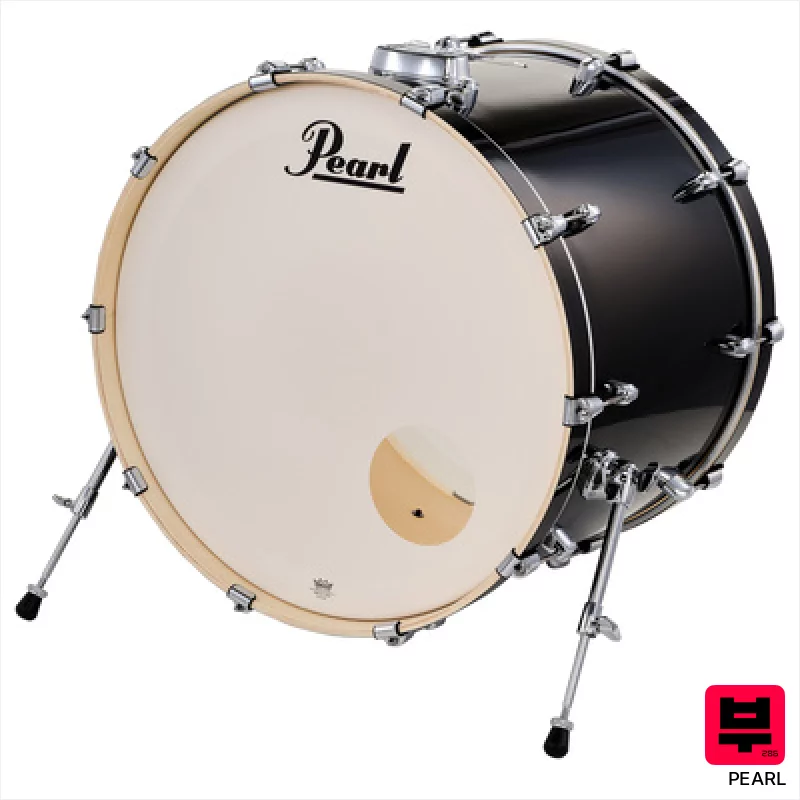
Pearl 24"x18" Export BD Jet Black
- • 6-ply poplar shell delivers a warm, resonant low-end tone
- • Jet Black wrap finish looks sharp and offers decent protection
- • Chrome-plated hardware provides a reliable, classic aesthetic
- • Export series offers a solid foundation at a budget-friendly price point
- • Poplar shell lacks the complexity of maple or birch
- • Standard hoops aren't the most responsive or tunable
- • Legs are functional but basic, may need upgrading for serious players
How to Choose the Best 24" Bass Drums
Shell Material
Maple and birch are the usual suspects for a balanced tone, but birch tends to be more aggressive and articulate. Poplar and mahogany offer warmer, rounder sounds, but might lack headroom when pushed hard. Expect some shell ply count variation in this price range; fewer plies generally mean more resonance, but less stability.
Bearing Edge
This is HUGE. A sharp, well-defined bearing edge transfers vibration more efficiently, leading to better resonance and sustain. Sloppy edges will choke the drum and kill its low-end thump. This is often where cheaper kits cut corners.
Hardware
Don't expect premium-grade hardware. You're likely looking at decent, functional hardware, but it probably won't be as robust or have the same finish as higher-end options. Check the leg placement - a well-designed mounting system minimizes dampening.
Resonance & Tuning Range
A good drum should respond well to different tunings. Can you get a deep, resonant thump, or a higher, punchier tone? A drum that only does one thing isn't versatile. Look for a drum that can handle a variety of musical styles, from rock to funk.
Porting
The number and size of port holes drastically affect the drum's tone and projection. More ports generally mean more air movement and a louder, more open sound. Consider your mic setup and playing style - smaller gigs might benefit from fewer ports to control low-frequency build-up.
Buying Guide
At this price point, compromises are inevitable. You're probably not getting a 3-ply maple monster. Watch out for flimsy hardware and poorly finished bearing edges - those are the telltale signs of a budget cut. Spending a little more on a drum with a better bearing edge will often yield a bigger sonic improvement than a fancier finish. And remember, a good beater makes a massive difference - don't skimp there!
How This List Is Built
We don't play these instruments — we're a catalog, not a review desk, and we'd rather say so than pretend otherwise. This page ranks 6 24" bass drums from the Thomann catalogue, which is the largest single source of specification data in this category.
Position is computed, not curated. Four signals, in order of weight: how completely the manufacturer documents the instrument (number of published specifications), where it sits in the price range, how specific the model designation is — which filters out generic accessories — and whether a product image exists. The same inputs always produce the same order, so nothing here is shuffled to look fresh.
What this list is good for: narrowing a category down to a shortlist by spec and budget. What it isn't: a substitute for hearing an instrument. Before you buy, read hands-on reviews and, where you can, play it. Full methodology.

