
Best 2.1 Monitoring Systems for Professional 2026
Let's be honest, slapping a pair of standard nearfields and a basic sub doesn't always cut it when you're tracking a full band, mixing complex orchestral scores, or just trying to nail that critical vocal EQ. A proper 2.1 monitoring system can give you a much more complete picture of your mix, but it's a commitment - both financially and in terms of learning how to work with the extended frequency range. This isn't gear for bedroom practice; it's for serious players demanding clarity and accuracy.
Last updated: April 11, 2026
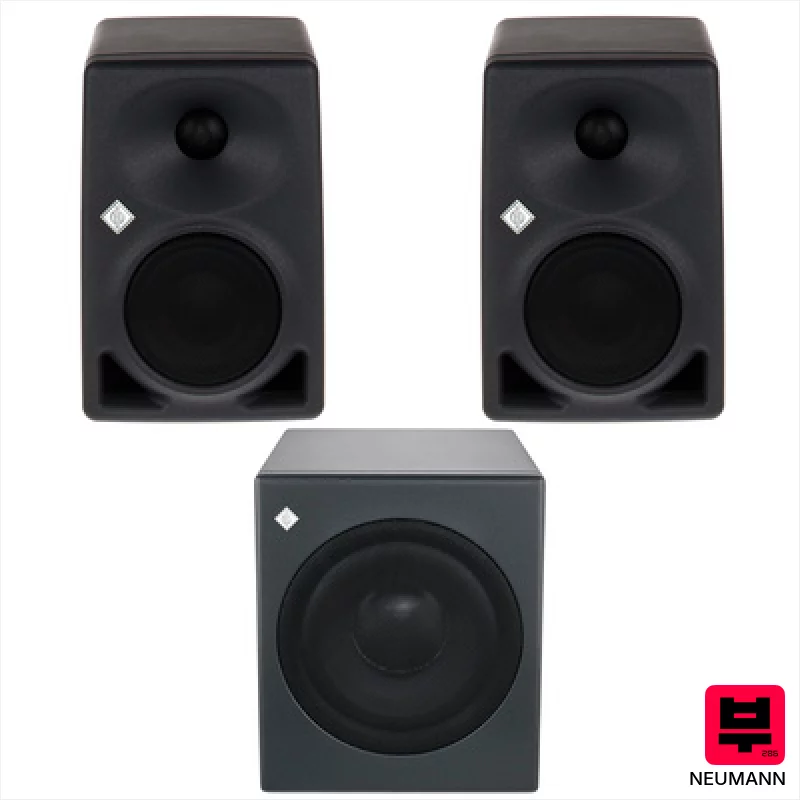
Neumann KH 80 DSP Sub Bundle
- • Exceptional transient response from the 10in Ultra Long Excursion woofer.
- • DSP offers precise calibration and FIR phase correction for seamless integration.
- • KH 750 DSP’s LFE modes provide flexible low-end customization.
- • KH 80 DSP satellites deliver Neumann's signature clarity and imaging.
- • Premium-priced, a significant investment for smaller studios.
- • Requires optional MA 1 for full calibration and monitor integration.
- • Size and weight (19.5kg) make placement and transport challenging.
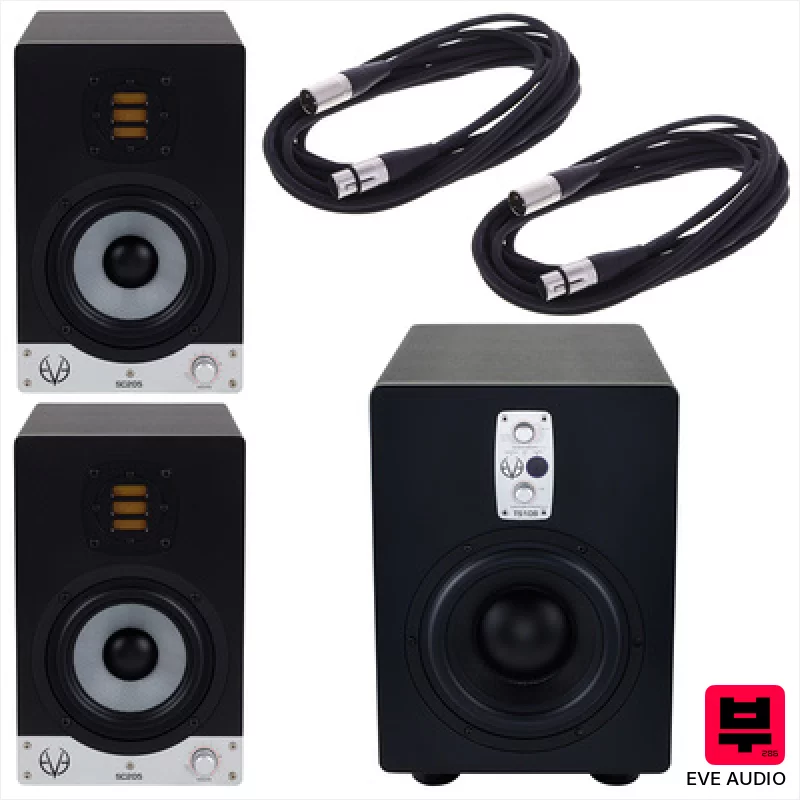
EVE Audio SC205 Bundle + TS108
- • Excellent transient response for accurate mixing decisions.
- • TS108's passive radiator eliminates frustrating port noise.
- • SC205’s ribbon tweeter delivers a remarkably smooth high-end.
- • Flexible filtering options tailor the sub to various acoustic spaces.
- • The 8-inch sub might feel limiting for larger rooms or bass-heavy genres.
- • SC205's midrange can occasionally sound a touch recessed.
- • The overall package is fairly heavy, making placement less convenient.
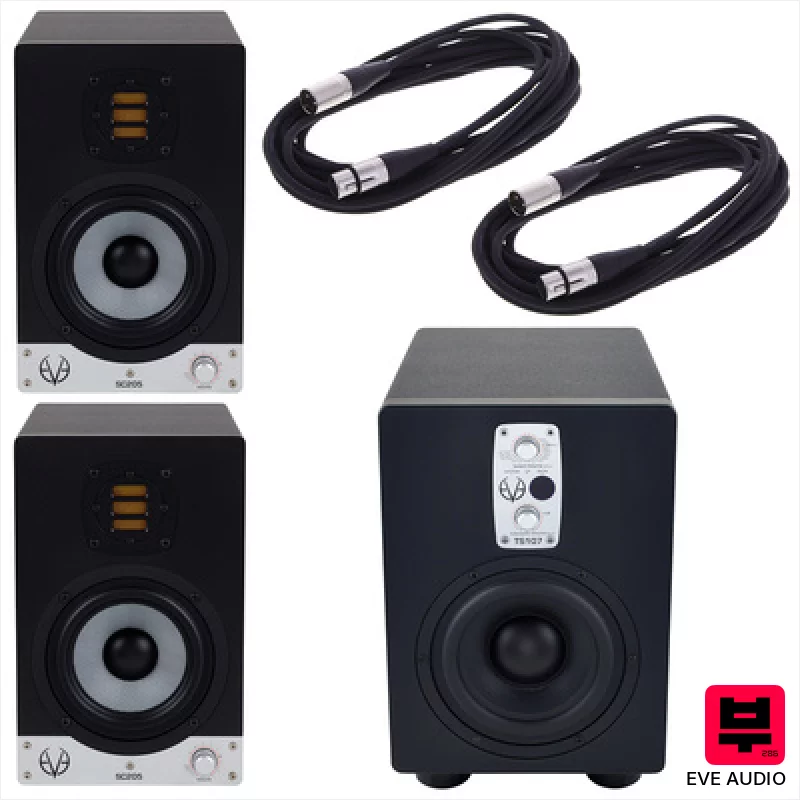
EVE Audio SC205 Bundle + TS107
- • Excellent transient response thanks to the ribbon tweeter design.
- • TS107's passive radiator minimizes port noise, crucial for critical listening.
- • SC205’s waveguide provides a wide, stable sweet spot.
- • Balanced XLR inputs offer clean, noise-free signal reception.
- • The 6.5 in subwoofer might be limiting for truly deep sub-bass applications.
- • The aesthetic is somewhat utilitarian; may not suit all studio environments.
- • High-end competitors offer more extensive EQ and routing options.
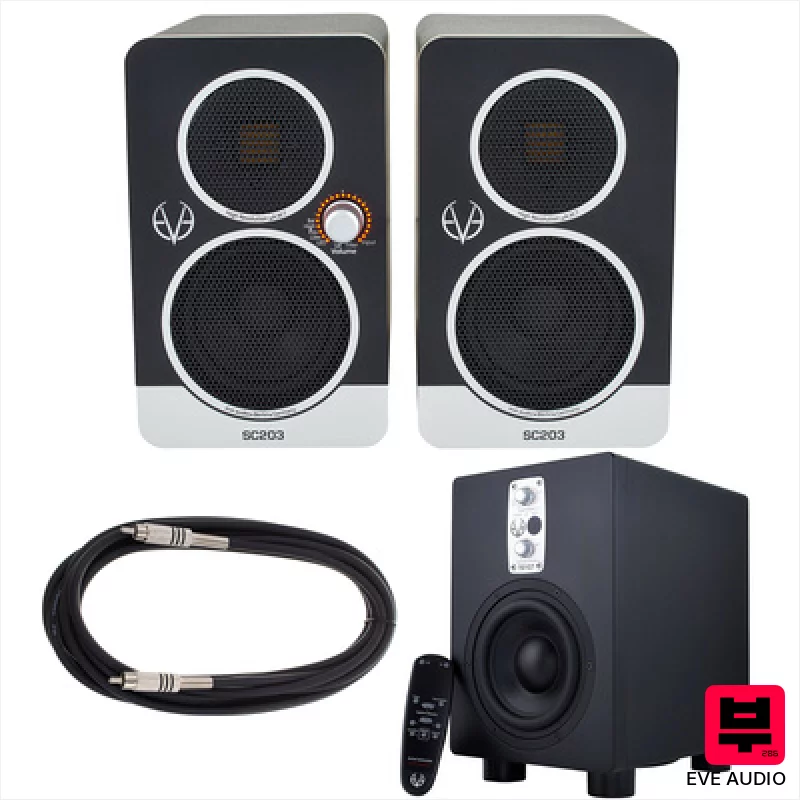
EVE Audio SC203 2.1 Bundle
- • Excellent transient response, revealing subtle details in mixes.
- • TS107 sub delivers clean, controlled low-end extension.
- • Passive radiator design minimizes airflow noise for a clean listening environment.
- • Balanced XLR inputs offer professional-grade connectivity and noise rejection.
- • SC203 satellites can feel a little lean in the mid-range for some tastes.
- • Sub's 100W output might be limiting for very large rooms or loud listening.
- • The size of the subwoofer, while compact, can still be a challenge in smaller spaces.

JBL 305P MKII Subwoofer Bundle
- • Solid 15mm MDF cabinet minimizes resonance for clean sound.
- • Class-D amplification delivers efficient power with minimal heat.
- • XLR and 1/4” inputs offer versatile connectivity options.
- • Subwoofer's XLF preset provides a noticeable low-end boost.
- • Subwoofer’s size (nearly 400mm deep) can be challenging in smaller spaces.
- • While versatile, lacks advanced EQ options found in higher-end systems.
- • The 10” sub might feel limited for those needing extreme low-frequency extension.
How to Choose the Best 2.1 Monitoring Systems
Frequency Response & Accuracy
It's not just about low-end thump. We're looking for a balanced response with minimal coloration - can you hear subtle details and accurately identify problem frequencies without the system masking them?
Subwoofer Integration
A poorly integrated sub will sound detached and muddy the low end. Seamless blending between the satellites and the subwoofer is crucial for accurate bass representation and a cohesive soundstage.
Transient Response & Dynamics
Can the system handle sudden peaks and dynamic shifts without distortion or smearing? Sloppy transient response will make drums sound lifeless and guitars lack punch.
Headroom & Power Handling
Gigging and tracking loud sources demand headroom. Clipping isn't just annoying; it introduces unwanted harmonics and ruins your mix. You need enough power to handle the peaks without compression.
Stereo Imaging & Soundstage
A wide, accurate stereo image is vital for panning decisions and creating a sense of space in your mixes. A collapsed or inaccurate image will lead to mono compatibility issues and a muddy sound.
Buying Guide
Don't chase the bass - chase accuracy. Many budget 2.1 systems prioritize low-end extension over overall tonal balance, leading to mixes that sound good in a car but fall apart elsewhere. Spend your money on quality satellites first; a decent sub can be upgraded later. Be prepared to spend time dialing in the crossover frequencies and phase alignment to get the most out of the system - it's not plug-and-play.
How This List Is Built
We don't play these instruments — we're a catalog, not a review desk, and we'd rather say so than pretend otherwise. This page ranks 5 2.1 monitoring systems from the Thomann catalogue, which is the largest single source of specification data in this category.
Position is computed, not curated. Four signals, in order of weight: how completely the manufacturer documents the instrument (number of published specifications), where it sits in the price range, how specific the model designation is — which filters out generic accessories — and whether a product image exists. The same inputs always produce the same order, so nothing here is shuffled to look fresh.
What this list is good for: narrowing a category down to a shortlist by spec and budget. What it isn't: a substitute for hearing an instrument. Before you buy, read hands-on reviews and, where you can, play it. Full methodology.

