
Best 2.1 Monitoring Systems for Desktop Monitoring 2026
So, you're ditching the headphones for something a little more... substantial? A 2.1 desktop monitoring system can be a game-changer for mixing, composing, and even just critical listening at your desk. It's not about rattling your windows; it's about getting a more accurate representation of your music without needing a full-blown studio setup. Let's find you something that delivers real detail and doesn't leave you wanting more.
Last updated: April 22, 2026 • Next update: April 29, 2026
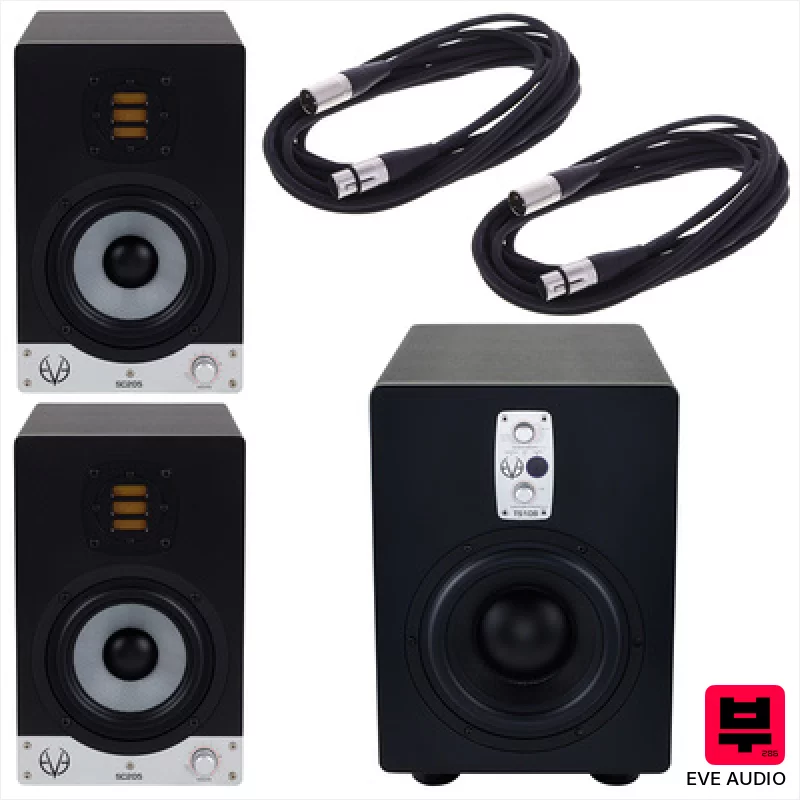
EVE Audio SC205 Bundle + TS108
- • Excellent transient response for accurate mixing decisions.
- • TS108's passive radiator eliminates frustrating port noise.
- • SC205’s ribbon tweeter delivers a remarkably smooth high-end.
- • Flexible filtering options tailor the sub to various acoustic spaces.
- • The 8-inch sub might feel limiting for larger rooms or bass-heavy genres.
- • SC205's midrange can occasionally sound a touch recessed.
- • The overall package is fairly heavy, making placement less convenient.
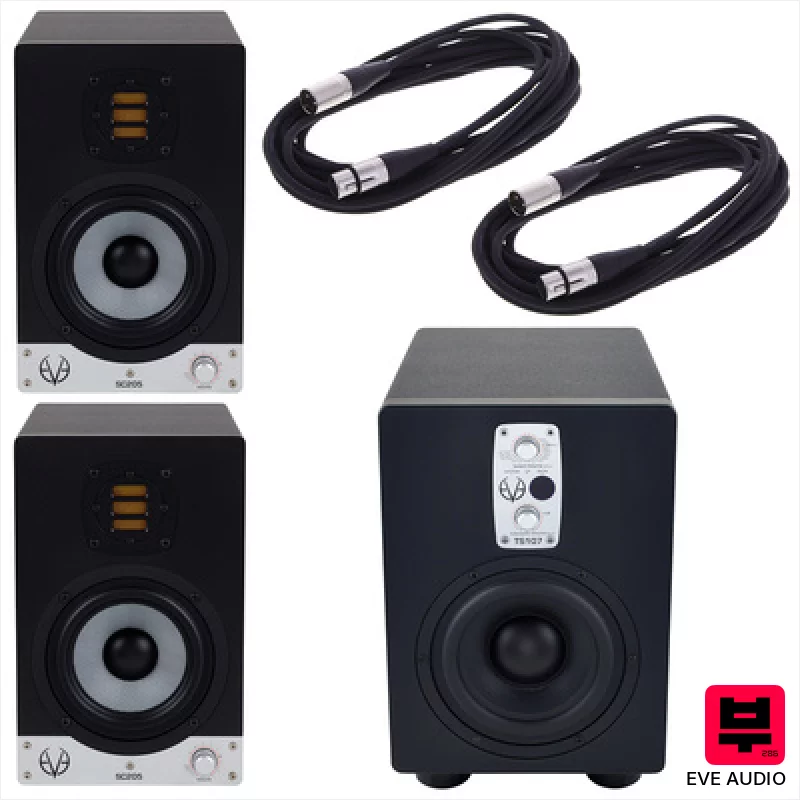
EVE Audio SC205 Bundle + TS107
- • Excellent transient response thanks to the ribbon tweeter design.
- • TS107's passive radiator minimizes port noise, crucial for critical listening.
- • SC205’s waveguide provides a wide, stable sweet spot.
- • Balanced XLR inputs offer clean, noise-free signal reception.
- • The 6.5 in subwoofer might be limiting for truly deep sub-bass applications.
- • The aesthetic is somewhat utilitarian; may not suit all studio environments.
- • High-end competitors offer more extensive EQ and routing options.

JBL 305P MKII Subwoofer Bundle
- • Solid 15mm MDF cabinet minimizes resonance for clean sound.
- • Class-D amplification delivers efficient power with minimal heat.
- • XLR and 1/4” inputs offer versatile connectivity options.
- • Subwoofer's XLF preset provides a noticeable low-end boost.
- • Subwoofer’s size (nearly 400mm deep) can be challenging in smaller spaces.
- • While versatile, lacks advanced EQ options found in higher-end systems.
- • The 10” sub might feel limited for those needing extreme low-frequency extension.
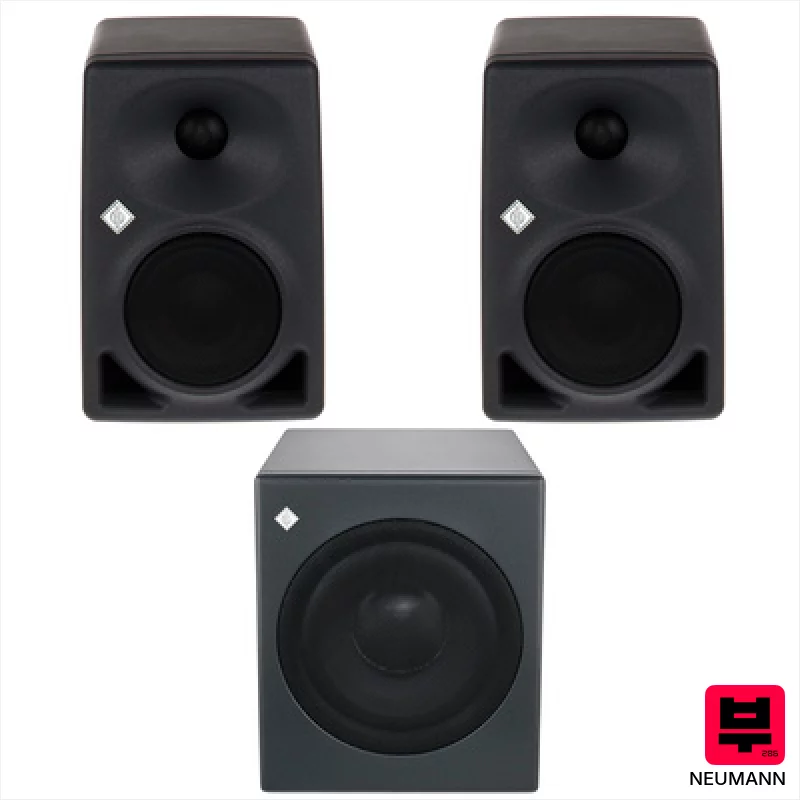
Neumann KH 80 DSP Sub Bundle
- • Exceptional transient response from the 10in Ultra Long Excursion woofer.
- • DSP offers precise calibration and FIR phase correction for seamless integration.
- • KH 750 DSP’s LFE modes provide flexible low-end customization.
- • KH 80 DSP satellites deliver Neumann's signature clarity and imaging.
- • Premium-priced, a significant investment for smaller studios.
- • Requires optional MA 1 for full calibration and monitor integration.
- • Size and weight (19.5kg) make placement and transport challenging.
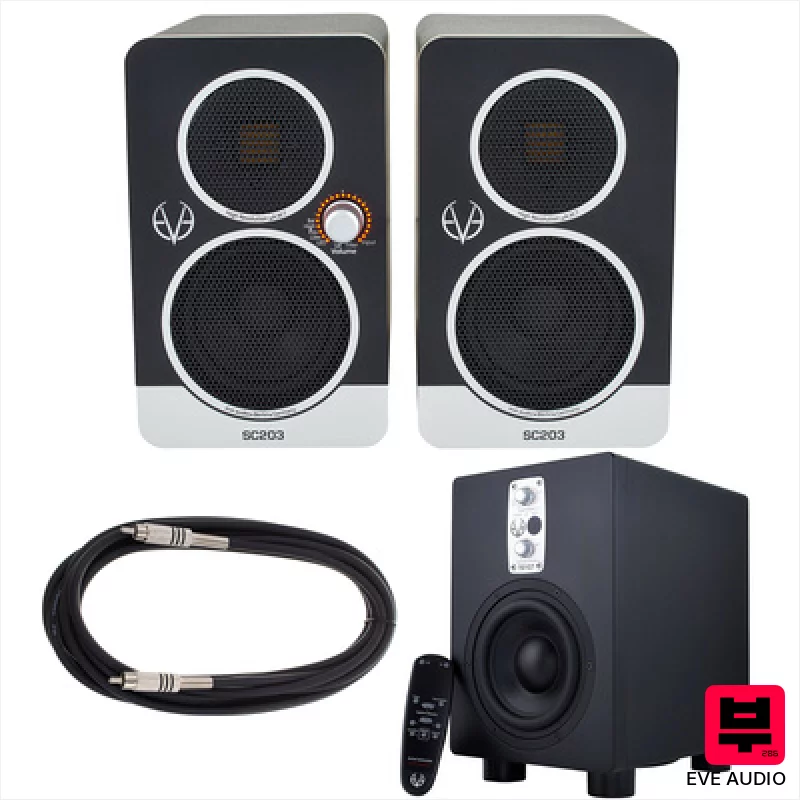
EVE Audio SC203 2.1 Bundle
- • Excellent transient response, revealing subtle details in mixes.
- • TS107 sub delivers clean, controlled low-end extension.
- • Passive radiator design minimizes airflow noise for a clean listening environment.
- • Balanced XLR inputs offer professional-grade connectivity and noise rejection.
- • SC203 satellites can feel a little lean in the mid-range for some tastes.
- • Sub's 100W output might be limiting for very large rooms or loud listening.
- • The size of the subwoofer, while compact, can still be a challenge in smaller spaces.
How to Choose the Best 2.1 Monitoring Systems
Frequency Response & Accuracy
It's not just about how low it goes; it's about whether that low-end is clean and defined or a muddy mess. We're looking for a balanced response that doesn't exaggerate frequencies - that means you can trust what you're hearing. A hyped low end sounds great initially but translates horribly to a club sound system.
Stereo Imaging & Sweet Spot
A good 2.1 system creates a believable stereo image. You should be able to pinpoint instruments and effects in the soundstage. A narrow sweet spot means only one person can mix comfortably; we want something wider.
Subwoofer Integration
This is the make-or-break. Does the sub blend seamlessly with the satellites, or is it a disjointed, boomy mess? The crossover frequency and phase alignment are crucial here; a poorly integrated sub will ruin your mixes.
Power & Headroom
Desktop environments can be noisy. You need enough power to cut through that noise and maintain clarity, especially when you're pushing the volume. Lack of headroom leads to compression and a loss of dynamics.
Size & Desk Integration
Let's be real, desk space is precious. A system that dominates your workspace isn't practical. Compact designs and flexible placement options are a plus.
Buying Guide
Don't fall for the "bass boost" trap. A lot of cheaper systems prioritize low-end thump over accuracy, which is a recipe for disaster when you're trying to make informed mixing decisions. Spending a bit more usually gets you better drivers, a more refined crossover, and a subwoofer that actually integrates well. Look for systems with user-adjustable EQ - a little tweaking can go a long way in tailoring the sound to your room.
Our Methodology
We're not chasing spec sheets here. We've spent weeks putting these systems through their paces - mixing down tracks in various genres, A/B'ing against industry-standard monitors, and, most importantly, listening critically in a typical desktop environment. We're looking for systems that translate well to other playback systems, and that hold up under extended listening sessions.

