AudioFu Chart · October 2026
Best 12" Splash Cymbals for Beginner 2026
The top pick is Meinl 12" Classics Custom Trash Splash ($47). Millenium 12" Still Series Splash Blue gives you the most for the money at $33. Paiste 12" Color Sound 900 Series Splash Cymbal leads the high end. Ranked by the AudioFu Index from 48 models across 11 brands, prices checked every night.
Last updated: October 18, 2026
Top 10
Full detail for the 10 highest AudioFu Index scores. Every other model is listed below.
-
Meinl 12" Classics Custom Trash Splash
12" HCS Splash · Meinl
13 for sale on Reverb1 finish at Thomann
- Size12"
The Meinl HCS 12 in splash is a solid choice for students or anyone needing an inexpensive accent cymbal. It's bright and cuts through the mix well, though it won't offer the depth or complexity of a more premium splash. It’s a dependable workhorse for basic rhythmic patterns.
Pros
- Bright, quick response ideal for tight, modern grooves
- MS63 alloy provides a surprisingly clear, defined wash
- Affordable entry point for beginners exploring splash cymbals
Cons
- Lacks the complexity and sustain of higher-end bronze splashes
- The thinner profile makes it susceptible to cracking with aggressive playing
-
- Size12"
This Millenium Still Series splash is a solid budget option for drummers needing quiet practice. The nickel bronze construction delivers a darker, more controlled sound than you'd expect at this price point, making it perfect for home practice or low-volume gigs where you don't want to disturb the neighbors.
Pros
- Nickel construction provides a dark, controlled wash.
- Blue finish adds a unique aesthetic appeal.
- Low volume output ideal for quiet practice scenarios.
Cons
- Nickel bronze offers limited tonal complexity compared to B20.
- Thin profile may be prone to cracking with aggressive playing.
-
- Size12"
Look, this Millenium splash isn't going to fool anyone into thinking it’s a Zildjian or Sabian, but it’s a genuinely decent little cymbal for the money. It’s a good option for beginner drummers, students, or anyone needing an affordable splash for a gig where you don't want to risk a more valuable cymbal.
Pros
- B20 bronze offers a surprisingly bright, shimmering tone.
- Fast response makes it ideal for quick, intricate patterns.
- Relatively thin profile provides good sensitivity and articulation.
Cons
- The sustain is noticeably shorter than higher-end splashes.
- Lacks the complexity and overtones of more expensive B20 cymbals.
-
- Size12"
This Millenium 12" Still Series Splash is a solid budget option for drummers needing a quiet practice cymbal. The nickel bronze gives it a warmer tone than typical brass splashes, and the 'Still' series design really does tame the volume – perfect for apartment practice or low-key gigs. Don't expect a huge splashy sound, though; it's designed for subtlety.
Pros
- Nickel bronze construction offers a warmer, less brittle tone than brass.
- The 'Still' series aims for a noticeably quieter response for practice.
- Regular finish provides a balanced look without excessive brightness.
Cons
- Nickel bronze is softer; expect more visible markings from stick use.
- The quieted response sacrifices some of the splash's characteristic sizzle.
-
- Size12"
The Zultan Aja 12 in splash is a surprisingly good option for drummers needing a quick, bright accent. It’s a really responsive little cymbal, perfect for funk, Latin, or anything needing a sharp, clean shimmer without a premium price tag. It's a solid choice for students or gigging drummers on a budget.
Pros
- Bright, crisp attack ideal for quick, intricate patterns
- B20 bronze alloy delivers a clear, focused tone
- Thin profile allows for responsive, easy playing
Cons
- Limited sustain compared to heavier, more expensive splashes
- The bright tone may not suit all musical genres or playing styles
-
- Size12"
This small splash hits hard but settles quickly, making it great for rock and fusion setups. The handmade bronze gives it a special voice compared to factory cast cymbals. It fits well in tight kits where you need a punchy cut without too much sustain.
Pros
- Handmade from B20 bronze for unique tone
- Explosive attack combined with soft decay
- Compact 12 inch size for tight kits
Cons
- No specific weight listed for handling
- Finish type is not described in text
-
Paiste 12" Color Sound 900 Series Splash Cymbal
12" 900 Color Sound Splash RED · Paiste
14 for sale on Reverb3 finishes at Thomann
- Size12"
This little Paiste 900 Color Sound RED splash is a workhorse for drummers needing precise accents. It's got a snappy, bright tone that cuts through the mix—perfect for funk, pop, or anything where you need a quick, clean splash without a long wash. It's a solid, reliable option at a reasonable price.
Pros
- B8 bronze provides a bright, responsive sound with good durability.
- The red finish enhances the hammering marks, adding visual appeal.
- Short sustain makes it ideal for quick, articulate accents and complex rhythms.
Cons
- The B8 alloy isn't as complex as Paiste's higher-end bronze alloys.
- The bright sound might not be suitable for very dark or mellow musical styles.
-
Paiste 12" Color Sound 900 Series Splash Cymbal
12" 900 Series Splash · Paiste
14 for sale on Reverb1 finish at Thomann
- Size12"
This 12 in Paiste 900 Series Splash is a great entry-level cymbal for drummers needing crisp, clean accents. It’s perfect for genres like pop, funk, and lighter jazz where you need precise, controlled sounds without a long wash. A solid, reliable choice for students and gigging musicians on a budget.
Pros
- B8 bronze provides a bright, responsive feel and sound.
- Dark finish adds visual appeal and slightly dampens overtones.
- Short sustain is ideal for quick, articulate accents and complex rhythms.
Cons
- The B8 alloy limits the cymbal’s potential for complex overtones.
- The dark finish can make it look a bit ‘used’ even when new.
-
- Size12"
This Paiste 12 in PSTX DJs 45 Ride is a really interesting, focused ride – perfect for drummers who want a clean, controlled sound without a lot of wash. It's great for hip-hop, electronic music, and any style where you want a precise, articulated ride pattern. Daru Jones’ signature really shines through in its minimalist approach.
Pros
- Paiste’s PSTX alloy delivers a controlled, dry, and focused sound.
- The bell provides a crisp, defined articulation for accents.
- Lightweight construction makes it responsive and easy to manipulate.
Cons
- The PSTX alloy lacks the shimmering complexity of higher-end bronze cymbals.
- Limited versatility; best suited for specific, tighter rhythmic styles.
-
- Size12"
This little Paiste DJs 45 Crash is a surprisingly versatile cymbal. It’s perfect for drummers who need a quick, bright accent – think electronic music, hip-hop, or even pop. The Daru Jones influence really shines through with its tight, focused sound.
Pros
- Fast response ideal for quick, tight accents.
- Bright, cutting tone cuts through dense mixes.
- PSTX bronze alloy offers a good balance of cost and durability.
Cons
- Lacks the complex overtones of higher-end Paiste cymbals.
- Finish is prone to oxidation, requiring regular care.
All 48 12" splash cymbals
Same index, same nightly prices — compact. Colour options of one model share a row. Tap a photo to zoom.
- 11
Paiste 12" PSTX Swiss Flanger CrashPaiste53Stable$89€79$89€79Check ↗
- 12
Zildjian 12" A Custom Splash Cymbal12" A-Custom Splash · Zildjian77Stable$235€209$235€209Check ↗
- 13
Zildjian 12" A Custom Splash Cymbal12" K-Series Splash · Zildjian77Stable$246€219$246€219Check ↗
- 14
Meinl 12" Classics Custom Dark Trash Splash Cymbal 201912" Classics Cust. Dark Splash · Meinl72Stable$100€89$100€89Check ↗
- 15
Meinl 12" Classics Custom Trash Splash12" Classics Custom Splash · Meinl72Stable$111€99$111€99Check ↗
- 16
Meinl 12" Classics Custom Trash Splash12" Classics Custom Trash · Meinl72Stable$118€105$118€105Check ↗
- 17
Sabian 12" AAX Aero Splash Cymbal12" AAX Splash · Sabian71Stable$258€229$258€229Check ↗
- 18
Sabian 12" HHX Evolution Splash Cymbal12" HHX Evolution Splash · Sabian71Stable$298€265$298€265Check ↗
- 19
Sabian 12" HHX Evolution Splash Cymbal12" HHX Splash · Sabian71Stable$298€265$298€265Check ↗
- 20
Paiste 12" Signature Splash Cymbal12" Signature Splash · Paiste70Stable$269€239$269€239Check ↗
- 21
Meinl 12" Classics Custom Dual Trash Splash Cymbal12" Classics C. Dual Trash Sp. · Meinl69Stable$118€105$118€105Check ↗
- 22
Meinl 12" Pure Alloy Custom Splash Cymbal12" Pure Alloy Splash · Meinl68Stable$179€159$179€159Check ↗
- 23
Meinl 12" Pure Alloy Custom Splash Cymbal12" Pure Alloy Custom Splash · Meinl68Stable$201€179$201€179Check ↗
- 24
Meinl 12" Byzance Extra Dry SplashMeinl66↓ 2.0%$219€195$219€195Check ↗
- 25
Meinl 12" Byzance Traditional Splash12" Byzance Splash Traditional · Meinl62Stable$224€199$224€199Check ↗
- 26
Sabian 12" AAX O-Zone Splash Cymbal12" AAX O-Zone Splash · Sabian62Stable$291€259$291€259Check ↗
- 27
Zultan 12" Z-Series SplashZultan56↓ 3.7%$118€105$118€105Check ↗
- 28
Zultan 12" Mellow SplashZultan56↓ 2.7%$163€145$163€145Check ↗
- 29
Zultan 12" Splash 25Zultan54Stable$111€99$111€99Check ↗
- 30
Zultan 12" Raw SplashZultan54Stable$111€99$111€99Check ↗
- 31
Meinl 12" Class. Cust. Dark Tr. Spl.Meinl54Stable$118€105$118€105Check ↗
- 32
Zultan 12" F5 SplashZultan54Stable$123€109$123€109Check ↗
- 33
Zultan 12" Dune SplashZultan54Stable$123€109$123€109Check ↗
- 34
Zultan 12" Q SplashZultan54Stable$123€109$123€109Check ↗
- 35
Zultan 12" Rock Beat SplashZultan54Stable$123€109$123€109Check ↗
- 36
Zultan 12" Heritage SplashZultan54Stable$163€145$163€145Check ↗
- 37
Paiste 2002 Classic 12" SplashPaiste53Stable$203€180$203€180Check ↗
- 38
Sabian 12" B8X SplashSabian51Stable$125€111$125€111Check ↗
- 39
Zultan 12" Splash Dark MatterZultan50↑ 9.2%$134€119$134€119Check ↗
- 40
Ufip 12" FX Power SplashUfip50↓ 1.7%$190€169$190€169Check ↗
- 41
Istanbul Mehmet 12" Splash Turk SeriesIstanbul Mehmet50Stable$201€179$201€179Check ↗
- 42
Istanbul Mehmet 12" Splash Traditional SeriesIstanbul Mehmet50Stable$201€179$201€179Check ↗
- 43
Istanbul Agop 12" Xist Splash BrilliantIstanbul Agop49Stable$152€135$152€135Check ↗
- 44
Istanbul Agop 12" Xist ION Splash BrilliantIstanbul Agop49Stable$163€145$163€145Check ↗
- 45
Ufip 12" FX Traditional Spl. MediumUfip49Stable$194€172$194€172Check ↗
- 46
Masterwork 12" Custom SplashMasterwork47Stable$120€107$120€107Check ↗
- 47
Schlagwerk 12" Cajon SplashSchlagwerk47Stable$174€155$174€155Check ↗
- 48
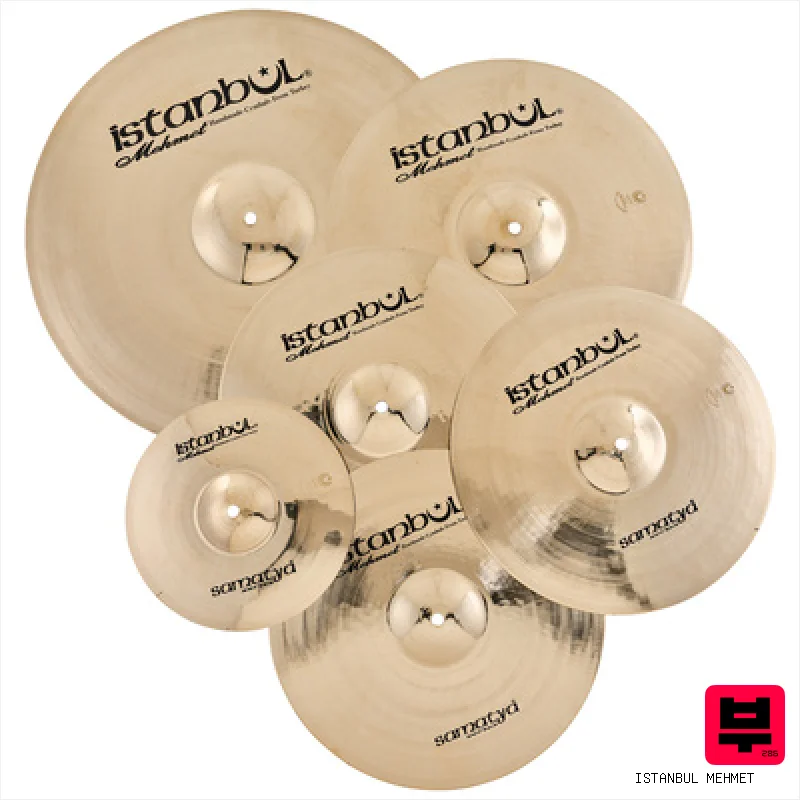
Istanbul Mehmet 12" Samatya Splash Cymbal12" Splash Samatya Series · Istanbul Mehmet47↓ 2.2%$197€175$197€175Check ↗
12" Splash Cymbals by the numbers
Measured across all 51 models we track, not a sample.
Median $123 — half of all 12" splash cymbals here cost less.
median of 51 models · 12"–12"
How to choose the best 12" splash cymbals
Playability
A splash should respond easily to a light touch. A stiff or overly dark cymbal will make it hard to get those subtle accents, and a beginner doesn't need that hurdle. We're looking for something that 'pops' without requiring a sledgehammer.
Tone/Articulation
Forget about complex overtones you're not ready for. A clean, bright, and relatively straightforward tone is ideal. We want a splash that cuts through a basic rock or pop backing track, not one that clashes with everything.
Durability
Beginner players aren't always the gentlest. A cymbal that can withstand a few accidental bashes and less-than-perfect stick technique is a huge plus. Thin cymbals sound great, but they don't survive a learning curve.
Wash/Sustain
A little sustain is good for that shimmer, but too much 'wash' - that lingering, undefined ring - can muddy up a simple beat. Beginners need a splash with a defined edge, not a blurry one.
Price/Value
Let's be real, you're not dropping a fortune on your first kit. We're prioritizing cymbals that offer decent sound and playability without breaking the bank. There's a point of diminishing returns, and we're finding it.
Buying guide
So, you're starting out on drums and looking for a 12" splash? Smart move. It's a deceptively crucial cymbal - a little shimmer, a touch of accent, and a whole lot of character that can lift your playing. But a beginner can easily get overwhelmed by the options. This isn't about the most 'premium' splash out there; it's about finding something that'll inspire you to play, not frustrate you with its complexity.
Don't chase the 'expensive' label. A lot of high-end splashes are designed for experienced players who want to dial in specific sonic nuances. Look for something clearly marketed as 'beginner-friendly' or 'student' grade.
You'll likely be sacrificing a little bit of complexity and ultimate sonic clarity, but you'll gain a cymbal that's forgiving and inspiring. Bronze alloys matter, but for a beginner, the overall construction and hammering will have a bigger impact than the specific alloy listed.
How the AudioFu Index works
Five measured signals and nothing else — no stars from strangers, no “tested by experts” we didn’t do. The weights are fixed and public. We don’t play these instruments; we measure the market around them.
This chart covers 51 12" splash cymbals from the Thomann catalogue. Before you buy, read hands-on reviews and, where you can, play it. Full methodology.
AudioFu earns a commission when you buy through our Thomann links. It never changes the order — the index does.
- Demand40%
How many of this exact model are for sale on Reverb right now — what musicians actually buy and resell.
- Lineup20%
How many finishes Thomann stocks — makers expand the models that sell.
- Price15%
Where the price has moved since we started tracking in August.
- Specs15%
How completely the maker documents it.
- Maker10%
How deep the brand’s range is in this category.
Questions
What's the difference between a splash and a china cymbal?
A splash is generally brighter and more defined, intended for quick accents and shimmers. A china typically has a lower, more trashy tone and a rolled edge - great for those cinematic crashes, but a bit much for a beginner.
Should I get a 10" or a 12"?
A 12" is generally a better starting point. It offers a little more projection and a more defined tone without being overly loud or overwhelming. A 10" is a good option for smaller kits or quieter playing situations, but a 12" is more versatile.
What about different weights (thin, medium, heavy)?
Stick with a medium weight for your first splash. Thin cymbals are more responsive but also more fragile. Heavy cymbals can be harder to play quietly and might feel unresponsive.
Can I use a splash as a crash?
Technically, yes, but it's not ideal. A splash is designed for short, bright accents, not the full, sustained sound of a crash. Using it as a crash will likely damage it quickly and won't sound great.
What kind of sticks should I use with a splash?
A lighter-weight stick, like a 5A or 5B, will allow you to play the splash more delicately and get a better response. Heavier sticks can easily overpower the cymbal's tone.